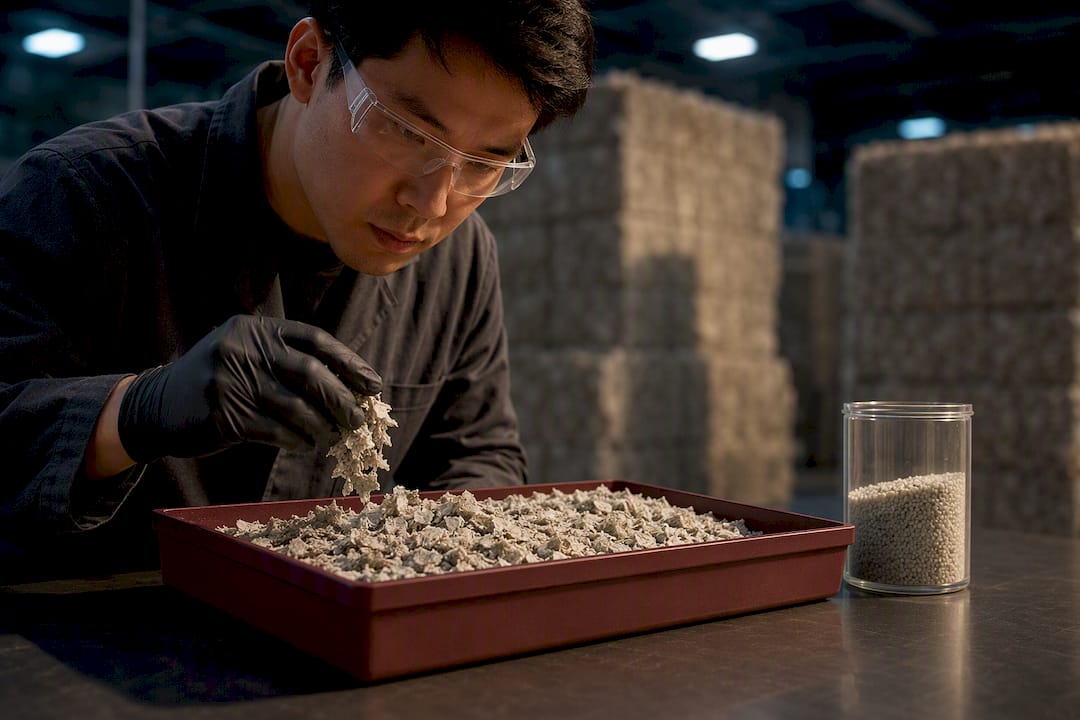
Post-consumer recycled content is material that already completed a full life cycle as a finished product, such as a used bottle or carton, before being collected and reprocessed into new packaging. For procurement teams, that distinction matters because PCR can cut virgin-material demand and satisfy emerging state laws, but only when a supplier can prove it with certified chain-of-custody documentation. Everything below covers how PCR is defined, regulated, and verified.
**TL;DR:** Certified chain-of-custody documentation is essential to verify true post-consumer recycled content claims, with APR and UL certifications being the most credible. The environmental benefits of PCR vary by material type, with metals showing the largest gains, while plastics and paper depend heavily on collection and reprocessing efficiency. Regulations like New Jersey’s law and federal substantiation rules demand detailed reporting, registration, and clear proof of recycled material sources to avoid compliance issues. Poorly documented or unverifiable PCR claims are common compliance risks, making supplier transparency and batch-level testing crucial for procurement. Building a robust documentation trail before claims are challenged protects brands from liability and supports credible sustainability assertions.
Yuanpackaging
Explore Yuan Packaging
Table of Contents
- What Is Post-Consumer Recycled Content, and How Does It Differ From Pre-Consumer Material?
- Does Using PCR Actually Reduce Environmental Impact?
- Which Certifications Actually Verify a PCR Claim?
- What Regulations Govern PCR Claims and Reporting?
- How Does PCR Affect Manufacturing and Quality Control?
- What Should Procurement Ask Suppliers Before Approving PCR Packaging?
- How Does a Premium Packaging Manufacturer Actually Source and Verify PCR?
- The Gap Between PCR Marketing and PCR Reality
- Ready to Add Certified Recycled Content to Your Packaging Line?
- Sources
- FAQ
What Is Post-Consumer Recycled Content, and How Does It Differ From Pre-Consumer Material?
The Association of Plastic Recyclers defines post-consumer recycled content, often shortened to PCR, as material that finished its intended use, entered the waste stream, and was collected for recycling. Post-industrial content, sometimes called pre-consumer material, is scrap generated during manufacturing that never reached a consumer at all, such as trim from a converting line. That difference isn’t academic. Many recycled-content laws and third-party certifications count only PCR toward compliance percentages, so scrap diverted internally by a factory typically cannot be marketed as post-consumer content.
UL Solutions uses a similar framework in its ECV validation program, treating post-consumer and pre-consumer as distinct categories with separate reporting requirements. Measurement itself runs on a mass-by-weight basis: a package claiming 30% recycled content must show that 30% of its total weight, not volume or surface area, comes from qualifying material.
Common PCR sources include:
- Curbside-collected plastic bottles (PET, HDPE)
- Recovered aluminum and steel cans
- Recycled office and packaging paper
- Reclaimed glass cullet from municipal programs
Excluded material generally includes factory rework, regrind that never left the plant, and byproducts recycled internally without ever reaching an end user.
Does Using PCR Actually Reduce Environmental Impact?
Usually, yes, but the size of the benefit depends heavily on the material. The EPA’s Recycling Economic Information report finds that metals typically deliver the largest per-ton environmental gains from recycling, while benefits from plastics and paper vary more with collection efficiency and reprocessing energy. Buying recycled-content products also closes the loop that collection programs depend on, according to EPA guidance on recycling basics: without steady demand for PCR, sorted material has nowhere to go but a landfill or incinerator.
PCR isn’t a guaranteed environmental win in every case. Reprocessing contaminated or poorly sorted streams can consume enough energy to erode part of the benefit, and open-loop recycling, where material downgrades into a lower-value product each cycle, doesn’t deliver the same impact reduction as closed-loop reuse.
For procurement, that means asking suppliers not just “is this PCR” but “how was it collected and processed,” since answer quality varies as much as the material itself.
Which Certifications Actually Verify a PCR Claim?
Chain-of-custody documentation is the backbone of any credible PCR claim, and it comes in two main forms: segregated systems, where certified material is physically kept apart from virgin resin at every stage, and mass-balance accounting, where certified inputs are tracked proportionally through a shared production system. ISO-based chain-of-custody standards underpin both approaches, giving auditors a consistent framework to verify claims across suppliers.
Two certification programs carry the most weight in packaging:
- *APR PCR Certification** verifies that a converter’s recycled content meets the Association of Plastic Recyclers’ sourcing and testing criteria.
- *UL ECV 2809** provides third-party validation of recycled-content percentages, distinguishing post-consumer from pre-consumer inputs in the process.
**Pro Tip:** _Ask every supplier for the actual certificate number and issuing body, not just a marketing claim of “certified recycled content.” A real APR or UL certificate lists the specific facility and material stream it covers. If a supplier can’t produce that, treat the claim as unverified._
Weak claims tend to share a pattern: vague percentages (“contains recycled material”), no named certification body, and no willingness to share an audit trail. The APR specifically warns that mislabeling pre-consumer scrap as post-consumer content is one of the most common compliance risks buyers encounter.
What Regulations Govern PCR Claims and Reporting?
Regulatory pressure on PCR is no longer theoretical, and New Jersey’s law is the clearest working example. Procurement teams selling into that market, or supplying brands that do, need to understand three compliance layers.
- *New Jersey’s Recycled Content Law**, signed January 18, 2022, sets phased minimum PCR percentages by product category, with manufacturer registration and annual reporting requirements that began in 2025. The law also includes a waiver process for manufacturers who can document that qualifying material simply isn’t available at the required volume.
- *Federal substantiation rules** under 16 CFR § 260.13 prohibit deceptive recycled-content claims and require clear qualifiers whenever a product is only partially made from recycled material. A label claiming “recycled packaging” when only the label itself is recycled, and the box is not, runs afoul of this rule.
- *Food-contact considerations** add another layer for brands in beverage, nutraceutical, or pharmaceutical packaging, where the FDA evaluates recycled-content inputs for migration risk before they can touch consumable products.
Practical compliance work follows a predictable rhythm: register with the relevant state agency, maintain batch records linking specific product SKUs to certified PCR sources, submit annual certification data, and keep documentation ready in case a waiver application becomes necessary.
How Does PCR Affect Manufacturing and Quality Control?
PCR is rarely a drop-in replacement for virgin resin or fiber, and pretending otherwise is where a lot of packaging programs stall. Recycled inputs vary batch to batch depending on collection source and processing quality, which can shift melt flow in extrusion, alter mold-fill behavior in injection processes, and change how ink adheres during printing. Manufacturers commonly adjust temperature profiles, tweak coating formulations, or blend PCR with virgin material at controlled ratios to hold color and barrier performance steady.
Quality control needs to catch these shifts before they reach a finished product:
- Verify incoming certificates against the batch actually delivered, not just the purchase order.
- Run mechanical and appearance testing on each new PCR lot rather than assuming consistency across shipments.
- Build acceptance criteria into supplier contracts, with rejection thresholds defined in advance.
**Pro Tip:** _Keep a backup list of certified PCR suppliers before you need one. Seasonal collection swings and contamination events can pull a material offline with little warning, and a single-source PCR strategy leaves a production line exposed._
What Should Procurement Ask Suppliers Before Approving PCR Packaging?
A supplier’s willingness to document a PCR claim in detail tells you almost everything about whether that claim will hold up under audit. Before signing off, request the following:
- Third-party certificate (APR PCR or UL ECV 2809) naming the specific facility and material stream.
- Chain-of-custody report specifying segregated or mass-balance accounting.
- Batch-level test reports confirming recycled content percentage by weight.
- A written description of the source stream, including contamination controls at collection.
Watch for these red flags during supplier review:
- Percentage claims with no named certifying body
- Refusal to share an audit trail or batch records
- Inconsistent language between marketing copy and technical spec sheets
A supplier that can’t answer these questions confidently is a compliance liability waiting to surface at the worst possible time, usually during a customer audit or a regulator’s spot check.
How Does a Premium Packaging Manufacturer Actually Source and Verify PCR?
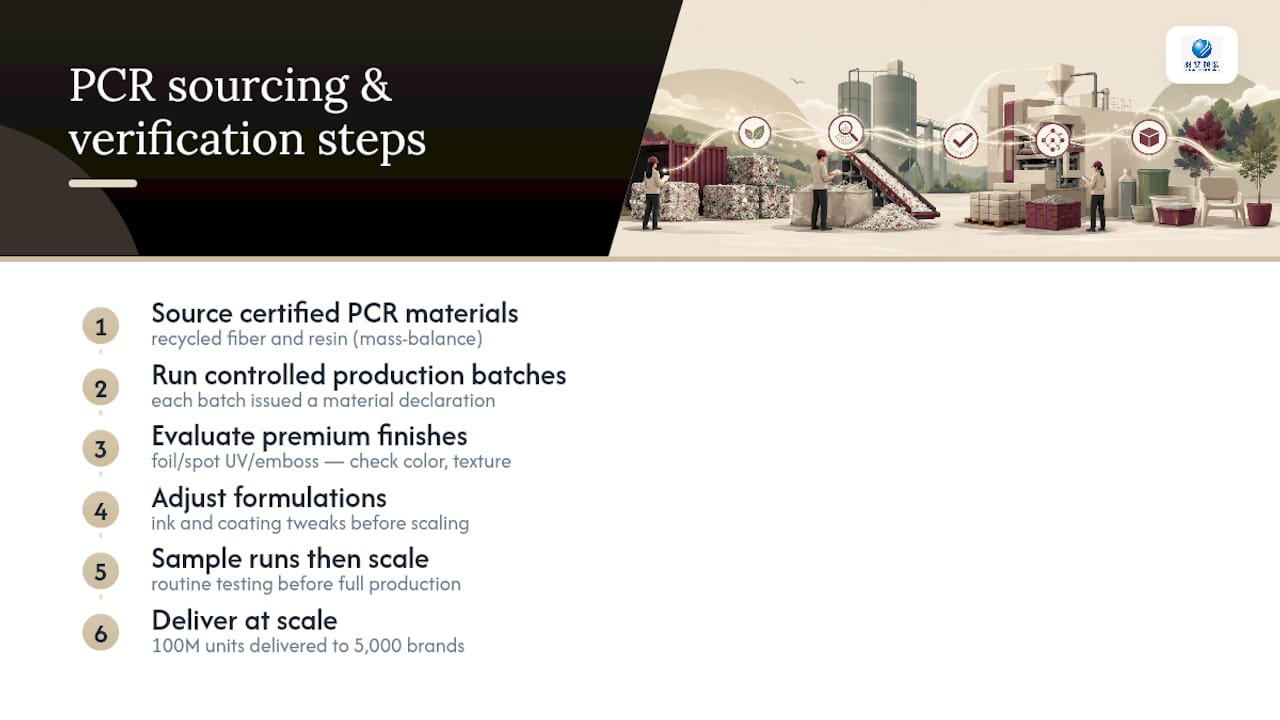
Yuanpackaging sources certified recycled fiber and resin through controlled mass-balance production runs, then backs each batch with a material declaration a brand’s compliance team can file for audit purposes. Premium finishes add a real wrinkle: PCR substrates can shift base color and surface texture, so achieving a consistent foil stamp, spot UV, or embossed result often means adjusting ink formulations or coating layers before a run goes to full volume. With more than 100 million units delivered to 5,000 brands, that kind of iteration has become routine rather than exceptional, and it’s why sample runs matter before committing to a full production order.
The Gap Between PCR Marketing and PCR Reality
Most packaging conversations treat post-consumer recycled content as a checkbox: either a product has it or it doesn’t. That framing misses the point entirely. The real question isn’t whether a package contains PCR, it’s whether the percentage claim survives an audit, and most published guidance skips past that almost entirely.
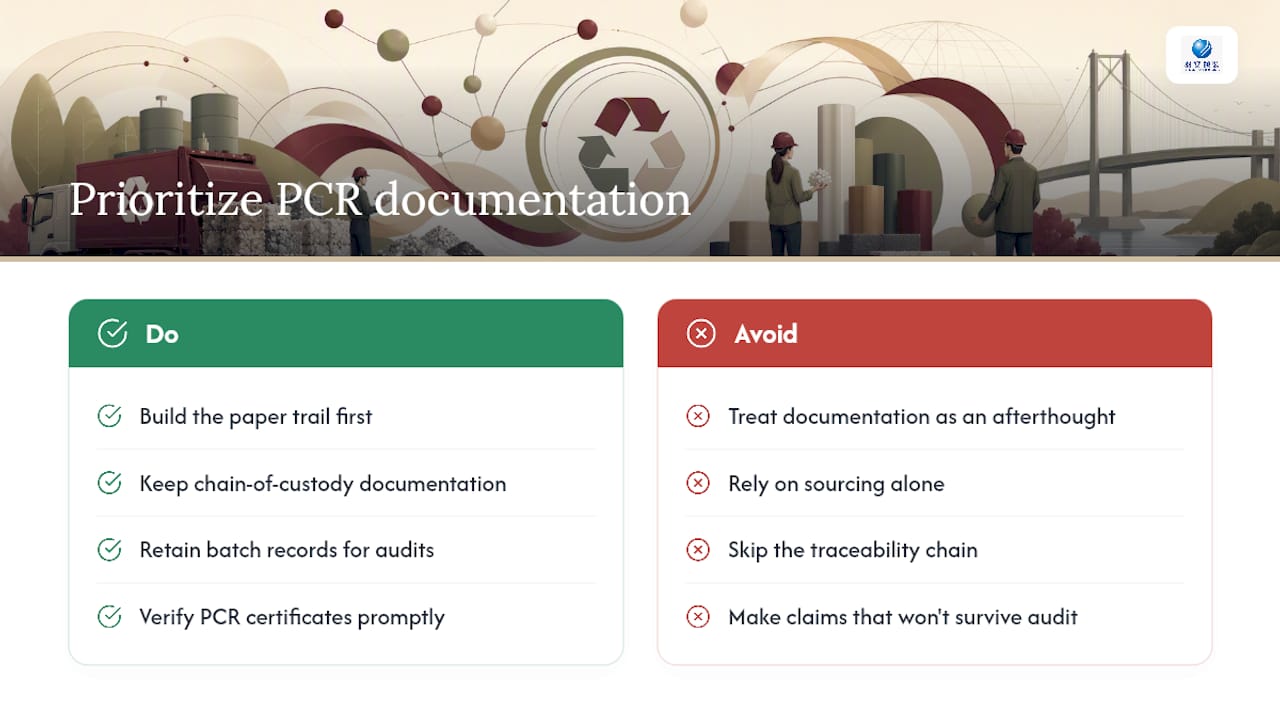
Conventional advice tells brands to “choose recycled materials” as though sourcing were the hard part. It isn’t. Sourcing certified PCR is straightforward once you know which certifications matter. The hard part is the traceability chain behind the claim, and that’s exactly where the NJDEP’s registration and reporting structure and federal substantiation rules under 16 CFR § 260.13 are pushing the industry. Brands that treat documentation as an afterthought will find themselves scrambling when a regulator or a retail partner asks for proof.
If there’s one priority procurement should act on first, it’s this: build the paper trail before you need it, not after a claim gets challenged. Chain-of-custody documentation, batch records, and certificate verification aren’t compliance overhead. They’re what separates a defensible sustainability claim from a liability.
_— Anthony_
Ready to Add Certified Recycled Content to Your Packaging Line?
For brands weighing PCR against virgin materials, the real advantage isn’t just access to recycled substrates, it’s having a manufacturing partner who has already solved the color-matching and finishing problems PCR tends to create. Yuanpackaging sources certified eco-materials, validates supplier documentation before it reaches your production line, and runs sample batches so you can approve quality before committing to volume.
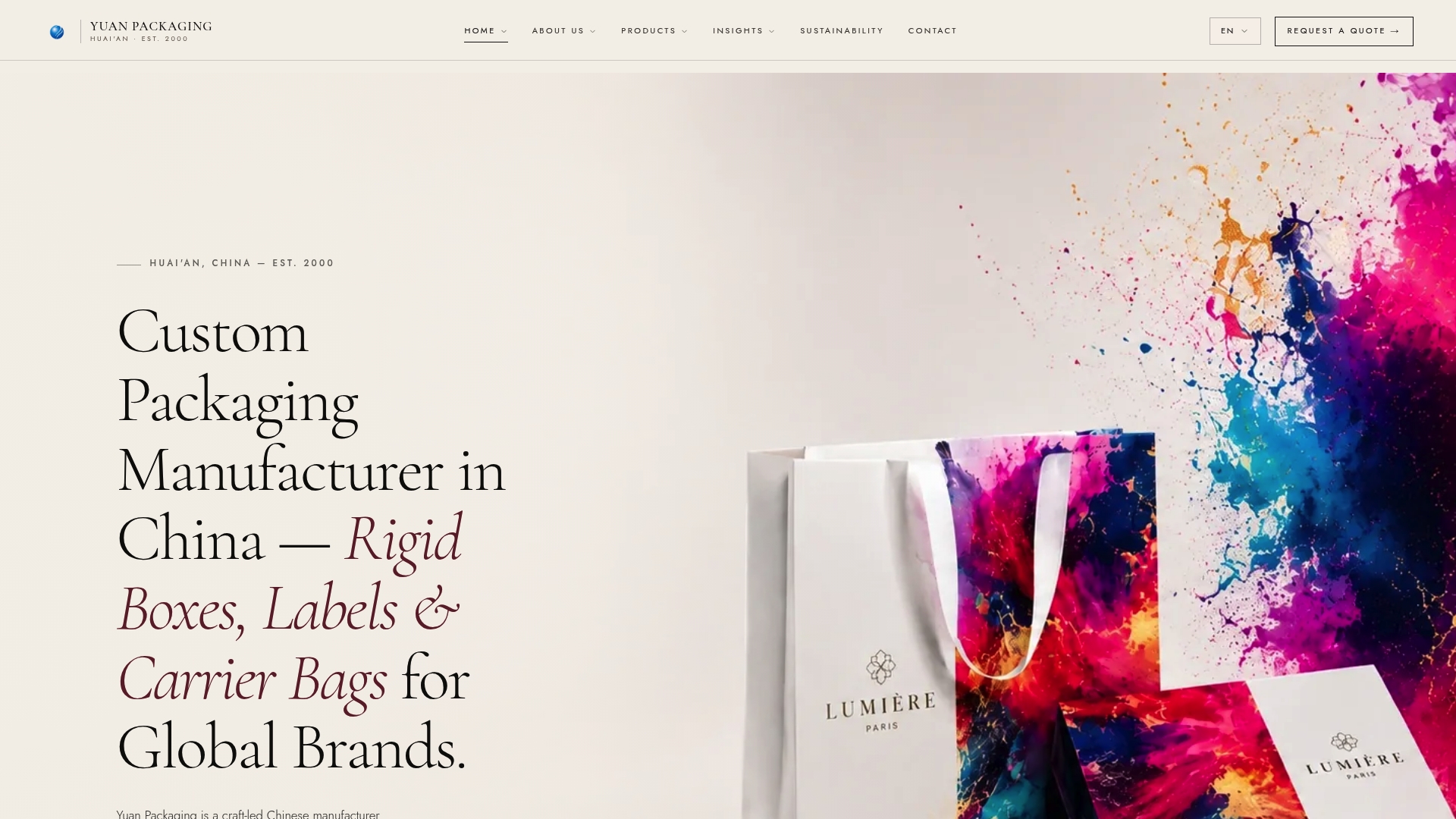
Whether you’re specifying recycled fiber for rigid gift boxes, recycled paper stock for carrier bags, or certified substrates for pressure-sensitive labels, the sourcing and verification work is already built into the process. Request a material data sheet or a sample run through Yuanpackaging’s product catalog to see how certified PCR performs on your specific packaging format before you finalize a production order.
Sources
- Is All Recycled Material Created Equal? - Association of Plastic Recyclers (APR)
- Recycled content (NJDEP) — Recycled Content Law
- Defining recycled content | UL Solutions
- 16 CFR § 260.13 - Recycled content claims (e-CFR / LII)
FAQ
What Is the Difference Between Post-Consumer and Pre-Consumer Recycled Content?
Post-consumer content comes from products that reached an end user and were collected after use, while pre-consumer (post-industrial) material is scrap generated during manufacturing that never left the factory. Most recycled-content laws and certifications count only post-consumer material toward compliance percentages.
Is PCR Plastic Safe for Packaging?
PCR plastic can be safe for packaging, including food-contact applications, when it’s sourced and processed under proper controls, though the FDA evaluates recycled inputs for migration risk before approving food-contact use. Certification through programs like APR PCR or UL ECV 2809 helps confirm the material meets quality and safety benchmarks.
Are Recycled Plastic Bags Really Recyclable?
Recyclability depends heavily on local collection infrastructure. Many plastic bags require drop-off at store take-back programs rather than curbside bins, so a bag labeled recyclable in one region may not have that option available elsewhere.
What Are the Main PCR Requirements Brands Need to Know?
Requirements vary by jurisdiction, but New Jersey’s law is a leading example, setting phased minimum PCR percentages by product category along with manufacturer registration and annual reporting. Federal rules under 16 CFR § 260.13 additionally require clear substantiation and qualifiers whenever a recycled-content claim doesn’t apply to an entire product.