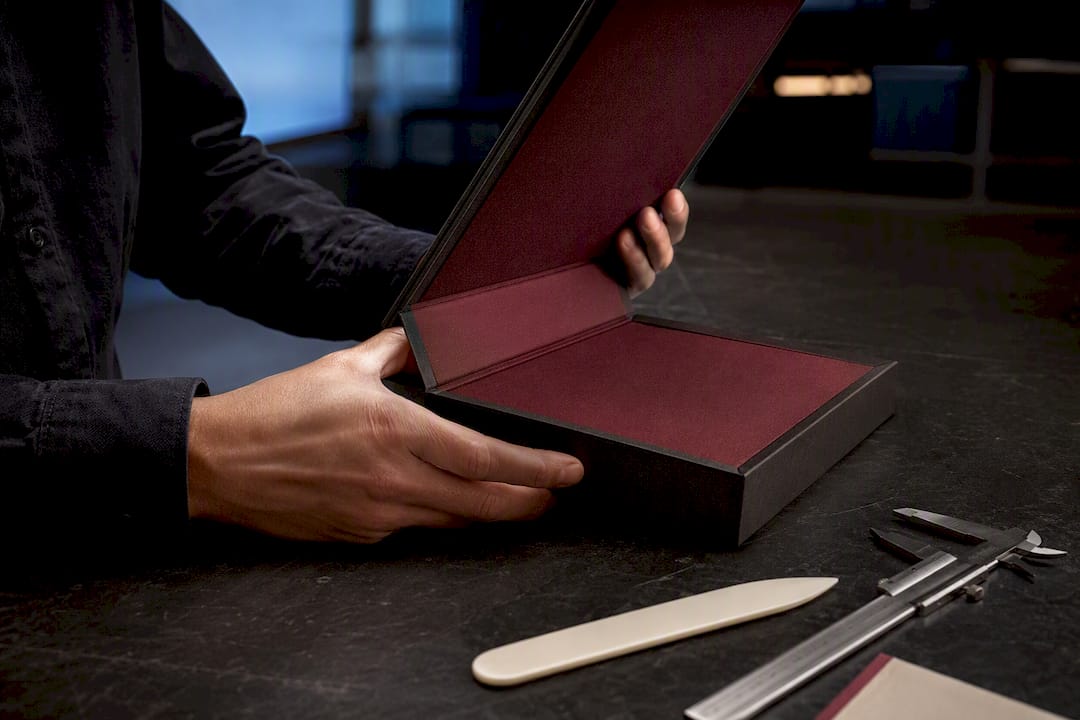
书本式盒是一种带铰链的精品硬盒,开启方式类似精装书,通常由书脊、封面灰板和模拟装订效果的内衬组成。它非常适合高端礼赠、收藏版或限量版产品,以及那些希望开箱过程更具设计感、而不只是单纯实现功能的零售展示。如果产品本身较重、尺寸很大,或者大批量时对成本非常敏感,那么普通精品硬盒或折叠纸盒通常会更加合适。
**简而言之:** 大多数书本式盒使用 2–3mm 精品硬板,酒类或五金等较重产品通常建议使用更厚的板材。 与外部颜色形成对比的内衬可以明显提升包装的感知品质,尤其是在盒盖打开的一瞬间。 对于需要反复开合的包装,内嵌磁铁的磁吸结构通常更耐用;丝带则更适合一次性礼赠开启,但频繁使用时磨损更快。 正确的刀模规格非常关键,包括铰链宽度以及为纸板厚度预留的间隙,否则第一版样品很容易出现闭合错位。 可以使用再生材料,但如果更重视压纹和烫箔细节的精度,原生板材通常能获得更细致的效果。
目录
- 什么是书本式盒?它有哪些结构变化?
- 应该选择哪些纸板、裱纸和内衬?
- 书本式盒应该选择哪种闭合方式?
- 烫箔、压纹等工艺会如何影响设计?
- 书本式盒的内托应该如何设计?
- 如何正确准备刀模和样品?
- 交期、起订量和成本通常如何?
- 书本式盒有哪些可持续材料选择?
- 为什么这份指南来自厂家的实际生产经验
- 大多数书本式盒建议真正忽略了什么
- 准备从规格表进入实物打样了吗?
- 参考资料
- 常见问题
什么是书本式盒?它有哪些结构变化?
所有书本式盒都有一个共同特点:盒盖通过书脊铰链像书本封面一样翻开,而不是直接向上取下。在此基础上,又可以分成几类不同结构,而前期需求中选错结构,是最常见的错误之一。
**铰链式翻盖盒** open on a fixed spine hinge and stay attached, which is what most people picture when they hear “book box.” **独立盒盖的精品硬盒** skip the hinge and rely on a friction-fit or magnetic top, giving a cleaner look at the cost of that book-like swing motion. **书套组合结构** pair a book-style shell with an outer sleeve that slides off first, adding a reveal step that collectors and premium spirits brands use to slow the unboxing down on purpose.
不同结构的基本组成通常都包括:
- *精品硬板** — the structural core usually made of chipboard or grayboard
- *裱纸或布料** — the wrapped exterior material that carries print and finish
- *书脊** — the hinge point, either taped, sewn, or wrapped depending on flex needs
- *铰链** — the mechanism allowing the lid to swing rather than lift
- *内部衬纸** — the material glued inside, often contrasting the cover for a reveal effect
Fragrance and cosmetics brands lean on hinged clamshells for their theatrical open. Watch and jewelry brands often prefer setup boxes for a tighter, more architectural feel. Spirits and limited-run collectibles frequently combine a book style box with a slipcase, similar in spirit to what you’ll find on Pacdora 的供应商案例图库 showing the format across categories.
应该选择哪些纸板、裱纸和内衬?
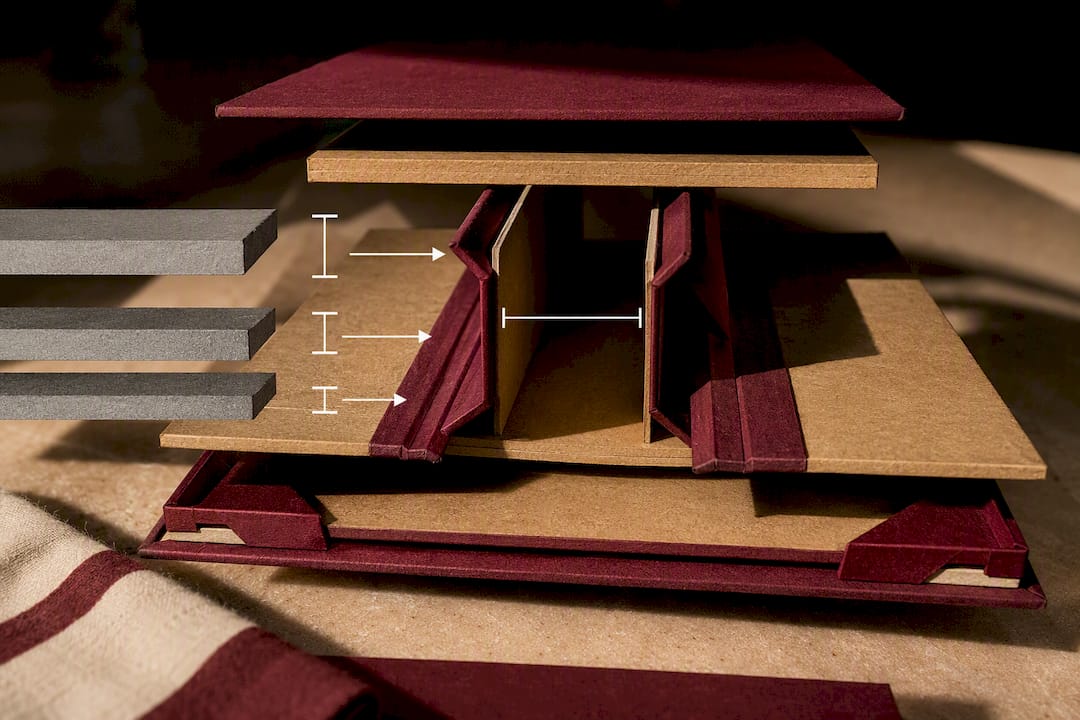
Board thickness drives both the tactile weight and the structural integrity of a book style box, and it’s the single most under-specified detail in early briefs. Most premium book style boxes use **2–3mm 灰板**,其中 2mm 更适合轻量化妆品,3mm 更适合酒类礼盒或五金配件等较重产品。板材太薄,经过几次开合后书脊会显得软;板材过厚,则会明显增加运输重量,却未必带来同等比例的高级感提升。
外部裱面材料大致可以分为三类:
- *涂布或未涂布印刷纸** — the most economical, works well with foil and litho printing
- *纹理纸或棉纤维纸** — add a tactile layer that reads as premium before the customer even opens the box
- *布料或复合裱面** — used for high-end collector editions where durability under repeated handling matters
Craft tutorials and DIY sources often show book-shaped boxes made from folded paperboard rather than true rigid construction, and the difference shows up immediately in hand. A 折叠纸板书本盒 will flex and dent in shipping in a way that a properly wrapped rigid board simply won’t.
内部衬纸的重要性往往高于很多品牌团队的预期。盒盖打开时,如果内衬颜色与外部形成明显对比,通常是最经济的提升高级感方式之一,而且完全不需要增加外部印刷工艺。
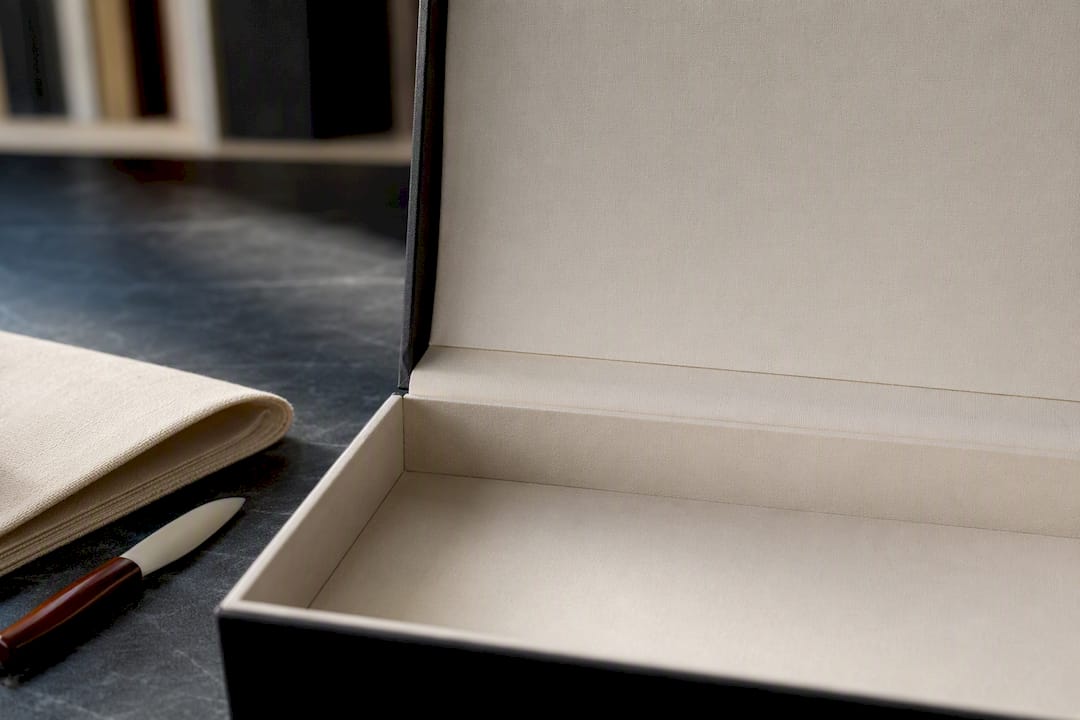
**Pro Tip:** _如果预算只够升级一个表面,优先升级内衬而不是外部裱面。外部负责在货架上吸引消费者,而内衬则负责在开盒的第一秒提升体验。_
Construction quality also determines how the box survives transit. A well-wrapped spine with reinforced corners tolerates repeated handling on a retail floor far better than a lightly taped equivalent, which is worth weighing against your 精品硬盒生产方案 before finalizing a spec.
书本式盒应该选择哪种闭合方式?
Closure choice comes down to how the box will actually be handled, not just how it looks in a render. **磁吸闭合** are the default for most book style boxes today, and the strength you need depends entirely on lid weight and hinge tension. Suppliers commonly use thin-profile embedded magnets glued discreetly into the board, a detail visible across PakFactory 灵感案例 as the standard approach for premium formats.
- *内嵌磁铁** — invisible from the outside, ideal when the brand wants a seamless closure with no visible hardware
- *丝带闭合** — decorative and brand-forward, but they wear out faster under repeated retail handling and work best for one-time gifting rather than shelf display
- *机械搭扣或螺丝柱** — reserved for heavier products or boxes that need to survive repeated opening in a retail environment, like sample kits or demo units
For light gift items opened once, a ribbon or single small magnet is plenty. For anything over a pound, or anything that will be opened and closed dozens of times on a display table, go with dual embedded magnets or a reinforced clasp. If your box will double as long-term storage, a 磁吸闭合系统 built for repeat use is worth the marginal cost over a decorative ribbon.
烫箔、压纹等工艺会如何影响设计?
Lamination sets the baseline before any special effect touches the surface. **哑膜** softens color and resists fingerprints, which matters on dark or glossy cover stocks that show handling marks quickly. **亮膜** sharpens contrast and saturates photography well but shows every fingerprint within days of shelf handling. **柔感覆膜** adds a velvet-like hand feel that’s become a near-default for fragrance and cosmetics packaging because it signals premium before a customer reads a single word.
特殊表面工艺通常叠加在这些基础效果之上:
- *烫箔** — works best on darker or matte cover stocks where metallic contrast pops
- *击凸或压凹** — adds a tactile dimension but requires simpler line art; fine detail gets lost in the pressing
- *局部 UV** — creates a gloss highlight against a matte field, commonly paired with foil for logo treatments
纹理裱纸搭配烫箔,是供应商案例和包装灵感图库中最常见的组合之一,而且确实有充分理由。这种组合上镜效果好,也更能承受拿取摩擦,不容易像某些未涂布纸那样出现烫箔掉边。
每增加一种表面工艺,都会提高成本并延长交期,因为烫箔和压纹都需要在普通胶印之外增加独立模具和加工步骤。如果同时考虑多种效果,建议优先选择一个主工艺,而不是把三种全部叠加在一起。尤其在较小面板上同时使用烫箔、压纹和局部 UV,往往会显得繁杂,而不是高级。
书本式盒的内托应该如何设计?
当产品易碎、较重,或者本身非常值得展示时,内部陈列设计才真正体现其价值。应先根据产品选择内托类型,而不是反过来让产品迁就内托。
- *硬质内托** work for boxed sets with multiple fixed components, like a fragrance and lotion duo.
- *模切泡棉或纸浆托** suit fragile single items, cradling glass or ceramic pieces so they can’t shift in transit, a pairing seen often in Pacdora’s product galleries.
- *模塑纸浆内托** offer a lighter, more sustainable middle ground between foam and rigid board, though at a slightly softer finish quality.
首先测量产品最宽位置,然后每边大约预留 1–2mm 的间隙。太紧会导致产品难以放入,太松则会在运输中晃动。对于玻璃产品,应让泡棉内托深度足以使产品完全低于盒口,这样盒盖闭合时不会直接对产品施压。
如何正确准备刀模和样品?
第一版样品能否把书本式盒做对,很大程度取决于刀模需求是否足够精确。书脊宽度必须同时考虑纸板厚度和裱纸余量,而不能只参考产品本身尺寸。这也是第一版样品最容易出现闭合错位的原因。
- Provide exact product dimensions **加上** any packaging inside it, like an insert or tissue layer, not just the bare item
- 把间隙要求直接标注在刀模文件上,而不是单独写在邮件里,这样生产人员在模切时就能看到
- 确认书脊宽度已经包含铰链胶带和纸板厚度,否则书脊太窄会导致开盖时卡住
- 大货前先制作实物样,并手工检查适配度、开合弧度和闭合对位
A detailed 精品硬盒刀模指南 walks through the tolerance notes that prevent the most common rework requests. The single biggest avoidable error: submitting a dieline with the product’s outer dimensions but no clearance allowance, which almost always produces a first sample that’s too tight to close smoothly.
交期、起订量和成本通常如何?
为书本式盒做预算时,需要同时考虑三个变量:打样时间、最低起订量和一次性模具费用。相比普通折叠纸盒,书本式盒的样品开发通常更久,因为铰链和内衬在大货前都需要单独检查适配效果。
- *打样** generally extends further out when multiple finishes or a custom insert are involved, since each element needs its own approval round
- *MOQ 和阶梯报价** mean unit cost drops meaningfully as order volume rises, since setup and tooling costs get spread across more units
- *模具或刀模费用** for embossing, foil stamping, or a custom-shaped insert are typically one-time charges that apply once per design, not per reorder
- *国际运输** adds its own lead time on top of production, and consolidating a book style box order with related packaging, like a 印刷运输箱 for retail distribution, can simplify logistics
在定制精品硬盒预算中,买家最容易低估的往往是交期、MOQ 门槛和模具费用,而这些因素最终对单价的影响甚至可能超过外部裱面材料本身。
书本式盒有哪些可持续材料选择?
**FSC 和 PEFC 认证** confirm the board and paper in your box came from responsibly managed forestry, and more retail buyers now require proof of one before approving a packaging supplier. Ask for the certificate number, not just a claim of certification, since chain-of-custody documentation is what actually holds up in an audit.
- *再生纸板** costs less and reduces environmental impact, though it can show a slightly grayer core edge and less crisp emboss detail than virgin board
- *原生纸板** holds finer detail for deep embossing and foil work, making it the better pick when finish precision is the priority
- *混合材料内衬**,例如泡棉与布料粘合,会增加回收难度,即使外盒本身可以回收
- *金属箔** can also interfere with paper recycling streams depending on local processing capability
**Pro Tip:** _应直接要求供应商提供 FSC 产销监管链文件,而不是接受笼统的可持续声明。一个可以核验的证书编号,比规格表里一整段环保文案更有价值。_
为什么这份指南来自厂家的实际生产经验
这份指南基于 Yuan Packaging 超过 25 年的精品硬盒生产经验,服务范围覆盖美妆、酒类和生活方式品牌,并已向全球约 5,000 个品牌交付超过 1 亿件产品。这些实际经验涵盖本文提到的完整流程:打样、小批量原型,以及书本式盒和相关精品硬盒的大规模生产。准备向供应商提交项目需求的买家,可以在大货前先了解 Yuan Packaging 的精品硬盒能力,或直接索取样品和技术资料。
大多数书本式盒建议真正忽略了什么
大多数书本式盒指南都停留在美学层面:裱纸、烫箔、压纹,以及所谓的高级视觉语言。这其实只是比较容易的一半。真正更难、也真正决定盒子能否完整通过零售供应链的,是规格控制:间隙公差、书脊宽度计算,以及铰链在反复使用下的耐久性。品牌团队因为书脊没有给纸板厚度留够空间而浪费的时间,往往比任何表面工艺选择造成的问题都更多。
传统建议也常常低估内衬的重要性。很多人只关注外部裱面,但在最关键的开盒时刻,消费者真正看到的其实是内部。内衬往往是成本最低、感知价值回报最高的升级方式,却经常被忽略,反而把预算花在并不必要的第四种外部工艺上。
如果第一次向供应商提交书本式盒需求,应先讨论刀模,再讨论表面工艺。一个书脊卡住、却有漂亮烫箔的盒子,远不如一个外观简单但每次都能顺畅打开的盒子。
准备从规格表进入实物打样了吗?
像本文这样的规格要求,可以直接转化为可操作的实物样,而不需要你独自理解刀模和公差。设计和打样团队可以在生产前审核刀模,在问题变成返工样品之前提前发现间隙和铰链风险。
Beyond book style boxes, the team supports the full range of finishes covered above, foil stamping, embossing, spot UV, and soft-touch lamination, plus sustainable board and FSC-certified material options for brands that need documentation, not just claims, examples of which you can find in 定制鞋履生产 production. Whether you’re sourcing your first collector edition run or scaling an existing luxury line, the 精品礼品硬盒产品系列 covers formats from book style hinges to shoulder-neck boxes in one place. Explore the full packaging product range and request a quote or sample to get a real prototype into your hands before you commit to a production order.
参考资料
常见问题
书本式盒通常用于什么?
书本式盒通常用于高端礼赠、收藏版或限量版产品,以及高端零售展示,特别适合希望消费者在实际开盒过程中感受到设计感和仪式感,而不仅仅是功能性的品牌。
书本式盒应该使用多厚的纸板?
大多数书本式盒使用 2–3mm 精品硬板。2mm 更适合轻量化妆品包装,而 3mm 更适合酒类套装等较重产品。
磁吸闭合比丝带闭合更好吗?
磁吸闭合,尤其是内嵌薄型磁铁,在零售环境中反复开合时更耐用;丝带则更适合一次性礼赠开启,但频繁使用时磨损更快。
书本式盒可以使用再生材料吗?
可以。再生纸板是书本式盒的常见选择,不过如果最重视压纹和烫箔细节精度,原生板材通常表现更好。
书本式盒样品最常见的返工原因是什么?
书脊宽度没有为纸板厚度和铰链胶带预留足够空间,是第一版样品出现闭合错位最常见的原因,因此打样前进行详细刀模审核非常重要。