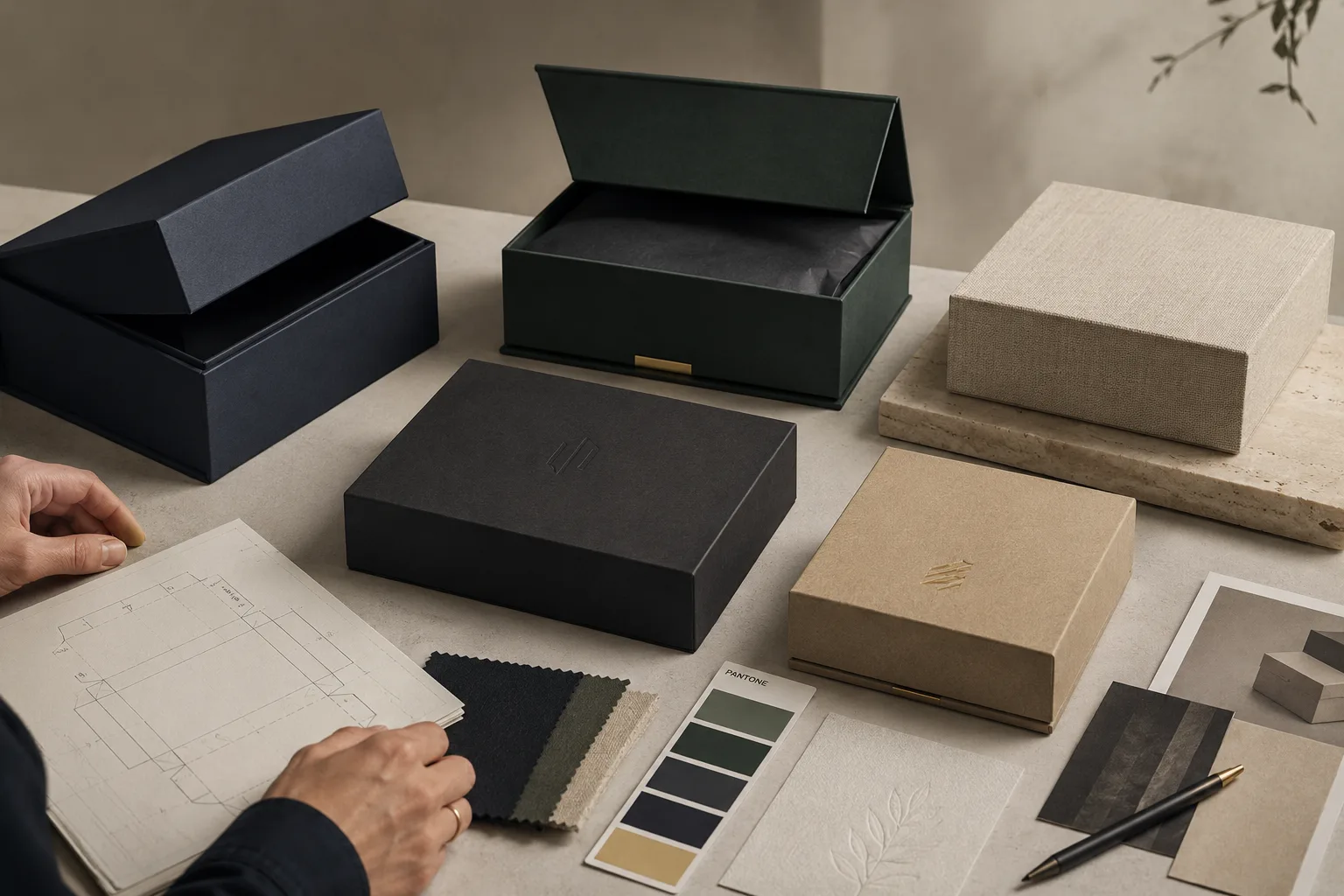
The premium gift box market is shifting. After years in which maximalist decoration — heavy foiling, complex embossing, multiple special finishes layered over each other — defined the category, the brands gaining market share in 2024 are making more considered choices. The shift is not towards austerity, but towards intentionality: finishes that reinforce the brand's specific positioning rather than simply signalling expense.
Structural design
Structural design is receiving more attention than at any point in the past decade. Brands are investing in box forms that create a distinctive opening experience — the slow, satisfying resistance of a well-tensioned lid; a magnetic closure that rewards the consumer's sense of touch before they see the product. These structural details require precision manufacturing, and they are increasingly used as a differentiator by brands who recognise that their packaging is the first physical expression of the product experience.
Material and surface
Material selection is moving away from heavily coated stocks toward surfaces that can be felt as well as seen. Uncoated boards with soft-touch lamination, natural kraft with selective foiling, linen-texture papers with blind emboss — these combinations create packaging that feels as premium as it looks, which matters in a market where photography can reproduce the visual experience but cannot reproduce the tactile one.
Discuss your packaging project
Colour and restraint
Colour is becoming more specific and more restrained. Pantone colours matched to precise brand standards, applied across minimal surface areas, are replacing the multi-colour decorative schemes that were standard five years ago. Deep single-colour boxes — navy, forest green, warm black — with a single foil element are performing particularly well in the spirits and cosmetics categories, where the packaging needs to work in retail display and in social media photography simultaneously.
Planning your gift packaging
For brands planning gift packaging for 2025, our recommendation is to begin structural development earlier than you think necessary. The opening experience your box creates is a design decision, not a production variable — and it requires iteration. Our prototyping team can produce presentation-quality samples quickly, allowing you to evaluate structural options before committing to tooling.
Frequently Asked Questions
What gift box closure types are available?
Common options include magnetic closures, book-style hinged lids, drawer-style sliding boxes, and lift-off lids. Each creates a different opening experience and requires specific manufacturing precision.
What materials are trending in premium gift boxes?
Uncoated boards with soft-touch lamination, natural kraft with selective foiling, and linen-texture papers with blind emboss — surfaces that feel as premium as they look.
How early should I start gift box structural development?
Start earlier than you think necessary. The opening experience is a design decision that requires iteration — our prototyping team can produce presentation-quality samples quickly for evaluation.