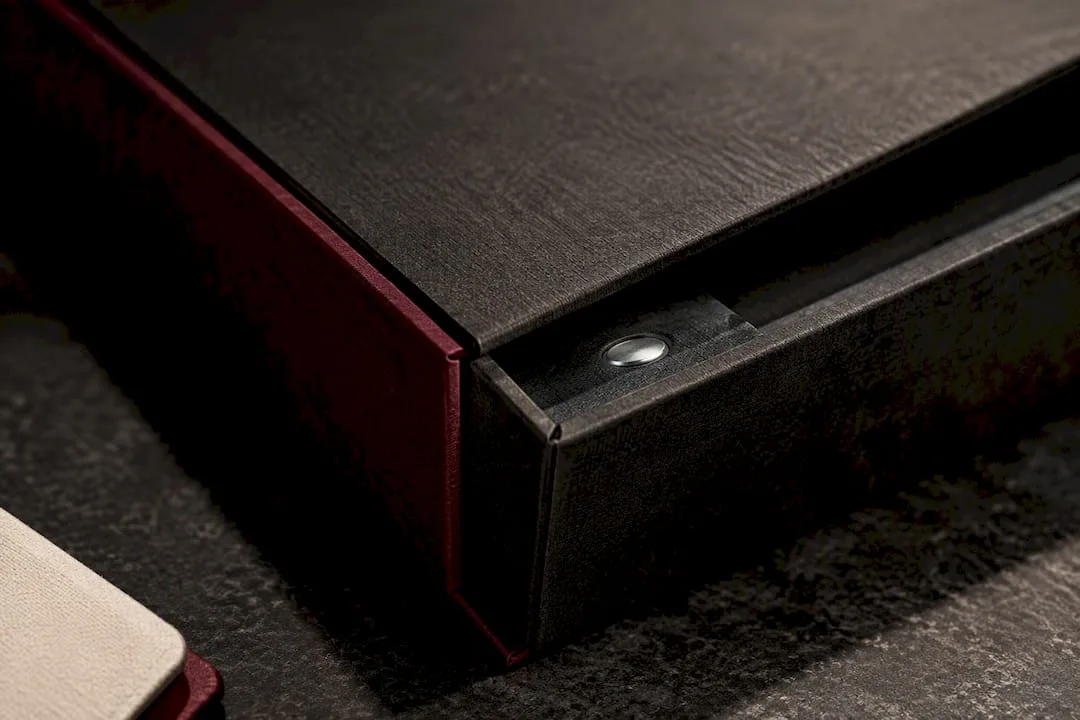
A hidden neodymium magnet closure, sized to the lid and matched to board thickness, gives the most premium feel and the most reliable performance for rigid gift boxes. Prioritize product weight, board GSM, lip height, and a real prototype built with the final wrap before you commit to production. Start with a dieline, run a digital mockup, and build one physical sample before you order anything at scale.
TL;DR: Ensure your magnetic closure uses neodymium magnets with the correct size and placement based on lid width and product weight to maintain durability. Build a final prototype with actual wrap material and magnet pockets to accurately assess closure feel, alignment, and potential failures before large-scale production. Confirm that your dieline, structural rules, and magnet specifications align with your manufacturer’s expectations, especially regarding material thickness and fold allowances. Pick the appropriate magnet type and retention method—magnet-to-magnet for strength or magnet-to-steel for affordability—while verifying polarity and offset edges to prevent cracking. Recognize that most magnetic boxes are not fully recyclable due to embedded magnets, but choosing FSC-certified board and minimizing adhesive around the magnet can reduce environmental impact.
Table of Contents
- Which Tools Turn a Magnetic Box Concept Into a Factory-Ready File?
- How Do You Set the Structural Rules for a Magnetic Box?
- What Magnet Type and Placement Actually Work for Rigid Boxes?
- How Do Board and Finish Choices Affect Magnetic Closure Strength?
- How Should You Test a Magnetic Box Prototype Before Production?
- What Belongs in a Magnetic Box RFQ or Spec Sheet?
- How Does an Experienced Manufacturer Reduce Magnetic Box Risk?
- Do Magnetic Closures Wear Out With Repeated Use?
- Are Magnets in Packaging Safe for Consumers?
- How Much Do Magnet Choices Add to Box Production Cost?
- Can Magnetic Box Components Be Recycled?
- A Practical Take: Build Simple, Test Early, Lock Late
- How Yuanpackaging Helps You Order a Magnetic Box With Confidence
- Sources
- FAQ
Which Tools Turn a Magnetic Box Concept Into a Factory-Ready File?
Every magnetic box design starts as a flat drawing before it becomes a physical object. A 2D dieline defines the structural cuts, scores, and fold lines your factory needs to build a proof, while a 3D mockup lets stakeholders see how the finished box will photograph and feel before anyone cuts board.
Parametric generators add a layer most designers skip too early. A tool like the parametric magnetic box model on Printables lets you adjust wall thickness, lip height, and magnet diameter, then export an STL to check whether the magnet pocket and lid actually fit before you touch a physical sample.
Factories typically expect a specific set of files:
- PDF dieline for the structural layout and score lines
- AI or CDR files for print-ready artwork and finish placement
- STEP, IGES, or STL files for complex lids, magnet pockets, or molded inserts
- PNG, 4K render, or MP4 mockup for internal approval before sampling
Run the 3D mockup past your team specifically to check foil or spot UV telegraphing and lid alignment. Catching a misaligned magnet pocket on screen costs nothing; catching it after tooling costs a full sample cycle.
How Do You Set the Structural Rules for a Magnetic Box?
Structure decides whether your magnetic closure feels solid or flimsy, and it has to be locked before magnet selection even starts. Get these five elements right and the closure almost designs itself.
- Separate inner and outer dimensions. Your inner dimension has to account for wrap paper thickness and any lining material, typically adding 1 to 3 millimeters per wall depending on your board and wrap combination.
- Set the lip height deliberately. The lip, or shelf, is what the lid rests against when closed. Too shallow and the lid wobbles; too deep and you lose usable depth for the product inside.
- Match wall thickness to product weight. Manufacturer guidance generally maps board weight to product weight, with roughly 800 to 1,000 GSM (1.5 to 1.8mm) suited to items up to 1 kilogram and heavier boards reserved for bulkier kits.
- Score the hinge with fold allowance built in. A hinge scored too tight on heavy board delaminates within a handful of open cycles.
- Reinforce corners and the hinge fold on any box carrying board above 1,200 GSM, since that’s where cracking shows up first.
Get the dieline and material rules confirmed with your manufacturer before finalizing artwork placement, since small dimensional shifts move where your magnet pocket lands.
What Magnet Type and Placement Actually Work for Rigid Boxes?
Neodymium is the standard for premium rigid boxes because it delivers a strong pull-to-size ratio and the self-aligning snap that makes a lid feel engineered rather than just closed. Magnet-to-magnet closures create that longer-range attraction shoppers associate with high-end packaging, while flexible magnetic strips work better on thin, compliant latches where a rigid disc would crack the board.
Sizing depends on lid width and contents weight, not habit. A narrow lid on a light cosmetic box needs less pull than a wide lid holding a heavier spirits gift set, and oversizing slightly costs less than a returned box with a lid that pops open in transit.
- Magnet-to-magnet systems give the strongest, most satisfying snap and work best on symmetrical lids.
- Magnet-to-steel setups cost less and simplify alignment, though the closure feels marginally less premium.
- PSA (pressure-sensitive adhesive) suits flat, smooth board surfaces.
- Liquid glue performs better on textured or heavily laminated board where PSA loses grip.
- Mechanical retention with a steel backer prevents pull-through on high-force closures, spreading load across the structure instead of concentrating it on adhesive alone.
Always verify polarity before assembly, keep magnets offset from board edges to avoid cracking, and run dual magnets on any lid wider than roughly 10 inches to stop corner lift.
Pro Tip: Match magnet size, adhesive method, and board thickness as a set rather than optimizing one variable alone. A magnet strong enough for the job but paired with the wrong retention method is how you get local peel or pull-through six months into production.
How Do Board and Finish Choices Affect Magnetic Closure Strength?
Board thickness does double duty in a magnetic box: it supports the structure and it sets the gap between magnet and target. Thicker board on heavier products isn’t just about preventing sag, it also determines how close your two magnets, or magnet and steel plate, actually sit to each other.
Wrap paper and lamination add distance on top of that board gap, and every added layer reduces holding force slightly. Compensate with a marginally larger magnet diameter or by relocating the magnet pocket closer to the surface rather than pushing pull force higher than the board can handle.
Finish choices carry their own tradeoffs:
- Soft-touch lamination feels premium but adds gap thickness that needs compensating in magnet spec.
- Foil stamping and spot UV near the magnet pocket area risk telegraphing if the pocket depth isn’t accounted for in tooling.
- Embossing close to a magnet pocket can create visible surface distortion once the magnet is seated.
Magnet coating matters even when the magnet is fully hidden. Coating and corrosion protection affect long-term appearance, since a corroded magnet can stain wrap paper from the inside if humidity gets into the pocket during storage or shipping.
How Should You Test a Magnetic Box Prototype Before Production?
Loose magnets on a workbench tell you almost nothing about how a finished box will perform. Prototypes need the actual wrap, insert, and magnet pockets in place because wrap thickness and lamination change the magnetic gap in ways a bare board sample never reveals.
Run this sequence before signing off on any production order:
- Build one physical prototype with final wrap, insert, and magnet already seated in the pocket.
- Open and close the lid repeatedly, checking that alignment and snap feel consistent, not just on the first few tries.
- Inspect for telegraphing at foil or emboss zones near the magnet pocket, along with edge gaps and hinge delamination.
- Check insert interference, since a snug insert can throw off lid closure by a millimeter that matters.
- For higher-risk shipments, request an ASTM D4169 distribution test report or an equivalent from your manufacturer.
Common failure modes tend to surface early. Watch retention closely between 50 and 100 open/close cycles, since that’s typically where a marginal adhesive bond or an undersized magnet first shows wear.
What Belongs in a Magnetic Box RFQ or Spec Sheet?
An incomplete RFQ is the single biggest reason quotes come back wrong or samples arrive with the wrong closure feel. Your spec sheet should cover box dimensions (inner and outer), board GSM, magnet type and exact placement, adhesive or mechanical retention method, finish list, insert design, order quantity, and target lead time.
Sampling typically moves through three stages: a digital proof, a flat mockup, then a physical sample, with manufacturers describing a spec-to-quote-to-mockup-to-sample workflow that usually runs 4 to 14 days depending on complexity and finish count.
- Ask about MOQ upfront, since minimums vary widely by finish complexity and board grade.
- Request a low-run proofing option or pilot run if you’re testing a new SKU before committing to full volume.
- For freight-sensitive orders, ask whether a flat-pack collapsible build is available, since it reduces shipping and warehouse footprint while keeping the magnetic snap intact once assembled.
- Request pull-force test data, production photos, and pre-shipment quality checks before goods leave the factory.
How Does an Experienced Manufacturer Reduce Magnetic Box Risk?
A manufacturer’s track record is the fastest signal of whether it can actually deliver a magnetic closure that survives real shipping and handling. Yuanpackaging has produced over 100 million packaging units for 5,000 brands worldwide across more than 25 years, spanning beauty, spirits, and lifestyle categories where closure feel directly affects shelf presence.
That scale shows up in the services available to brand teams designing a magnetic box:
- Prototyping and sampling before any volume commitment
- Small-run to high-volume production runs
- Finishing options including foil stamping, embossing, and soft-touch lamination
- Sustainable, FSC-certified material options for brands with recyclability targets
A manufacturing partner with this range typically coordinates magnet attachment choice, sample verification, and finishing sequencing as one process, which is exactly where telegraphing and pull-through failures tend to slip through when handled piecemeal.
Do Magnetic Closures Wear Out With Repeated Use?
Neodymium magnets themselves rarely degrade from repeated opening and closing. The failure point almost always sits somewhere else: the adhesive bond loosens, the board around the pocket fatigues, or the hinge that positions the lid over the magnet starts to sag.

PSA adhesive holds up well on smooth, flat board but loses grip faster on textured or heavily laminated surfaces exposed to handling oils and humidity over months of use. Liquid glue bonds tend to outlast PSA under those conditions, which is part of why glue is the standard recommendation for textured board.
Mechanical retention, magnet seated in a through-hole against a steel backer, generally outperforms adhesive-only setups over the box’s lifespan because pull force is distributed across the board structure rather than concentrated on a glue line. That matters most for gift boxes meant for repeated use, like a spirits presentation box a customer reopens for years, versus a single-use unboxing where the magnet only needs to survive one open cycle before the box gets set on a shelf.
Hinge wear deserves equal attention. A lid that no longer sits flush after repeated use throws off magnet alignment even when the magnet and adhesive are both intact, so hinge scoring and fold allowance from the structural design stage directly affect how long the closure feels tight.
Are Magnets in Packaging Safe for Consumers?
Magnets embedded in rigid box lids are generally safe when they’re fully enclosed within the board and wrap, with no exposed edge a consumer could pry loose. The risk profile changes sharply if the magnet detaches, particularly for packaging that might reach households with small children, since small high-strength magnets are a known ingestion hazard when separated from their housing.
Mechanical retention with a steel backer reduces detachment risk more reliably than adhesive alone, especially over a box’s full handling lifespan. For any packaging category where child access is plausible, gift sets, food-adjacent categories, or lifestyle boxes sold at retail, specify retention methods that don’t depend solely on glue holding for the product’s entire shelf life.
Corrosion is a secondary safety and quality concern. A magnet coating that degrades in humid storage conditions can stain or weaken the wrap around it, occasionally to the point of the magnet becoming loose inside its own pocket. Specifying a corrosion-resistant coating at the RFQ stage costs little and closes off a failure mode that’s expensive to trace once boxes are already in the field.
How Much Do Magnet Choices Add to Box Production Cost?
Magnet type and placement move your per-unit cost more than most brand teams expect going into their first RFQ. Neodymium costs more than steel-target alternatives, and that gap widens with magnet size, since larger discs for wider lids or heavier products cost proportionally more per unit at volume.
Placement and attachment method add a second cost layer. Mechanical retention with a steel backer requires more tooling precision and assembly steps than a simple adhesive placement, which raises unit cost but lowers long-term failure and return rates. PSA is the cheapest attachment method upfront; liquid glue costs slightly more in labor time but performs better on textured board, avoiding the higher cost of reworked units.
Dual-magnet setups on wide lids essentially double magnet material cost for that closure point, though they’re often the only way to prevent corner lift on box widths beyond roughly 10 inches. Weigh that against the cost of complaints or returns from a lid that pops open in shipping.
The flat-pack construction option changes the cost equation entirely by cutting freight and warehouse costs rather than magnet costs directly. For brands shipping internationally or storing large volumes, a flat-pack magnetic closure build can offset a more premium magnet spec through savings elsewhere in the supply chain, keeping total landed cost competitive with a simpler closure shipped assembled.

Can Magnetic Box Components Be Recycled?
Rigid board itself is typically recyclable, and FSC-certified board options are widely available for brands prioritizing sustainable sourcing. The magnet is where recyclability gets more complicated, since neodymium and steel components generally need to be separated from the board and paper wrap before either material stream can be processed properly.
Hidden magnet placement, the feature that makes premium closures feel so seamless, works against easy end-of-life separation. A consumer discarding the box has no simple way to remove the magnet before recycling the board, so most magnetic rigid boxes end up in general waste streams rather than paper recycling unless a facility specifically processes mixed packaging.
Brands serious about recyclability have a few real levers. Choosing FSC-certified or recycled-content board reduces the environmental footprint of the majority material in the box, even if the magnet component remains a small non-recyclable element. Minimizing adhesive coverage around the magnet pocket also simplifies any manual disassembly a consumer or recycler might attempt. None of these fully solve the mixed-material problem inherent to magnetic closures, but they meaningfully reduce the footprint of the box as a whole, which matters more for high-volume gift and retail packaging than for a single unit.
A Practical Take: Build Simple, Test Early, Lock Late
Prototype with final materials from day one rather than treating it as a late-stage formality. When choosing magnet size, err slightly oversized rather than pushing tolerances to the edge of what the board can bear. Lock finishes and wrap specifications before full production, since a last-minute lamination swap changes the magnetic gap you already tested and approved.
— Anthony
How Yuanpackaging Helps You Order a Magnetic Box With Confidence
Yuanpackaging manufactures custom magnetic closure rigid boxes at a scale that lets brand teams move from dieline to finished sample without guessing at magnet placement or board specs on their own. The advantage over piecing together a design with a generic box supplier is coordination: prototyping, magnet attachment method, and finish sequencing (foil, embossing, soft-touch lamination) get handled as one process instead of separate handoffs where telegraphing and pull-through issues tend to slip through.
Sustainable board options, including FSC-certified material, can be chosen by brands that need recyclability alongside a premium closure feel. If you’re ready to move past sketches, request a dieline review or order a physical sample through the rigid gift box product page to see how your magnet spec performs with your actual wrap and finish before committing to a full production run.
Sources
FAQ
What Is the Best Magnet Type for a Rigid Gift Box?
Neodymium magnets are the standard choice for premium rigid boxes because they deliver strong holding power relative to their size, creating the self-aligning snap associated with high-end packaging. Flexible magnetic strips work better on thin, compliant latches where a rigid disc risks cracking the board.
How Thick Should the Board Be for a Magnetic Box?
Board thickness should scale with product weight, with manufacturer guidance suggesting roughly 800 to 1,000 GSM for items up to 1 kilogram and higher GSM ranges for heavier kits. Thicker board also reduces sag, which keeps magnet alignment consistent over the box’s lifespan.
How Many Open and Close Cycles Should a Prototype Survive?
There’s no universal cycle count, but common failure modes like hinge delamination or reduced pull force tend to surface between 50 and 100 open and close cycles during testing. Testing with the final wrap and magnet pocket in place, rather than loose magnets, is the only reliable way to catch these issues before full production.
Does Yuanpackaging Offer Custom Magnetic Box Design and Production?
Yuanpackaging produces custom magnetic closure rigid boxes with prototyping, finishing, and sustainable material options for beauty, spirits, and lifestyle brands. Pricing depends on specification, so exact quotes are available on request through the rigid box product page.
Are Magnetic Box Components Recyclable?
The board and paper components of a magnetic box are generally recyclable, especially with FSC-certified material, but the embedded magnet typically needs separation before recycling can happen cleanly. Hidden magnet placement, while good for aesthetics, makes that separation harder for consumers, which is why most magnetic boxes end up in general waste unless a facility processes mixed packaging materials.