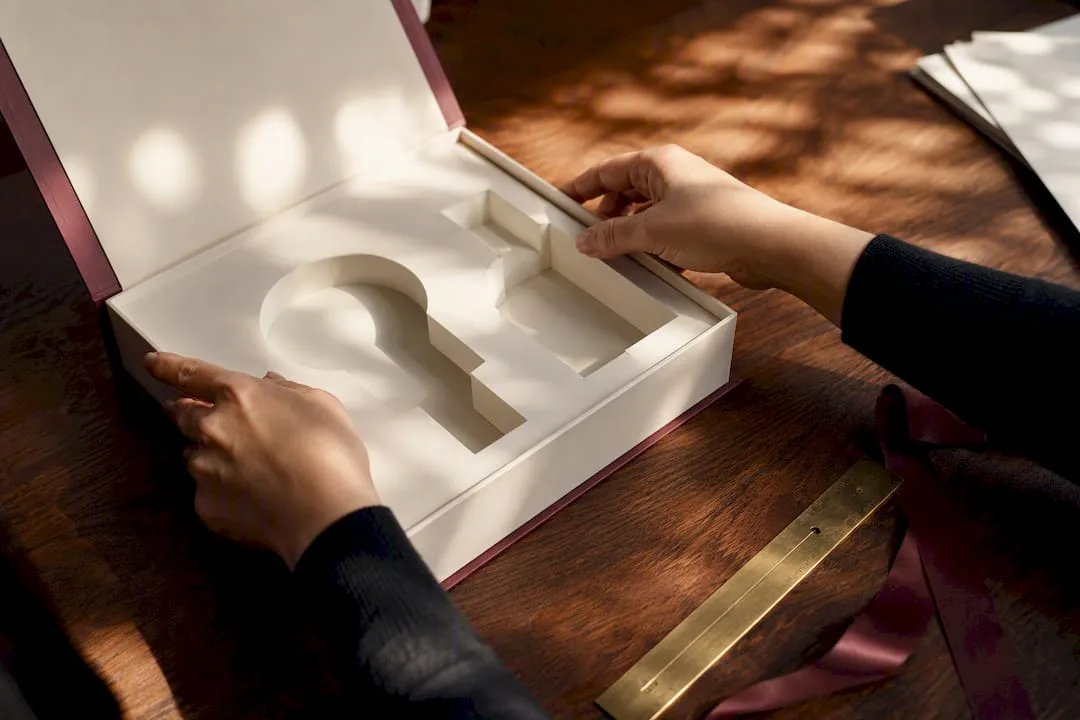
For lipsticks, mascaras, and pressed powders, folding cartons handle the job at the lowest cost per unit. For serums, skincare jars, and gift sets, rigid boxes with custom inserts protect the product and deliver the unboxing moment premium brands need. For subscription samples or tester programs, compact sample boxes keep costs down at low volumes.
The trade-off is straightforward: folding cartons win on cost and speed, rigid boxes win on perceived luxury and lead time runs longer, and mailers win when the box also has to survive a shipping carrier. Once you know your format, the next step is simple:
- Gather your product dimensions and quantity needed
- Choose a finish direction (matte, gloss, foil, emboss)
- Request a sample and quote before committing to a production run
Key Takeaways
Matching product form to box type first, then specifying materials and finishes against a clear dieline, is what prevents costly revisions and missed launch dates.
| Point | Details |
|---|---|
| Match format to product | Folding cartons for lipstick and powders, rigid boxes with inserts for bottles and gift sets. |
| Reserve label space early | Build the ingredient panel and principal display area into the dieline before finalizing artwork. |
| Expect standard lead times | Production runs 15 to 20 business days for 100+ pieces; samples take 3 to 5 business days. |
| Finishing raises cost and time | Foil stamping, embossing, and spot UV increase perceived value but require tooling. |
| Vet suppliers on specifics | Confirm capacity, in-house finishing, sample policy, and QC before committing to a run. |
| Yuan Packaging fits luxury runs | Over 25 years producing rigid boxes, cartons, and labels with in-house finishing for beauty brands. |
Table of Contents
- What Types of Cosmetic Box Packaging Should You Consider?
- What Materials and Finishes Affect Perceived Value?
- How Do You Get an Accurate Quote for Custom Cosmetic Packaging?
- Are Cosmetic Boxes Recyclable, and Where Does Labeling Go?
- How Do You Choose a Cosmetic Packaging Supplier?
- Yuan Packaging’s Manufacturing Track Record
- Sources
- FAQ
What Types of Cosmetic Box Packaging Should You Consider?
Four formats cover nearly every cosmetic product on the market, and picking the wrong one is the most common (and costly) packaging mistake brands make.
- Folding cartons. Built from single-ply cardstock, these are the workhorse of makeup box packaging. Lipstick sleeves, mascara boxes, pressed powder compacts, and foundation cartons all typically ship in this format because it is light, printable, and cost-sensitive at scale. Suppliers commonly offer folding carton styles with online previews so you can approve a design before print.
- Rigid boxes. Thicker, sturdier, and built around a wrap of decorative paper over rigid chipboard. Rigid boxes suit glass bottles, skincare jars, and multi-piece gift sets where drop protection and a slow-open lid reveal matter. Inserts (foam, molded pulp, or corrugated trays) become necessary here, not optional.
- Mailers and shipper boxes. For direct-to-consumer brands, the outer box has to survive freight handling. Corrugated mailers with printed interiors double as both shipping protection and unboxing content.
- Sample and shade-family boxes. Compact, low-cost cartons sized for testers, minis, or subscription box inserts. These run smaller MOQs and simpler finishes since the format prioritizes volume over spectacle.
What Materials and Finishes Affect Perceived Value?
Board weight is where cost and quality separate. Cardstock is measured in points, and the difference between a 14 pt and a 24 pt sheet is the difference between a flimsy sleeve and a box that feels substantial in a customer’s hand. Cardstock and coating choices materially shape how premium a box reads on shelf.
- 14 pt to 18 pt cardstock: Suits lightweight cartons for lipstick, mascara, or single-item retail boxes.
- 24 pt cardstock or heavier: Better for boxes that need to hold shape without an insert, like foundation cartons or compacts.
- Rigid chipboard: The standard for heavy glass bottles and multi-item gift sets that need structural rigidity, not just thick paper.
- Coatings: Matte finishes read as understated and premium; gloss reflects light and pops color; soft-touch coatings add a tactile, velvet-like feel that skincare brands favor.
- Foil stamping, embossing, spot UV: These raise perceived value the fastest but add cost and often extend lead time because of tooling requirements.
Pro Tip: If your budget only stretches to one finish upgrade, choose foil stamping over spot UV. Foil reads as more expensive on camera and in-store lighting, which matters more than it sounds if your product sells partly on Instagram unboxing.
Inserts deserve their own line item. Beyond looks, a well-fitted insert reduces breakage claims on glass bottles and keeps loose components (brushes, mirrors, sample vials) from rattling during transit.
How Do You Get an Accurate Quote for Custom Cosmetic Packaging?
Getting a workable quote starts with numbers, not adjectives. Manufacturers need exact interior dimensions, not “medium size,” and the fastest way to blow a production timeline is sending vague specs that require multiple rounds of revision.
- Measure the product, not the guess. Record height, width, depth, and add clearance (usually 1 to 3 millimeters per side) so the item slides in without friction.
- Build or request a dieline. This flat template shows fold lines, glue tabs, and printable area. Reserve space here for required label copy before the design is locked.
- Confirm your MOQ. Standard folding cartons often start at lower minimums than rigid boxes, since rigid construction and custom tooling raise the economics of small runs.
- Set your timeline expectations. Supplier guides say production commonly runs 15 to 20 business days for standard orders. Rigid boxes with heavy finishing can run longer.
- Ask about expedited options if your launch date is fixed and non-negotiable.
Cost drivers to expect on your quote:
- Run length (larger quantities lower the per-unit price)
- Number of ink colors and coverage
- Finishing (foil, emboss, spot UV) and any required tooling
- Insert complexity (foam, pulp, or printed tray)
- Freight, especially for heavier rigid box shipments
A tight RFQ includes: product dimensions, target quantity, finish preferences, insert needs, target unit cost, and your ship-to location.
Are Cosmetic Boxes Recyclable, and Where Does Labeling Go?
Paperboard folding cartons are broadly recyclable in standard paper streams. Rigid boxes are trickier: the chipboard core recycles fine, but laminated foils and certain coatings can complicate the process depending on your local recycling stream.
- Choose water-based coatings over laminates where the finish allows it
- Avoid mixing plastic windows into an otherwise all-paper carton if recyclability is a selling point
- Foil stamping on a small area has less recycling impact than a full metallic laminate
On labeling: U.S. cosmetic packaging is governed by CFR Part 701, which sets rules for ingredient list placement and principal display panel content. These federal cosmetic labeling requirements apply regardless of where a box is manufactured, so reserve a defined ingredient panel and principal display area on your dieline before finalizing artwork, not after.
Pro Tip: Building label space into the dieline early avoids the single most common (and expensive) revision request: discovering after proofing that the ingredient panel doesn’t fit.
How Do You Choose a Cosmetic Packaging Supplier?
Run any prospective supplier through a short checklist before committing volume:
- Production capacity that matches your order size, not just your first order but your projected growth
- Finishing capability in-house (foil, emboss, spot UV) rather than outsourced, which affects both cost and lead time
- A clear, affordable sample policy before production commitment
- A documented QC process, not a verbal assurance
- Transparent lead times stated in writing
- Some evidence of sustainability practice, whether recycled substrates or FSC-certified stock
Ask directly: “What’s your standard lead time for a rigid box with foil stamping?” and “Can I get a physical sample before I commit to a production run?” A supplier who hedges on either question is a red flag. So is a quote with no MOQ breakdown or a finishing capability list that sounds suspiciously identical to every competitor’s page.
For rigid or luxury runs specifically, Yuan Packaging’s rigid box program is built around exactly this kind of specification, with finishing done in-house rather than farmed out to a third party.

Yuan Packaging’s Manufacturing Track Record
Yuanpackaging has produced custom packaging for beauty, spirits, and lifestyle brands for over 25 years, delivering more than 100 million units to over 5,000 brands globally.
- Full product range: rigid boxes, folding cartons, pressure-sensitive labels, and carrier bags
- In-house finishing: foil stamping, embossing, spot UV, and die-cutting
- End-to-end handling: prepress, tooling, print production, quality control, and global logistics
- Experience with compliance-sensitive categories including pharmaceuticals and luxury cosmetics
A Note From Steven at Yuan Packaging
The most common dieline error we catch is missing clearance around inserts, which causes jamming on the production line, not just a tight fit at home. Send us your dimensions early and we’ll flag it before tooling starts.
— Steven
How to Start a Custom Cosmetic Box Order
Once you know your format and specs, starting the order is the easy part. If you need custom folding cartons for lipstick, mascara, or powder compacts, or rigid boxes for skincare jars and gift sets, Yuanpackaging runs both in-house with finishing capability that doesn’t depend on a third-party subcontractor. That matters most when your launch date is fixed: fewer handoffs means fewer places for a timeline to slip.
Your RFQ should include product dimensions, target quantity, finish preferences, and any insert requirements. If your outer carton needs regulatory-compliant label printing alongside the box itself, mention that up front so both can be quoted and produced on the same timeline. Send your specs and Yuanpackaging will return a sample timeline and production quote so you can compare real numbers instead of estimates.
Sources
FAQ
What Box Type Works Best for Lipstick Packaging?
Folding cartons are the standard choice for lipstick, offering low-cost printability and fast production without sacrificing shelf presence.
How Long Does Custom Cosmetic Box Packaging Take to Produce?
Standard production runs 15 to 20 business days for orders of 100 or more pieces, while samples typically take 3 to 5 business days.
Do Rigid Boxes Need Inserts?
Yes, for glass bottles, jars, or multi-item gift sets, an insert prevents movement and breakage during shipping and adds to the unboxing presentation.
Where Does the Ingredient List Go on a Cosmetic Box?
U.S. regulations under CFR Part 701 govern principal display panel and ingredient list placement, so that space should be reserved on the dieline before finalizing artwork.
Can Yuan Packaging Handle Both Rigid Boxes and Folding Cartons?
Yes, Yuanpackaging produces both formats in-house along with labels, and handles finishing options like foil stamping and embossing without outsourcing.