In beauty, the packaging is part of the product. A cosmetic carton or gift box is the first thing a customer touches, the hero of the unboxing, and increasingly the deciding factor on a crowded shelf or in a social feed. For beauty brands sourcing cosmetic packaging, the challenge is balancing a premium, on-brand presentation with regulatory compliance, recyclability, and a cost that works at volume. This guide covers the components, materials, finishes, and compliance points that matter when specifying cosmetic packaging.
Table of contents
- What cosmetic packaging covers
- Material choice
- Colour accuracy
- Finishing and premium perception
- Regulatory compliance
- Sustainability in beauty
- Scaling to volume
- How to brief a cosmetic packaging project
- Summary
- Frequently asked questions
What cosmetic packaging covers
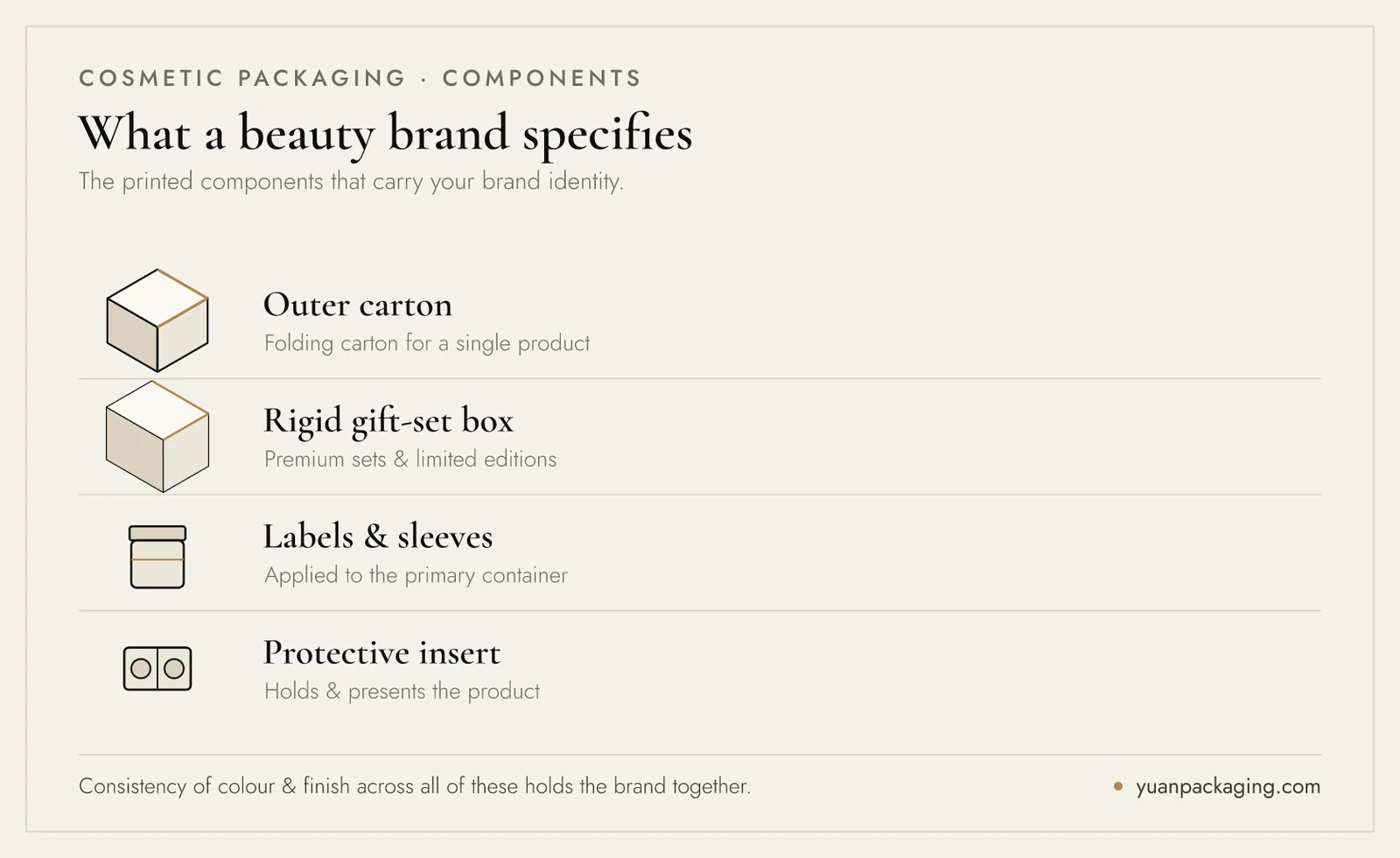
Most cosmetic packaging projects involve printed secondary and presentation packaging rather than the bottle or jar itself. The core components are the outer carton (the printed folding carton that holds a single product), the rigid gift-set box (for premium sets, collections, and limited editions), labels and sleeves (applied to the primary container), and protective inserts (cradles that hold and present the product). A brand’s identity is carried across all of these, so consistency of colour and finish between them matters.
Material choice
Material choice sets the tone before any print is applied. Folding boxboard and SBS give a clean, bright surface for vibrant cosmetic artwork; uncoated and textured papers signal a natural or clinical positioning; and heavy greyboard wrapped in specialty paper delivers the weight and rigidity expected of luxury skincare and fragrance. Increasingly, beauty brands specify FSC-certified and recycled-content boards to meet sustainability commitments — these now accept high-quality printing without the quality trade-off they once implied.
Colour accuracy
Colour accuracy is critical in beauty, where a brand’s signature shade is part of its equity. A specific brand pink or a precise gold must reproduce identically across cartons, labels, and gift boxes, and across every production run. This is why cosmetic packaging should be specified in Pantone references rather than process colour alone, and produced on a calibrated press that holds colour consistently — the difference between packaging that looks like the brand and packaging that looks almost right.
Discuss your packaging project
Finishing and premium perception
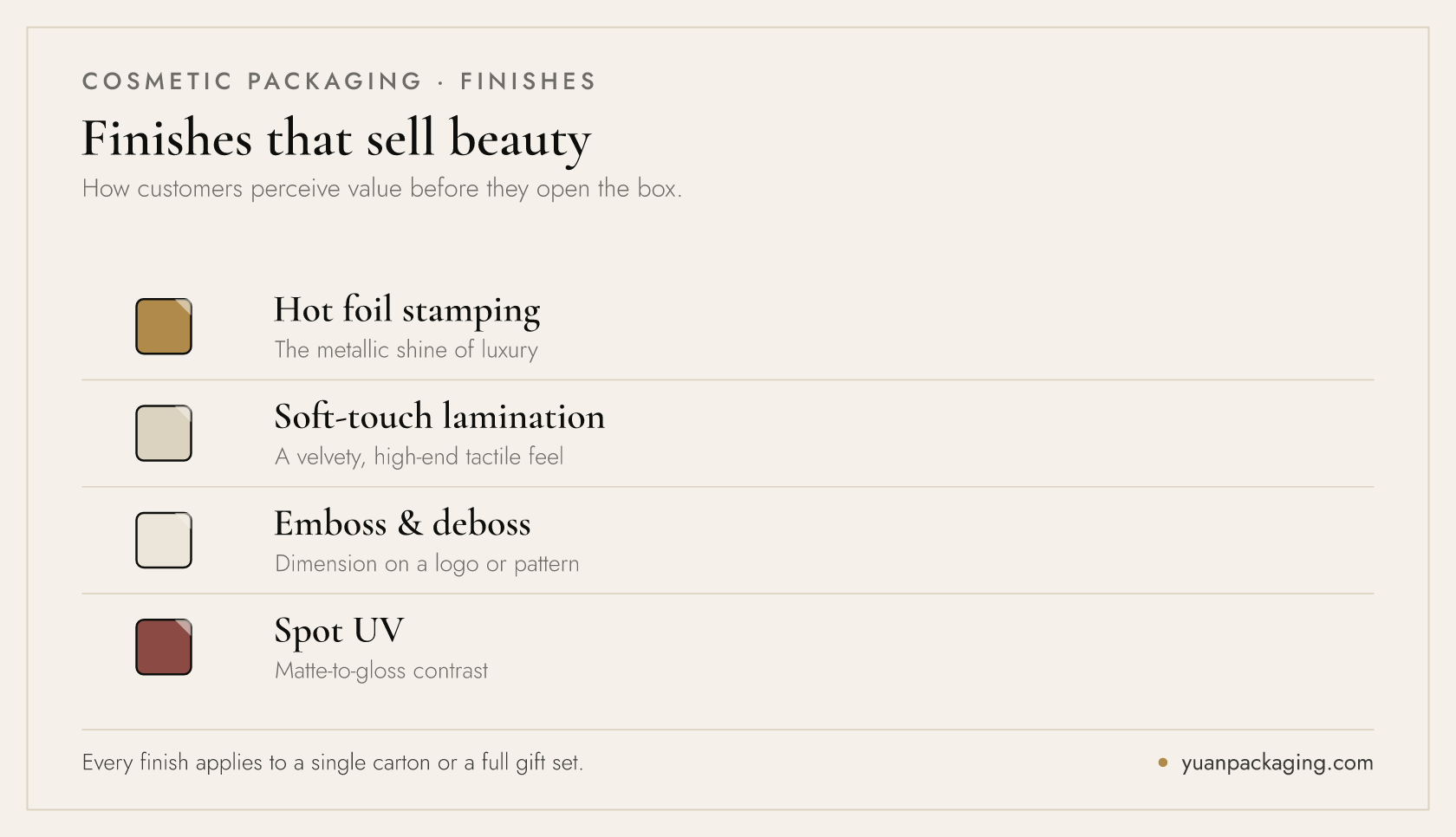
Finishing is where cosmetic packaging earns its premium perception. Hot foil stamping signals luxury; soft-touch lamination adds a tactile, velvety feel associated with high-end skincare; embossing and debossing add dimension to a logo or pattern; and spot UV creates contrast between matte and gloss. These effects are what make a customer perceive value before they have even opened the box — and they apply equally to a single carton or a full gift set.
Regulatory compliance
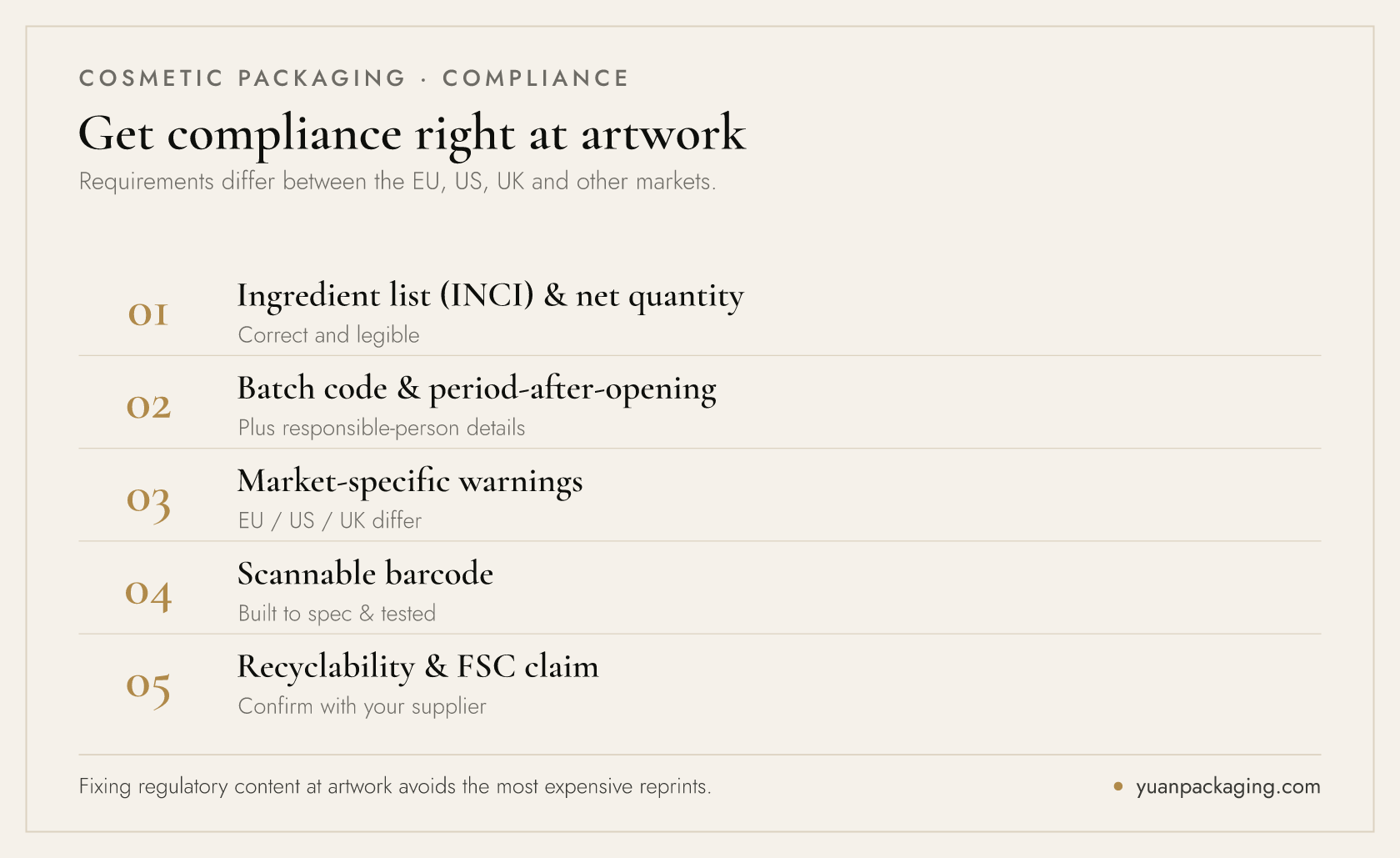
Cosmetic packaging also carries real compliance obligations. Ingredient lists (INCI), net quantity, batch codes, period-after-opening symbols, responsible-person details, and market-specific warnings must all appear correctly and legibly — and requirements differ between the EU, US, UK, and other markets. Barcodes must be built to specification and tested for reliable scanning. Getting this right at artwork stage avoids the most expensive kind of reprint: one triggered by a regulatory rejection.
Sustainability in beauty
Sustainability is now a buying signal in beauty, not just a compliance box. Recyclable mono-material structures, FSC-certified board, water-based inks, and the removal of unnecessary plastic windows or laminates all matter to conscious consumers and to retailer requirements. Our work on sustainable packaging covers how to make these choices without compromising the premium feel that beauty brands depend on.
Scaling to volume
For beauty brands scaling up, packaging needs to perform at volume as well as on the hero shot. A finish that looks flawless on a sample must be reproducible across hundreds of thousands of units, and colour must hold from the first carton to the last. Our facility is built for exactly this — four dedicated production lines running cosmetic cartons, rigid sets, and labels from launch quantities through to multi-million-unit annual programmes, with the colour management and QC that consistent beauty packaging demands.
How to brief a cosmetic packaging project
When briefing a cosmetic packaging project, bring the structure, the Pantone references, the finishing intent, the regulatory markets, and your forecast volume together at the start. The earlier these are aligned, the smoother sampling and production run — and the more a manufacturer can advise on where to invest in finish for impact and where to simplify for cost and recyclability.
Summary
In short: cosmetic packaging succeeds when premium presentation, accurate colour, regulatory compliance, and sustainability are designed in together — and when the result can be produced consistently at the volume your brand needs. If you are developing cosmetic cartons, gift sets, or labels for a beauty range, tell us about your project and our team will help you specify packaging that protects your margin and elevates your brand.
Frequently Asked Questions
What types of cosmetic packaging do beauty brands need?
Most projects involve printed secondary and presentation packaging: the outer folding carton, rigid gift-set boxes for premium sets, labels and sleeves for the primary container, and protective inserts. Consistency of colour and finish across all of these is what holds the brand identity together.
How do I keep my brand colour consistent across cosmetic packaging?
Specify your colours as Pantone references rather than process build alone, and produce on a calibrated press with a proofing workflow. This keeps a signature shade identical across cartons, labels and gift boxes, and from the first production run to the next.
What compliance information must cosmetic packaging show?
Typically ingredient lists (INCI), net quantity, batch code, period-after-opening symbol, responsible-person details and market-specific warnings, plus a scannable barcode. Requirements differ between the EU, US, UK and other markets, so confirm them at the artwork stage to avoid regulatory reprints.
Can sustainable cosmetic packaging still look premium?
Yes. FSC-certified and recycled-content boards now accept high-quality printing and premium finishes such as foil, soft-touch and embossing, so a recyclable mono-material structure can still deliver a luxury feel. The key is designing sustainability in at the specification stage.