Custom Cosmetic & Beauty Labels
Labels for skincare, fragrance and colour cosmetics — small formats, tight curvature, and a surface that has to stay perfect after months on a bathroom shelf.
At a glance
- Minimum order quantity
- Standard labels from 1,000 units; the digital line supports very short runs for launches, shade extensions and sampling
- Sampling
- Presentation-quality sample in 5–7 working days. The sample cost is credited against your first approved production order.
- Production lead time
- 15–20 working days after artwork approval
- Delivery to Europe
- DDP or DAP to the EU and the UK, DDP to Switzerland; your customs broker confirms duty and VAT rates
- Production
- Made to order (OEM/ODM)
- Country of origin
- Huai'an, Jiangsu, China
- Clear Film
- Small-Format Die Cutting
- Soft-Touch Finish
- Foil & Emboss
- Digital / Low MOQ
- Tamper Seals
Overview
Beauty labels are small, and small is difficult. A 30 ml serum bottle gives you a label a few centimetres across, wrapped around a tight radius, carrying a brand mark, an ingredient list in body copy that still has to be legible, and often a foil detail that has to register inside a millimetre. The die tolerance and the press registration matter more here than on any large-format work.
The other half of the problem is the environment. Labels on skincare and colour cosmetics meet oils, serums, creams, alcohol in fragrance, warm humid bathrooms and constant handling. Face stock, laminate and adhesive are chosen against that exposure — a paper label that looks beautiful in the proof can lift or stain within weeks on a product that leaks slightly at the cap.
Yuan Packaging prints beauty and daily-chemical labels on the same dedicated label line as our spirits work, with digital capability for launch quantities and offset and letterpress for volume. If your brand also needs a carton, a rigid coffret or a carrier bag, all three are made on this site — which keeps one Pantone reference governing every component instead of three.
Label Formats
Bottle & Serum Labels
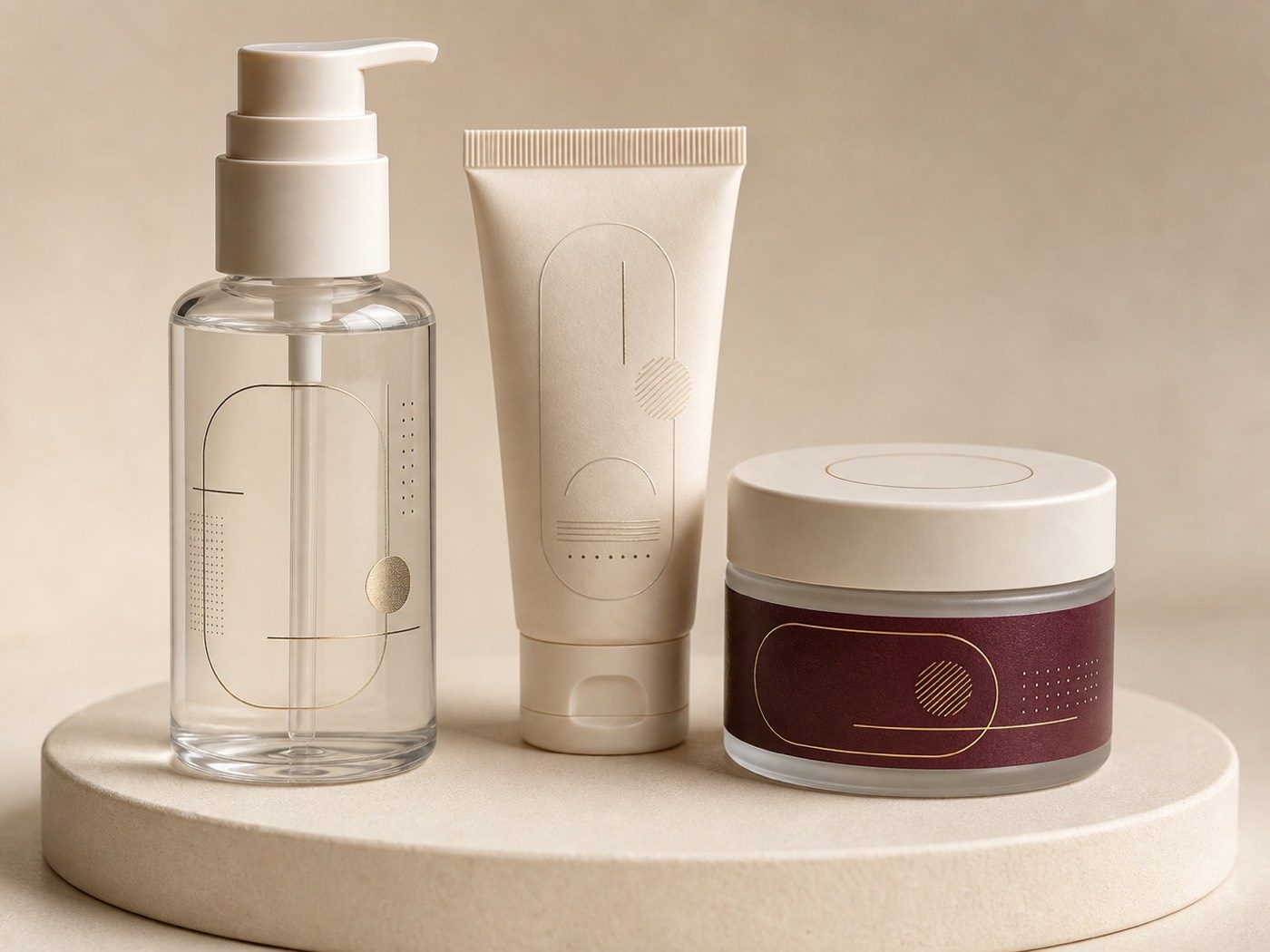
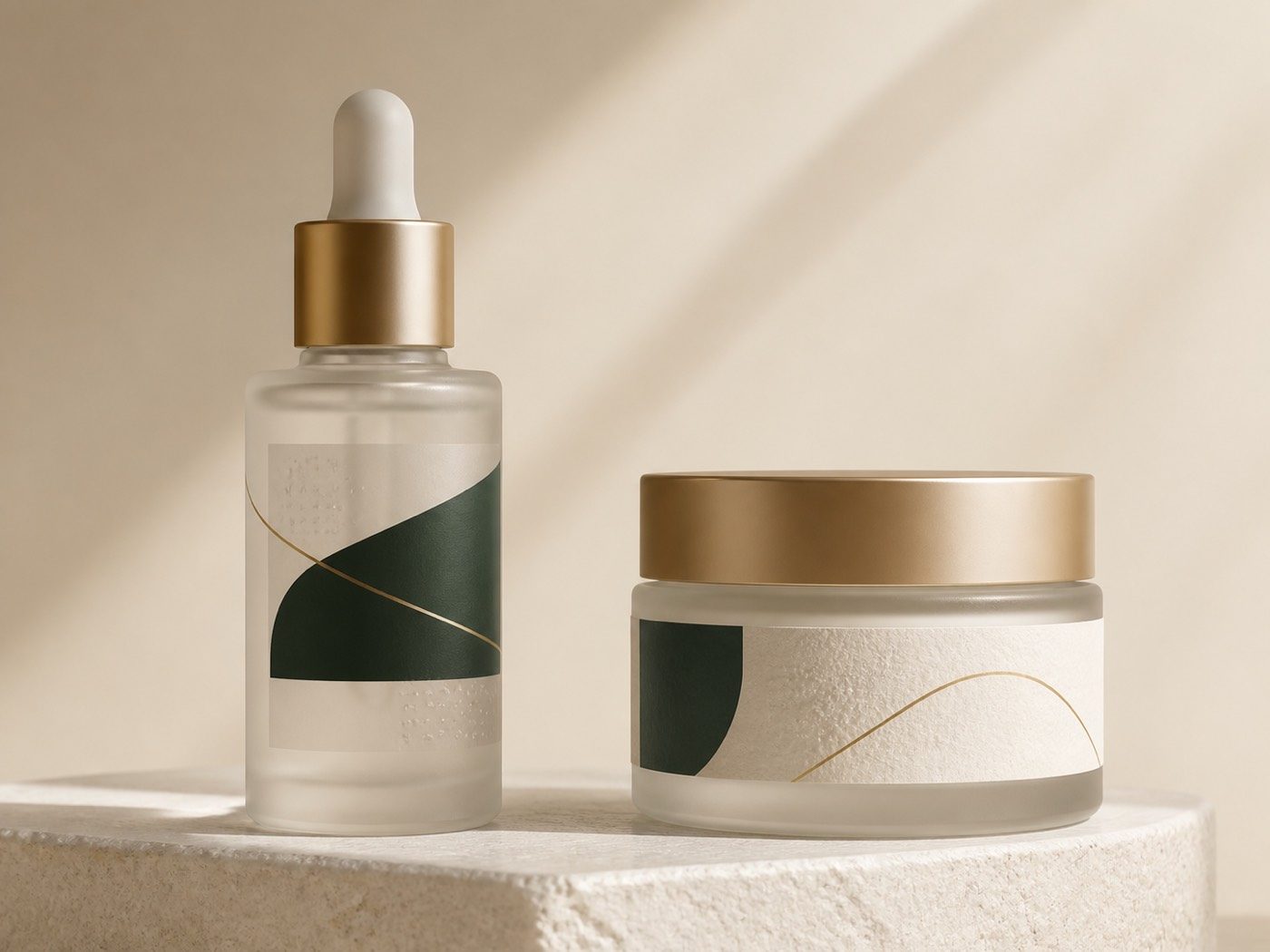
Tall narrow formats for dropper and pump bottles, where the label wraps a small diameter and the copy has to stay legible.
Jar & Lid Labels
Circular top labels and wrap-around body labels for cream jars, usually specified as a matched pair.
Tube Labels
Labels for squeezable tubes, where the face stock has to flex repeatedly without cracking the print or laminate.
Clear "No-Label" Film
Clear film with a white underprint so the artwork appears to sit directly on the glass or the product itself.
Complex Die-Cut Shapes
Non-rectangular outlines for compacts, palettes and fragrance bottles, cut to the container silhouette.
Tamper-Evident Seals
Clear or printed closure seals across caps and cartons where visible evidence of opening is required.
Selected work
Materials
Clear PP & PET Film
The no-label look on glass and clear plastic, with white ink laid under the artwork to hold colour density.
White & Matte Films
Film face stocks for products where moisture, oils and repeated handling rule out an uncoated paper.
Coated Papers
Where the pack is boxed and protected, coated paper gives a sharper foil and emboss result at lower cost than film.
Textured Specialty Stocks
Used on fragrance and prestige skincare where the label should feel like part of a considered object.
Metallised Substrates
A metallic ground across the label without a separate foil pass — efficient when the whole design is metallic.
Adhesive Systems
Chosen against the container material and the oils, creams and alcohols the label will actually meet in use.
Printing & Finishes
Soft-Touch Lamination
A velvet matte surface that also hides fingerprints — the most requested finish in prestige skincare.
Hot & Cold Foil
Gold, silver, rose and coloured foils, registered tightly on small formats.
Embossing & Debossing
Raised or recessed brand marks that give a small label a tactile signature.
Spot UV
Gloss varnish on selected elements, strongest when it contrasts with a soft-touch or matte ground.
White Underprint
Opaque white laid beneath CMYK on clear film so colours read correctly against the product behind them.
Precision Die Cutting
Small radii, internal cut-outs and shaped outlines held consistently across the run.
Across the Custom Labels range
This page covers what is particular to this product. The full lists for the whole range are set out once, on the Custom Labels page:
What you can customise
- Die shape cut to the container silhouette and curvature
- Face stock — clear film, white film, coated or textured paper
- Adhesive chosen against oils, creams, alcohol and humidity
- Finish combination — soft-touch, foil, emboss, spot UV
- Matching labels across bottle, jar, tube and outer carton
- Batch codes, shade numbers and variable data
- Roll or sheet delivery to suit hand or machine application
Specifications
| Minimum order quantity | Standard labels from 1,000 units; the digital line supports very short runs for launches, shade extensions and sampling |
|---|---|
| Production lead time | 15–20 working days after artwork approval |
| Print processes | Offset, Manroland 6+1 intermittent letterpress and digital (installed 2022) for short runs and variable data |
| Matching components | Folding cartons, rigid coffrets and carrier bags produced on the same site under one colour standard |
Terms for this specification
- Sampling
- Presentation-quality sample in 5–7 working days. The sample cost is credited against your first approved production order.
- Colour matching
- Pantone references and physical samples are used where the selected print process supports them. The approval method follows the substrate, artwork and process.
- Certifications
- ISO 9001, ISO 14001:2015, ISO 45001 and China Environmental Labelling (Ten-Ring). ISO 22000 applies to eligible food-contact work.
- Sustainable options
- FSC-certified or recycled-content paper and board, water-based inks and adhesives, and fibre-based fitments are available where the selected construction supports them.
Design & artwork
From an artwork check, through a dimensioned dieline and print-ready files, to a full concept package across a range — done by the factory that will make it.
Applications
Skincare
Serums, moisturisers, cleansers and treatment products, where the label meets oils and daily handling.
Fragrance
Bottle and coffret labels, often on textured or metallised stocks with foil and emboss detail.
Colour Cosmetics
Compacts, palettes and lip products — the smallest formats and the tightest die tolerances in the category.
Personal & Daily Care
Bath, body and household personal care, a sector our label line has served for domestic brands for years.
How it is made
Container & exposure review
Container material, diameter, curvature and what the label will meet in use — oils, creams, alcohol, humidity.
Substrate & adhesive selection
Face stock and adhesive proposed against that exposure, with the finish plan sized to the label area.
Die & artwork preparation
Die outline, bleed and minimum type size confirmed; foil, emboss and white ink separated onto their own layers.
Sampling
Samples in 5–7 working days, applied to your container so curvature and legibility can be judged in the hand.
Production & finishing
Printing, foil, emboss and lamination in sequence, with registration checked across the run.
Inspection & delivery
Visual and die-accuracy inspection, then rolls or sheets packed for hand or machine application.
Why Yuan Packaging
- Small-format die accuracy and press registration held across the full run, not just the first sheets
- Digital press for launch quantities, shade extensions and sampling without a full production commitment
- Labels, folding cartons and rigid coffrets produced on one site under a single colour standard
- Years of daily-chemical and personal-care label work for domestic brands on the same production line
Frequently asked questions
Can you achieve the clear "no-label" look on glass?
Yes — clear film with an opaque white underprint beneath the CMYK, so the colours stay dense while the substrate disappears against the glass. It is worth sampling on your own bottle, because how invisible the film reads depends on the glass and the product colour behind it.
Will the label survive contact with serums and oils?
Film face stocks with a laminate or overvarnish handle oil and cream contact far better than uncoated paper. We will recommend a combination for your formulation and container, and we recommend testing the sample against the actual product before approving the specification.
What is the smallest label you can produce?
Small-format work is routine on this line, but the practical limit depends on the die shape, the substrate and how much finishing the design carries. Send the die outline and we will confirm what is achievable and where the type size needs to change.
Can you print small quantities for a product launch?
Yes. Our digital label press, installed in 2022, supports very short runs — normally the right route for launches, market tests, shade extensions and sampling programmes before committing to an offset run.
Can you make the carton and the label together?
Yes, and it is usually cheaper and more consistent than splitting them. Folding cartons, rigid coffrets and carrier bags are produced on the same site, so one Pantone reference governs every component of the pack.
From the Journal
Related products
Request a custom packaging quote
What to send for a quote
- The product it is for, and the format you have in mind
- Size as length × width × height, and whether those are inside or outside dimensions
- Quantity, or two or three quantities if you want to compare unit prices
- Material and finish preferences, or the look you are after
- Artwork status: print-ready files, a draft, or nothing yet
- The date you need the goods by
- The destination country
Missing some of these? Send what you have, and we will ask about the rest.