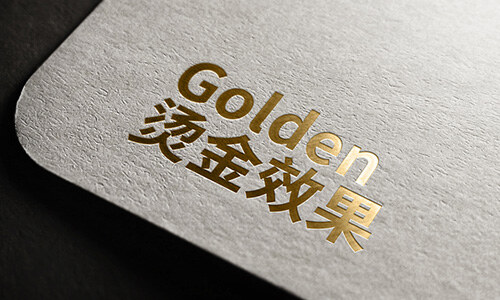
Foil stamping — hot stamping in industry terms — is one of the oldest premium finishing techniques in print, and one of the most consistently effective. The process transfers a metallic or pigment foil onto the substrate using a heated die under controlled pressure. The result is a finish that cannot be reproduced by printing alone: a mirror-bright surface with defined edges, tactile presence, and a light-catching quality that registers immediately as premium.
What determines foil quality
The quality of a foil stamp is determined by three variables: the die, the foil, and the press conditions. Dies can be etched brass, magnesium, or photopolymer — each with different edge definition and durability characteristics. Brass dies cut more cleanly and hold detail through longer production runs, making them the correct choice for anything with fine text or intricate line work. The foil itself varies enormously: gold, silver, rose gold, and holographic finishes are standard, but custom pigment foils can match brand colours precisely, and matte foils create an effect quite different from the conventional mirror finish.
Where we apply foil stamping
At Yuan Packaging, we apply foil stamping most often to gift box lid panels, label face stocks, and premium carton covers. The technique combines particularly well with embossing — the foil is applied first, then a matched emboss die raises the foil element above the surface of the substrate, creating a three-dimensional effect that is striking under any lighting condition.
Discuss your packaging project
Hot foil vs cold foil
One common specification question is whether to use cold foil (applied via adhesive through a printing unit) or hot foil (applied via heated die). Hot foil produces a sharper, more defined result and is the standard for luxury applications. Cold foil is more economical for large coverage areas and integrates into a printing pass, making it appropriate for label applications where the entire face stock is metallic. Both are available at Yuan Packaging, and our technical team can advise on which approach best suits your design.
Specifying foil: substrate matters
For designers specifying foil for the first time, the most important guidance is to consider the substrate. Smooth, coated boards hold foil cleanly; textured or heavily embossed stocks require adjusted die pressure and may show more variation across the sheet. Bringing your substrate specification to us at the design stage, before files are finalised, allows us to flag any potential issues before they become production problems.
Frequently Asked Questions
What is the difference between hot foil and cold foil stamping?
Hot foil uses a heated die for sharper, more defined results — the standard for luxury packaging. Cold foil uses adhesive through a printing unit, more economical for large metallic coverage areas like full-face labels.
Can foil stamping be combined with embossing?
Yes — this is one of the most effective combinations in premium packaging. The foil is applied first, then a matched emboss die raises it above the substrate to create a striking three-dimensional effect.
What foil colours are available for packaging?
Gold, silver, rose gold, and holographic finishes are standard. Custom pigment foils can match specific brand colours, and matte foils create a subtler alternative to mirror finishes.