Packaging for Pharmaceutical & Health Products
Clear information hierarchy, consistent cartons and clean production — a sector where the same result every month matters more than a striking one once.

At a glance
- Minimum order quantity
- Standard cartons and labels from 1,000 units
- Sampling
- Presentation-quality sample in 5–7 working days. The sample cost is credited against your first approved production order.
- Production lead time
- Typically 15–20 working days after artwork approval; confirmed on your quote
- Delivery to Europe
- DDP or DAP to the EU and the UK, DDP to Switzerland; your customs broker confirms duty and VAT rates
- Production
- Made to order (OEM/ODM)
- Country of origin
- Huai'an, Jiangsu, China
- Batch Traceability
- Braille-Ready
- Leaflet Printing
- Line Runability
- ISO 9001
Overview
Regulated packaging is judged on repeatability. The layout has to survive translation into every market you sell in, the batch code has to stay legible, the carton has to run on your cartoning line without jamming, and this quarter's cartons have to match last quarter's. Nothing about that is glamorous, and all of it is expensive to get wrong.
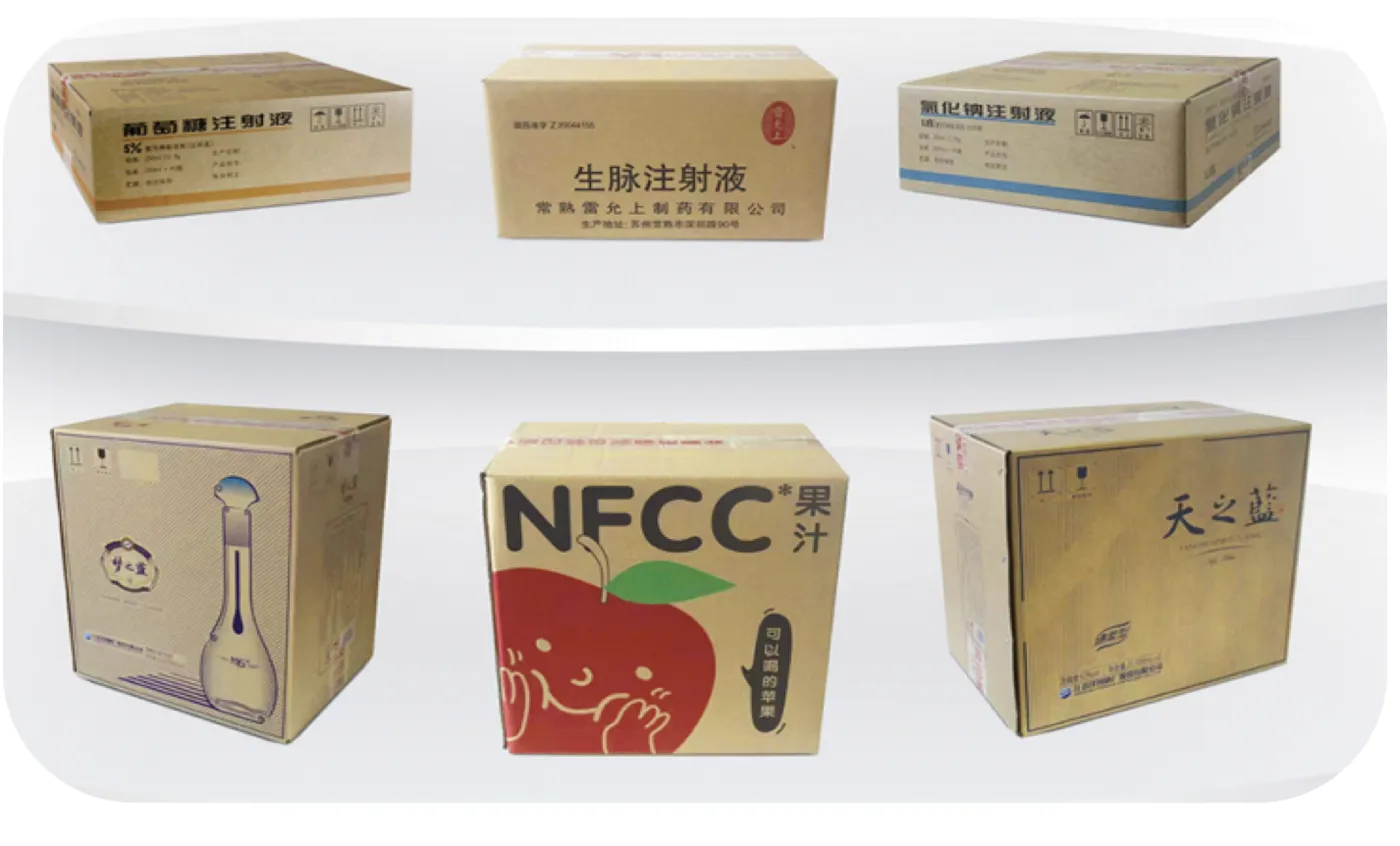
Pharmaceutical work is long-standing business on both our lines. Our label line has served pharmaceutical brands alongside liquor, agrochemical and daily-chemical customers for years, and our carton line produces printed cases for injection manufacturers including Changshu Leiyunshang Pharmaceutical.
The practical advantage of consolidating here is that the carton, the leaflet folded inside it and the label on the primary container are produced together, against one specification and one approval trail. Where those come from three suppliers, an artwork revision has three chances to be applied late — and it usually is.
What we make for this sector
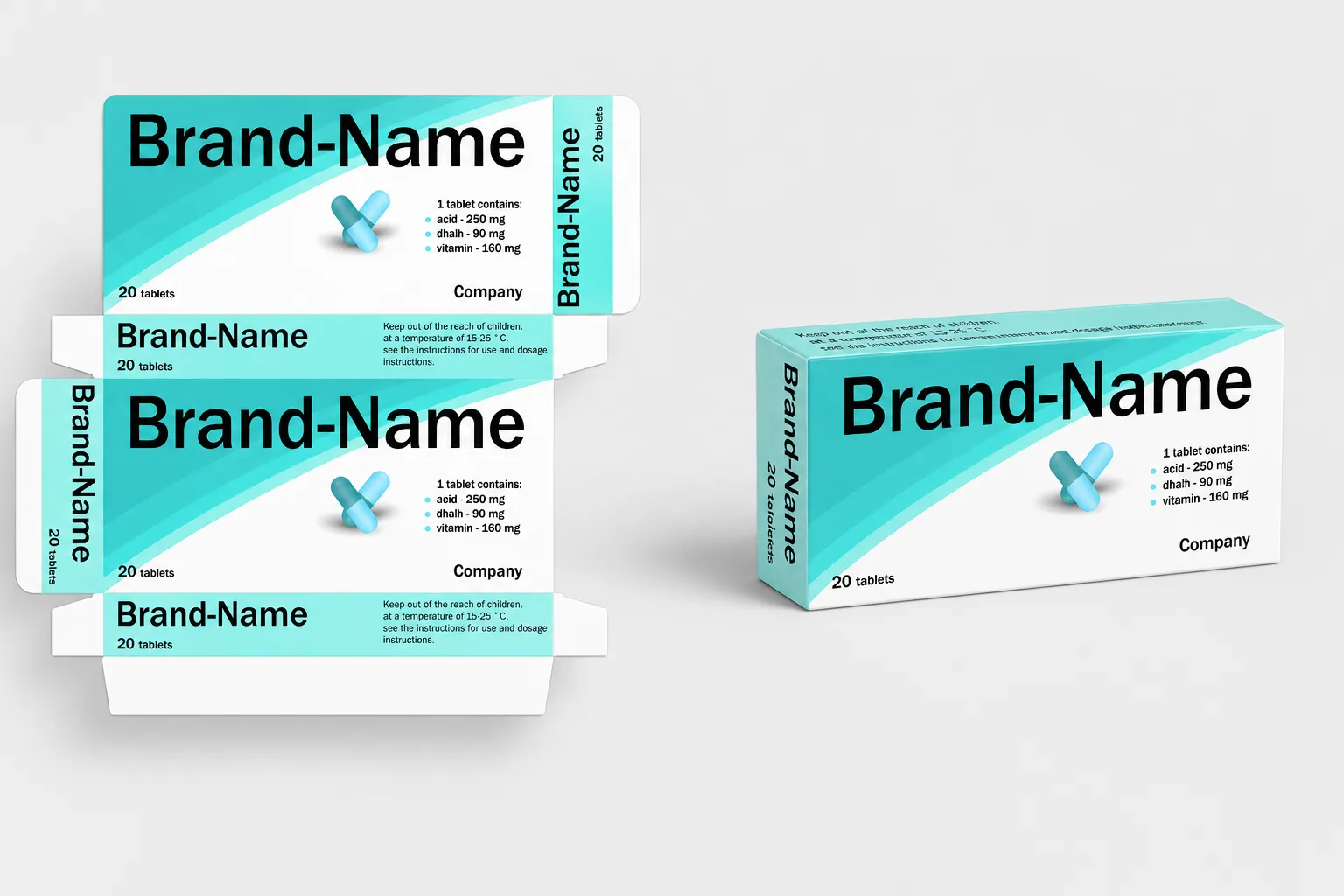
- Pharmaceutical Cartons — Medicine cartons, leaflets and Braille embossing with batch and serialisation coding.
- Pharmaceutical Labels — Primary container labels matched to the carton, on a line that has served this sector for years.
- Shipping Cases — Printed transit cases carrying batch, storage and handling information.
- Folding Cartons — Supplement and health-product cartons with retail shelf presence.
- Peptide Vial Gift Boxes — Presentation boxes for nutricosmetic, supplement and clinic vial kits, with a panel left clear for LOT and expiry coding.
What a regulated pack usually needs
Unit Medicine Carton
Sized to the blister, bottle or vial, creased to erect square and run cleanly through a cartoner.
Patient Information Leaflet
Printed and folded to the pattern your cartoning equipment expects, on stock thin enough to fit.
Primary Container Label
Bottle, vial and tube labels matched to the carton so the pack reads as one specification.
Braille & Tamper-Evident Features
Tactile embossing and sealed flaps where the destination market requires them.
Shipping Cases
Printed corrugated cases carrying batch, storage and handling information for distribution.
Supplement & Nutraceutical Packs
Health-product cartons that need pharmaceutical discipline with retail shelf presence.
Selected work
What to get right in this sector
Legibility before design
Minimum type size, contrast and a clear coding area are checked before plates — the cheapest point to catch a problem.
Line runability
Creasing, board grain and glue-flap geometry decide whether a carton jams your cartoner. Test the approved sample on your own line.
Batch and serialisation data
Code structure and data handover format are agreed before plates, not during the run.
Colour consistency between batches
Pantone spot colours with a physical reference retained between runs. Drift between batches draws more complaints than the shade itself.
Component version control
Carton, leaflet and label revised together under one approval trail, so a text change cannot land on two of three components.
Specifications
| Typical minimums | Standard cartons and labels from 1,000 units |
|---|---|
| Food-contact capability | ISO 22000 food-safety certification for nutraceutical and food-adjacent products |
Terms for this specification
- Sampling
- Presentation-quality sample in 5–7 working days. The sample cost is credited against your first approved production order.
- Colour matching
- Pantone references and physical samples are used where the selected print process supports them. The approval method follows the substrate, artwork and process.
- Certifications
- ISO 9001, ISO 14001:2015, ISO 45001 and China Environmental Labelling (Ten-Ring). ISO 22000 applies to eligible food-contact work.
What drives the cost
We do not publish a price list, because no two specifications are alike. The levers that decide a quote are consistent, though.
Quantity
Most of the cost of a print job is set-up — plates, dies, make-ready, the first good sheet. Doubling a run rarely doubles the price, which is why it is worth asking for two or three volumes on the same quote.
Structure
A rigid box is formed, wrapped and often assembled by hand; a folding carton is die-cut and glued in one pass. Structure is usually the single biggest difference between two otherwise identical packs.
Material
Board grade and wrap stock. Specialty and textured papers cost more per sheet, but can replace a finishing pass — sometimes the cheaper route to the same effect.
Finishing passes
Each of foil, emboss, spot UV and lamination is a separate pass through a machine. Two effects cost roughly twice one, so the question is always which effect earns its place.
Tooling
Dies, emboss plates and foil blocks are one-off costs carried by the first order and reused on every repeat. Repeat runs of an approved specification are materially cheaper than the first.
Design & artwork
From an artwork check, through a dimensioned dieline and print-ready files, to a full concept package across a range — done by the factory that will make it.
Applications
Prescription Medicines
Unit cartons with leaflets, batch coding and market-specific information layouts.
OTC & Consumer Health
Retail-facing cartons that keep regulatory discipline while competing on a pharmacy shelf.
Injection & Hospital Supply
Printed cases and cartons for injection products, as produced for Changshu Leiyunshang.
Supplements & Nutraceuticals
Health packaging combining pharmaceutical consistency with brand-led retail design.
Why Yuan Packaging
- Pharmaceutical is long-standing business on both the label and carton lines, not an occasional job
- Carton, leaflet and primary label produced together under one specification and approval trail
- Rapida 106 at 0.1 mm registration keeps regulatory small type sharp across a long run
- ISO 9001, ISO 14001:2015 and ISO 45001 management systems; ISO 22000 for food-adjacent products
Frequently asked questions
Can you supply carton, leaflet and label together?
Yes, and it is the main reason to consolidate regulated work. One specification, one approval trail and one revision history — instead of three vendors each versioning independently, which is how a text change ends up applied to two components out of three.
How do you keep cartons consistent between orders?
Pantone spot colours rather than CMYK builds wherever the brand colour allows, with a physical reference retained between runs, and the approved sample kept as the reference for structure as well as colour. In this sector, drift between batches is the complaint we work hardest to prevent.
Can you make presentation boxes for supplement and clinic vial kits?
Yes. Our peptide vial gift boxes are rigid boxes with inserts cut to the vials, an area left clear for LOT and expiry coding, and tamper-evident seals from our label line, for nutricosmetic, supplement and clinic skincare kits. The minimum is 500 boxes. We supply the packaging; the product's regulatory compliance and labelling stay with the brand.
Do you support Braille and tamper-evident requirements?
Yes, where your destination market requires them. Braille position and dot geometry, and the tamper-evident method, are both confirmed on the approved physical sample rather than on a proof, because both are easier to verify in the hand.
From the Journal
Request a custom packaging quote
What to send for a quote
- The product it is for, and the format you have in mind
- Size as length × width × height, and whether those are inside or outside dimensions
- Quantity, or two or three quantities if you want to compare unit prices
- Material and finish preferences, or the look you are after
- Artwork status: print-ready files, a draft, or nothing yet
- The date you need the goods by
- The destination country
Missing some of these? Send what you have, and we will ask about the rest.