Unit Medicine Cartons
Tuck-end cartons sized to blister packs, bottles, tubes or vials, creased to erect square and run cleanly on a cartoning line.
Medicine cartons, leaflets and labels where legibility, batch traceability and run-to-run consistency matter more than decoration.
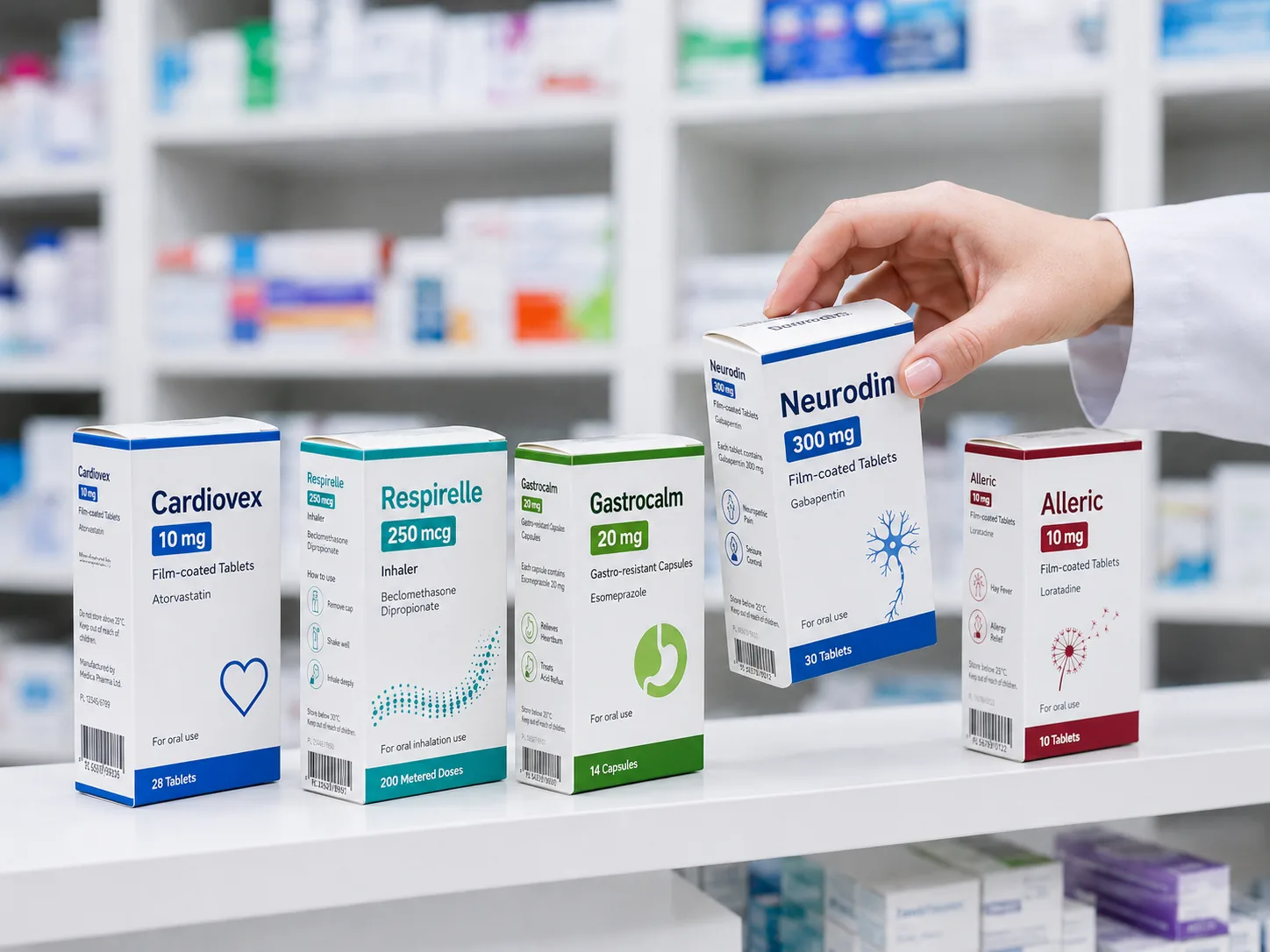
Pharmaceutical cartons are judged on different criteria from gift packaging. Nobody praises a medicine carton for being beautiful; they notice when the dosage text is hard to read, when a batch code smudges, when this month's cartons are a different shade of blue from last month's, or when a carton jams the cartoning line. Consistency is the product.
Pharmaceutical work is long-standing business on our label and carton lines — our label line has served the pharmaceutical sector alongside liquor, agrochemical and daily-chemical brands for years, and our carton line produces printed cases for injection and pharmaceutical manufacturers including Changshu Leiyunshang Pharmaceutical.
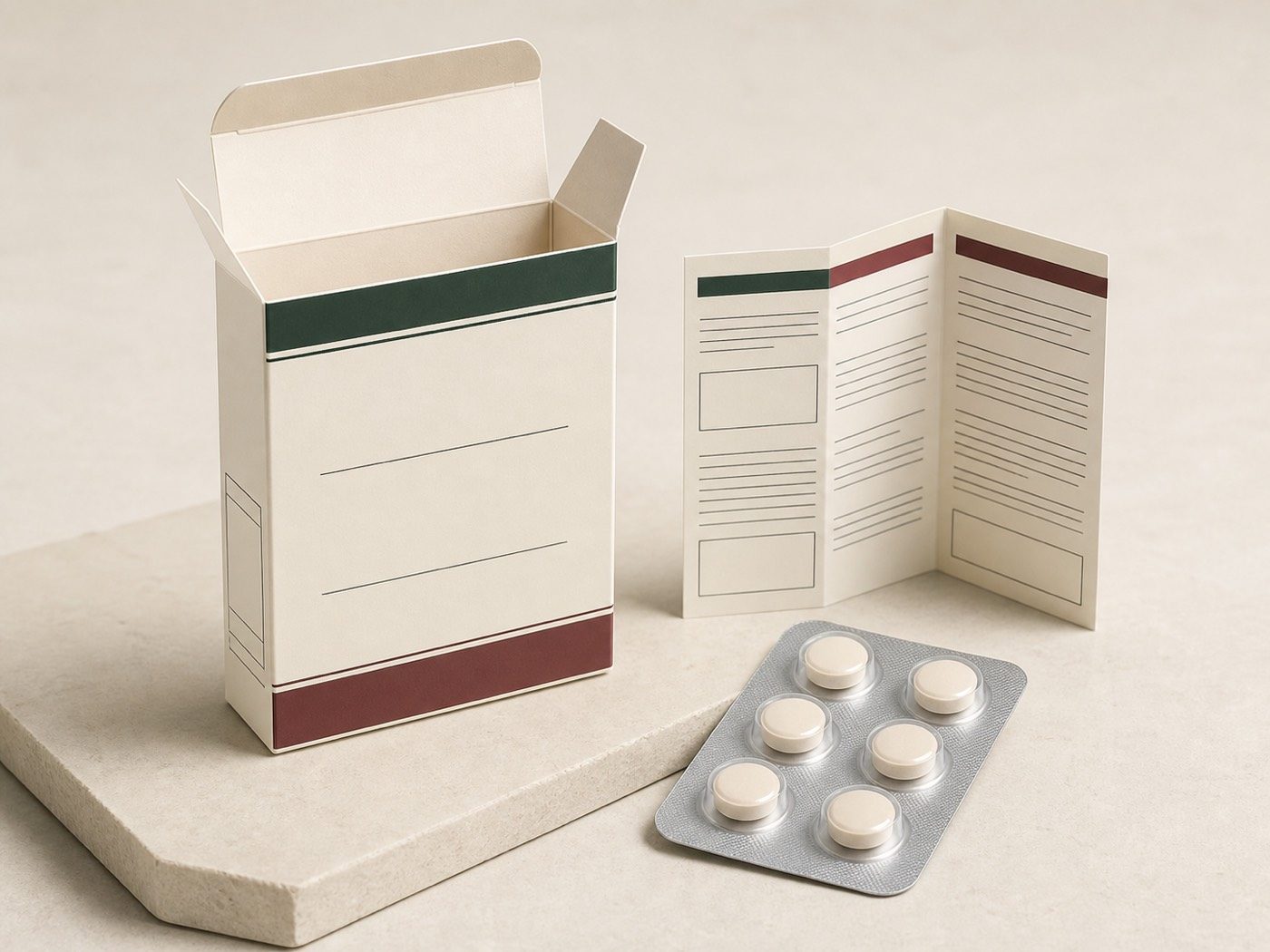
A pharmaceutical project is usually three components rather than one: the unit carton, the patient information leaflet folded inside it, and the label on the primary container. We produce all three, which keeps colour, batch data and artwork revisions governed by one specification and one approval trail instead of three suppliers each versioning independently.
A folding unit carton developed around the primary pack, the information hierarchy and the way the finished pack will be filled.
A pharmaceutical carton with tactile Braille integrated into the panel plan, artwork and physical sampling process.
A carton-and-seal system developed around the closure point where opening must leave visible evidence.
A retail-facing carton for supplements and health products, organised around the product format, information hierarchy and range system.
Tuck-end cartons sized to blister packs, bottles, tubes or vials, creased to erect square and run cleanly on a cartoning line.
Thin-stock leaflets printed and folded to fit inside the carton, in the fold pattern your cartoning equipment expects.
Bottle, vial and tube labels produced on our label line, matched to the carton so the whole pack reads as one specification.
Tactile Braille embossed into the carton panel where your market requires it. Position and dot geometry are confirmed at sampling.
Glued flaps or applied seals that show visible evidence of opening, for markets and products where that is mandatory.
Printed corrugated cases carrying batch, storage and handling information — the format behind our injection-product case work.
Supplement and health-product cartons that need pharmaceutical discipline with retail shelf presence.
| Minimum order quantity | Standard cartons from 1,000 units |
|---|---|
| Production lead time | 15–20 working days after artwork approval |
| Printing | Koenig & Bauer Rapida 106 eight-colour offset — 0.1 mm register at 18,000 sheets per hour |
| Quality management | ISO 9001 quality management, ISO 14001:2015 environmental management, ISO 45001 |
| Colour consistency | Pantone spot colours with a physical reference retained between repeat orders |
| Components supplied | Unit carton, patient leaflet, primary container label and outer shipping case |
The table above covers what changes by product; exact values are confirmed against your specification and quantity.
Which components you need — carton, leaflet, label, case — and what the destination market requires on each.
Carton dieline sized to the product and your cartoning line; leaflet fold pattern confirmed against it.
Minimum type size, contrast and coding areas checked before plates — the cheapest place to catch a legibility problem.
Cut, creased and folded samples in 5–7 working days, with the leaflet folded and inserted so the fit is proven.
Offset printing with Pantone control, then converting, with batch and variable data applied where specified.
Print, fold, glue and code inspection against the approved sample, then case packing and shipping documents.
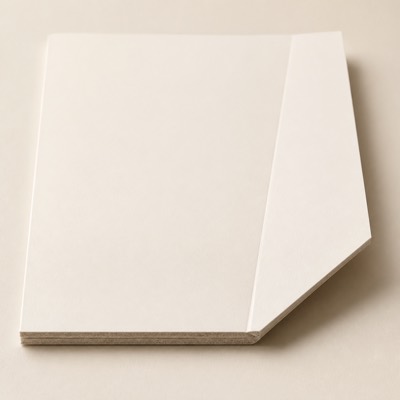
Bright folding boxboard with a smooth print face.
The standard carton stock in cosmetics and pharmaceutical work — clean creasing, reliable folding, white enough for small regulatory type.
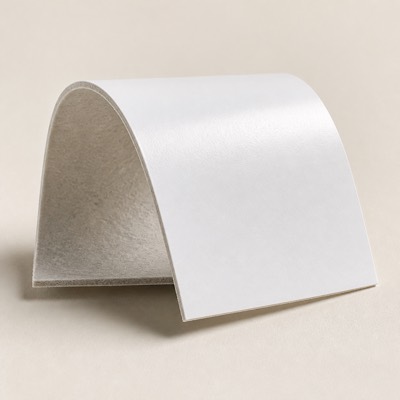
Coated on the printing face, uncoated on the reverse.
The default carton and wrap board. You are paying for coating only where the print goes, so it is the economical choice whenever the inside face is not seen.
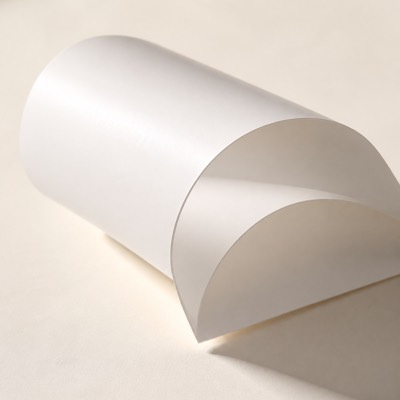
Coated on both faces for print inside and out.
Specify when the inside of the box is part of the design — an unboxing reveal, a printed inner lid, or a sleeve seen from both sides.
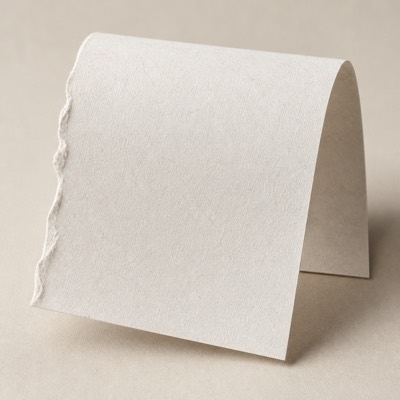
Strong uncoated white fibre with a natural surface.
Reads honest rather than glossy, and takes one or two spot colours well. Recycled and FSC®-certified grades are available where a materials policy applies.
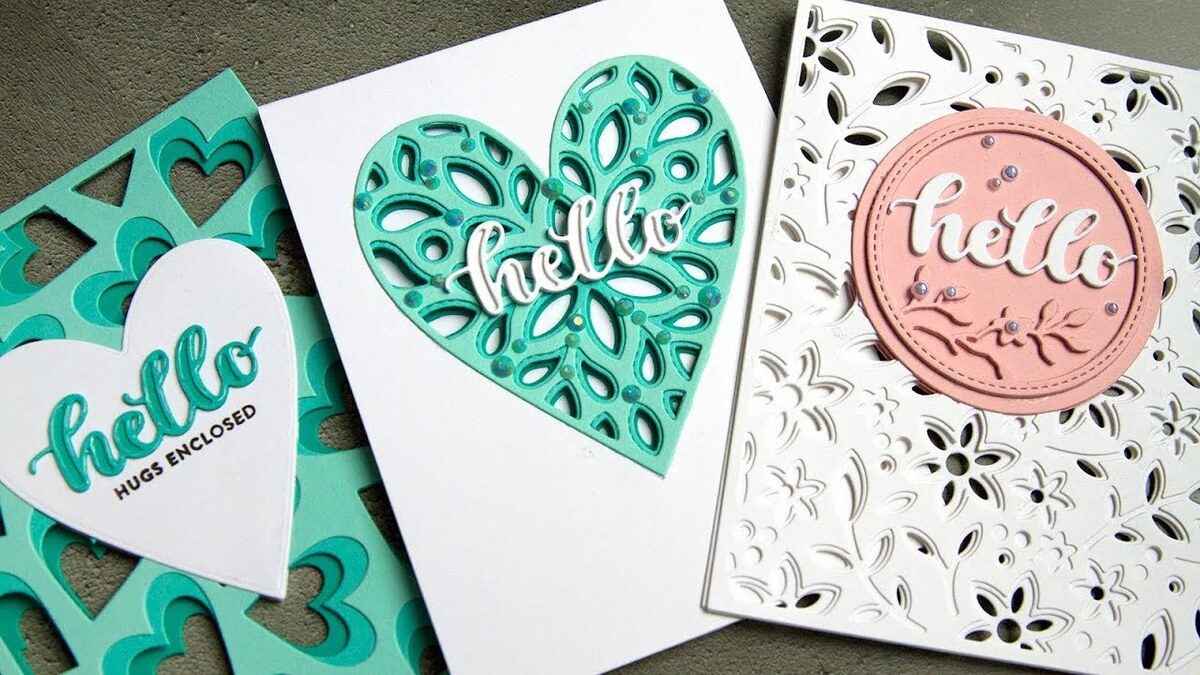
Custom shapes, windows and cut-outs.
Windows, shaped lids, handle apertures and label outlines. A window can be left open or patched with clear film depending on whether the product needs protecting.
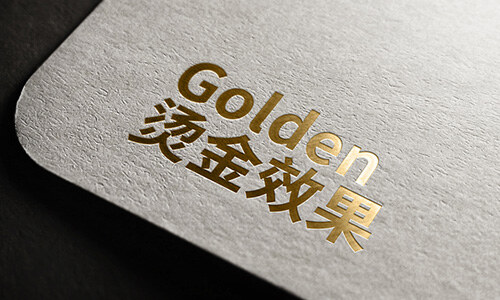
Metallic foil applied by heated die, registered to the print.
Gold, silver, copper and coloured foils. Applied flat before any wrapping or forming, so registration is controlled on a sheet rather than on a curve.
Read the foil stamping guide
Raised relief pressed into the surface from behind.
Can be registered over foil for a sculpted metallic mark. Sequence matters: emboss after foil is standard, and reversing it damages the foil surface.
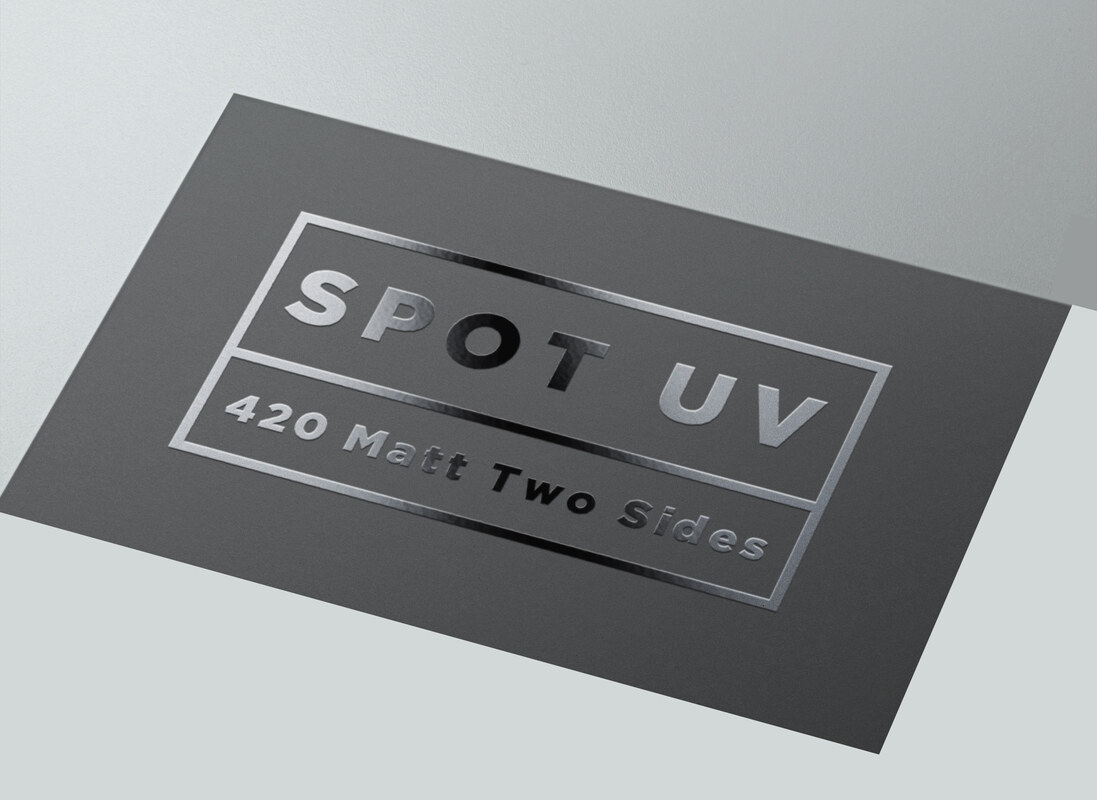
Gloss varnish applied to selected artwork elements.
Highest contrast over a matte or soft-touch base. On a gloss laminate it barely reads — the base finish decides whether spot UV is worth paying for.
Unit cartons with leaflets, batch coding and the information hierarchy the market requires.
Retail-facing cartons that keep regulatory discipline while competing for attention on a pharmacy shelf.
Printed cases and cartons for injection products — the work behind our Changshu Leiyunshang case production.
Health-product packaging that needs pharmaceutical consistency with brand-led design.
Consistency dominates here rather than unit price. The expensive event in regulated packaging is not the carton, it is the batch that has to be scrapped because a code smudged or a shade drifted — which is what the sampling and retained-reference discipline is for.
When you ask for a quote, ask for two or three quantities on it. The unit price usually falls faster than people expect.
No print-ready files? We draw the dieline
We check print-ready files free. Ordering a sample? The dieline is included, drawn in-house to our presses. Design, or rebuilding AI images, is done by our partner studio and quoted per job.
Yes, and it is the main reason to place pharmaceutical work with one supplier. Colour, batch data and artwork revisions stay governed by a single specification and approval trail, instead of three vendors each versioning independently.
That depends on creasing, board grain direction and glue-flap geometry more than on print. Tell us the equipment and we will confirm the structure at sampling — send the approved sample through your line before signing off the specification.
Yes. Batch, expiry and serialised codes can be printed digitally where unit-level data is required. Agree the code structure and data handover format before plates rather than during the run.
Yes, where your destination market requires it. Position and dot geometry are confirmed on the approved sample, because both are easier to verify in the hand than on a proof.
Pantone spot colours rather than CMYK builds wherever the brand colour allows it, with a physical reference retained between runs. For pharmaceutical work the shade drifting between batches is usually a bigger complaint than the shade itself.
Request a quote
Tell us your product, quantity, dimensions, materials and finishing requirements. Our team replies within one business day, and samples are produced in 5–7 working days.
Missing some of these? Send what you have, and we will ask about the rest.