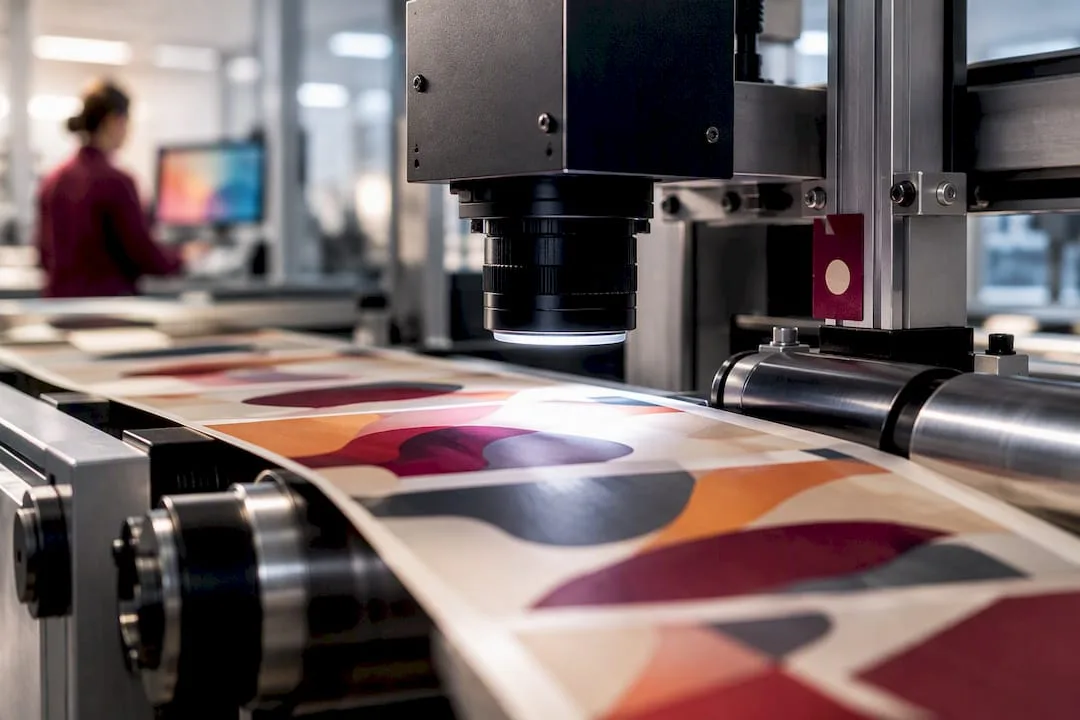
Variable data label printing (VDP) prints unique information, such as a serial number, batch code, or barcode, onto each label in a run rather than repeating the same image across the whole job. Packaging teams use it primarily for unit-level traceability, anti-counterfeit protection, and personalized promotions, letting one label design serve thousands of unique identities. Getting it right depends less on the printer itself and more on matching the right technology to your substrate and building in barcode verification from day one.
TL;DR: Matching barcode type to specific use cases is crucial: DataMatrix is best for dense supply chain data, while QR codes are ideal for consumer engagement. The choice of printing technology depends on substrate compatibility, speed, and color needs, with TTO, CIJ, and digital presses suited to different applications. Ensuring barcode verification via ISO standards and proper quiet zone management prevents costly rework and ensures scanability. Data preparation must be meticulous, with consistent field naming and thorough proofing to avoid serial or data errors during production. Combining optical barcode verification, color quality checks, and full-surface defect inspection creates a comprehensive quality control system for serialized labels.
Table of Contents
- 1. Practical applications and business value of VDP
- 2. Printing technologies that support variable data and where each fits
- 3. Barcode and 2D code selection with GS1 and ISO basics
- 4. Preparing data and artwork for reliable VDP
- 5. Production controls that keep serialized runs accurate
- 6. Substrate, finishes and design choices that affect scan rates
- 7. Connecting printers to your MES, APIs and label management systems
- 8. Cost, lead time and a decision checklist for VDP
- 9. Data security and privacy considerations for VDP data
- 10. Quality control beyond barcode verification
- 11. Regulatory requirements for pharmaceutical and food labels
- 12. Troubleshooting common variable data printing defects
- 13. Yuan Packaging perspective: lessons from serialized label production
- 14. Where Yuan Packaging fits into your VDP project
- Sources
- FAQ
1. Practical applications and business value of VDP
VDP earns its place on a production line when a brand needs every unit to carry its own identity, not just its own design. For regulated goods, unit-level serialization supports recall readiness: if a batch is compromised, a brand can isolate the affected units instead of pulling an entire shipment. Anti-counterfeit programs lean on the same principle, pairing encrypted serial numbers with consumer-facing QR codes that let a shopper verify authenticity with a phone camera.
Promotions and loyalty campaigns use VDP differently, printing unique codes or names across a short run without generating a separate SKU for every variant. That single shift, replacing dozens of static SKUs with one dynamic template, is often the strongest business case a procurement team can make internally.
- Serialization supports traceability and rapid, targeted recalls in regulated categories.
- Anti-counterfeit constructions combine unique serials with scannable verification for the end consumer.
- Personalization and limited-run promotions avoid the SKU sprawl of preprinted static labels.
2. Printing technologies that support variable data and where each fits
The right VDP technology depends on your substrate, run speed, and how much color the design needs. Thermal Transfer Overprint (TTO) works well on flexible film where label height is constrained, printing crisp monochrome text and codes directly onto flow-wrap or pouch film in-line. Continuous Ink Jet (CIJ) is a non-contact method suited to high-speed coding of primary packaging, useful when the surface is uneven or when contact printheads would risk damaging the pack.
Digital presses and digital offset systems handle full-color variable data at a resolution suited to premium labels and cartons, making them the practical choice when a design includes photography, gradients, or fine typography alongside a unique code. Print-and-apply and inline systems sit at the automation end, applying labels to product as it moves down the line, which suits roll-to-roll operations and high-volume primary-pack filling.
- TTO fits flexible film and short-height coding fields where contact printing is acceptable.
- CIJ suits high-speed, non-contact coding on primary packaging with irregular surfaces.
- Digital presses handle full-color, high-resolution variable art alongside dynamic codes.
- Print-and-apply and inline systems automate application at line speed for roll-fed and primary-pack production.
Each option trades resolution against speed and durability against substrate affinity. A TTO ribbon might code perfectly on one film but smear on another, while a digital press delivers stunning color at a lower daily throughput than an inline coder.
Pro Tip: Before committing to a print method, run a short trial on your actual substrate, not a generic test film. Contrast and adhesion behave differently across coated, uncoated, and metallized stocks.
3. Barcode and 2D code selection with GS1 and ISO basics
Choosing the right symbol starts with the job the code needs to do. GS1 guidance recommends selecting the barcode type by use case: GS1 DataMatrix suits dense supply-chain data such as batch, expiry, and serial number in a small footprint, while a QR code fits consumer-facing engagement where a shopper is expected to scan for content or verification. Deciding this early avoids costly rework once artwork and data mapping are already underway.
Verification then confirms the printed symbol is actually gradeable: ISO/IEC 15415 covers 2D symbol grading, and ISO/IEC 15416 covers linear barcodes, and a failing grade traces back to root causes like substrate choice, low contrast, or incorrect quiet zones, as barcode verification guidance explains.
- Match barcode type to use case: DataMatrix for supply-chain density, QR for consumer engagement.
- Encode expiry, batch, and serial fields using GS1 element string structure.
- Grade every run against ISO/IEC 15415 (2D) or ISO/IEC 15416 (linear) rather than assuming a scan means a pass.
- Keep quiet zones clear and maintain a human-readable fallback beneath the symbol.
Choosing between the two symbol families deserves its own reference; our comparison of DataMatrix and QR codes walks through the trade-offs in more depth.
4. Preparing data and artwork for reliable VDP
Most VDP failures trace back to the data file, not the printer. Accepted formats typically include CSV or Excel exports, mapped database extracts, or live API feeds, and Esko’s variable data documentation describes expanding that data into formats such as PPML before generating one-up or step-and-repeat output for a digital press workflow. Field naming has to stay consistent between the spreadsheet and the artwork template, or the RIP will drop or misplace values.
- Confirm the file format your press or RIP accepts, whether that is CSV, XML, or a live API connection.
- Lock field names and data types before mapping, since a renamed column breaks the artwork link silently.
- Decide one-up versus step-and-repeat output early, since it changes how the file is generated and imposed.
- Run a data proof and a scan-check proof on a verified sample roll before releasing the job to full production.
- Watch for leading-zero loss, inconsistent date formats, and accidental duplicate serial ranges, all common spreadsheet errors that surface only at print time.
Anyone preparing files for the first time should also review our artwork preparation guide for dieline and bleed conventions that apply alongside the data mapping steps above.
5. Production controls that keep serialized runs accurate
Serializing millions of labels means the printer is only half the system. GS1’s 2D Barcode Playbook recommends linking printing equipment to business systems so the correct data loads automatically, paired with inline validation cameras that check every symbol as it prints. A camera that flags a failed grade should trigger a reject or segregation mechanism immediately, before that unit moves further down the line.

Database sync matters just as much as the optical check. Without an audit trail confirming which serial was assigned to which unit, duplicate ranges can slip through, especially across shift changes or when a job restarts after a stoppage.
Pro Tip: Schedule printhead cleaning and ribbon or ink changeovers on a fixed cadence rather than waiting for a visible defect. Degraded print quality on serialized runs often shows up as failed grades before it is visible to the eye.
Reliable serialized production depends on catching failures at the source. Inline verification systems built for high-volume lines are designed to inspect every unit and log rejects for audit, which matters most in regulated categories where a missed duplicate is a compliance event, not just a cosmetic flaw.
6. Substrate, finishes and design choices that affect scan rates
A barcode that scans perfectly on a proof can fail on the actual substrate. Textured or highly absorbent stocks soften edge sharpness and reduce contrast, which is exactly what a verifier measures. Gloss varnish, foil, and spot UV each add visual appeal but can mask quiet zones or wash out contrast if placed over or too close to a barcode, a common cause of scan failures according to barcode quality guidance.
- Keep foil, spot UV, and heavy varnish clear of the barcode’s quiet zone entirely.
- Confirm minimum module size for small 2D codes on shrink sleeves and narrow labels before production.
- Specify protective coatings where the label faces condensation, abrasion, or chemical exposure in use.
Our buyer’s specification guide for pressure-sensitive labels covers substrate and adhesive selection in more detail for teams speccing a new label construction.
7. Connecting printers to your MES, APIs and label management systems
Automation turns VDP from a manual job into a repeatable process. Label management and serialization software handle the data feed, pulling from an API or database and pushing it into templates automatically, which reduces manual intervention and the number of distinct label files a team has to maintain. Print-and-apply integration changes how roll supply and line uptime get managed too, since a stalled applicator stops the whole line, not just the printer.
- Route data through label management software rather than manual file swaps between jobs.
- Build fallback modes, such as local caching of serial ranges, for when the network connection drops mid-run.
- Retain proofs, logs, and scan records for audit purposes, particularly in regulated industries.
8. Cost, lead time and a decision checklist for VDP
The main cost drivers in VDP are print method, verification equipment, data preparation, and integration effort, roughly in that order of impact on a quote. Run length changes the math directly: short runs with high SKU complexity favor VDP because generating dozens of static SKUs costs more in plates, setup, and inventory than one dynamic template does.
- Confirm the supplier’s verification capability matches your barcode grade requirements, not just their print speed.
- Ask how data prep and file mapping are quoted, since this is often underpriced and then delayed.
- Pilot with a sample size large enough to catch intermittent failures, not just a handful of proof labels.
- Set go or no-go acceptance criteria before the pilot starts, covering grade pass rate and data accuracy.
9. Data security and privacy considerations for VDP data
Variable data files often carry more than a product code. Customer names, loyalty numbers, or personalized messages moving through a label workflow are personal data, and handling them the same way you handle a generic product serial creates unnecessary exposure. Treat the data feed itself, whether it is a CSV export, a database connection, or a live API, as a controlled asset with restricted access, not a shared folder anyone on the floor can open.
Encryption in transit and at rest is standard practice for any file containing customer identifiers, and access should be limited to the people actually running the job. Serial number generation deserves its own scrutiny: if serials are predictable or sequential without obfuscation, they become easier to counterfeit, which defeats the purpose of an anti-counterfeit program in the first place. Retaining production logs and proofs supports both traceability and accountability if a data question comes up later, but that same retention policy should specify how long personal data stays on file and who can access it.
For brands operating internationally, privacy obligations vary by jurisdiction, so the data handling policy for a VDP project should reflect the strictest applicable rule for the markets a product ships into rather than a single default standard. Working with a print partner that documents its data handling procedure, rather than treating the file as a routine attachment, closes a gap that many packaging teams overlook until an audit forces the question.
10. Quality control beyond barcode verification
Barcode grading tells you the code will scan, but it says nothing about whether the color looks right or the print is free of streaks and voids. Color consistency across a variable run matters especially for premium beauty and spirits labels, where a shade shift between the first unit and the ten-thousandth is immediately visible on shelf. Spectrophotometer checks at defined intervals catch drift before it becomes a customer-facing problem, comparing printed color against an approved standard rather than relying on visual judgment alone.

Print defect detection covers the physical flaws that barcode verification does not, things like ink starvation, registration drift between color layers, and mechanical scratches from the applicator. Camera-based inspection systems built for defect detection typically scan the full label surface, not just the code area, flagging anomalies for rejection alongside the barcode reject logic already running on the line.
A mature QA program layers these checks rather than relying on one. Barcode verification confirms the data will scan, color measurement confirms the design matches spec, and full-surface defect inspection catches everything else. Skipping any one of the three leaves a blind spot, and for a brand shipping to retail, that blind spot usually surfaces as a customer complaint rather than an internal catch.
11. Regulatory requirements for pharmaceutical and food labels
Pharmaceutical and food labels carry compliance obligations that go beyond a scannable code. Serialization requirements in pharmaceutical supply chains generally require unit-level traceability from manufacture through dispensing, which is why the barcode verification and duplicate-prevention controls described earlier are not optional extras in that category, they are the mechanism that makes compliance possible. Food labels carry their own set of dynamic fields, typically expiry date, batch or lot number, and sometimes country of origin, all of which need to be both human-readable and machine-readable to satisfy trading partner and regulatory checks at once.
Requirements differ by country and by product category, so a brand shipping the same product into multiple markets should confirm the applicable rule for each destination instead of assuming one label design covers every jurisdiction. What stays consistent across regulated categories is the expectation that variable data is accurate, auditable, and tied to a documented production process, which is where the inline verification and record retention practices covered earlier in this guide directly support compliance rather than sitting apart from it. Any brand uncertain about a specific regulatory requirement should confirm it with the relevant authority or a compliance professional for their market rather than relying on general packaging guidance alone.
12. Troubleshooting common variable data printing defects
Most VDP defects trace back to one of three places: the printhead, the data file, or the substrate. A gradually fading or streaking print usually points to a worn printhead or a ribbon nearing its end, and the fix is a maintenance cadence rather than running the head until it fails visibly. Skipped or garbled characters in the variable field often mean a data mapping error, such as a field truncated by a character limit that the artwork template did not anticipate.
Barcode grade failures that pass a visual check but fail verification usually come down to contrast or quiet zone violations, exactly the substrate and finish issues covered earlier in this guide. Duplicate serials appearing in a run point to a database sync failure rather than a printer fault, which is why the audit trail matters as much as the optical inspection. Registration drift between a static background and the variable overprint, common on TTO and CIJ jobs, is typically a web tension or sensor calibration issue rather than a data problem, and it is worth ruling out mechanically before assuming the file is at fault.
Keeping a defect log tied to a specific job, printhead, and substrate lot makes the pattern easier to spot the second time a similar issue appears, rather than treating every defect as a one-off.
13. Yuan Packaging perspective: lessons from serialized label production
Serialized and anti-counterfeit label projects have taught us that a sample-first approach saves more time than it costs. Verified roll proofs catch data and grade issues before a full run commits, and sustainability trade-offs, like choosing a recyclable liner that still holds contrast for a 2D code, need to be resolved at the sampling stage, not after production starts. Anthony writes on packaging and labeling for Yuan Packaging, drawing on the company’s work producing premium packaging for beauty, spirits, and lifestyle brands over more than 25 years, a track record that includes over 100 million units delivered to 5,000 brands worldwide.
— Anthony
14. Where Yuan Packaging fits into your VDP project
Running variable data at scale is easier with a manufacturing partner that has already solved the sample, verification, and material questions. A manufacturing partner can produce custom serialized labels and anti-counterfeit constructions with verified sample rolls and end-to-end project support, helping teams spend less time troubleshooting and more time launching.
- Request a quote or a verified sample roll through our custom labels page.
- Explore anti-counterfeit label constructions built for serialization and brand protection.
- Review our label printing guide for deeper production detail.
Sources
- GS1 2D Barcode Playbook — creation and printing guidance
- Esko — Variable Data for Adobe Illustrator (VDP user guide)
- HPRT — What is barcode verification and grading?
- Teklynx — Smarter labeling: reduce label files with variable data
FAQ
What is variable data printing?
Variable data printing is a print process that changes information, such as a name, code, or image, on each piece within a single run rather than printing the same content repeatedly. It is used most often in labels for serialization, personalization, and promotional campaigns.
What is a variable label?
A variable label is a label where at least one element, commonly a serial number, batch code, or barcode, differs from unit to unit within the same production run. The static parts of the design, like the brand logo, stay identical across the whole batch.
How does variable data printing work?
A print system pulls data from a source such as a spreadsheet, database, or API and merges it into a template at the moment of printing, so each label carries its own unique values. GS1 guidance recommends linking the printer to business systems and using inline validation cameras to confirm each printed symbol meets the required grade.
Is there a way to print labels from an Excel spreadsheet?
Yes, most variable data workflows accept a CSV or Excel export as a data source, mapping each spreadsheet column to a field in the label template. Field names and formats need to match exactly between the spreadsheet and the artwork file to avoid dropped or misplaced data at print time.