Custom Non-Woven Carrier Bags
Reusable carrier bags for retail, promotional and packaging programmes where repeat-use potential and a textile-like surface are part of the brief.
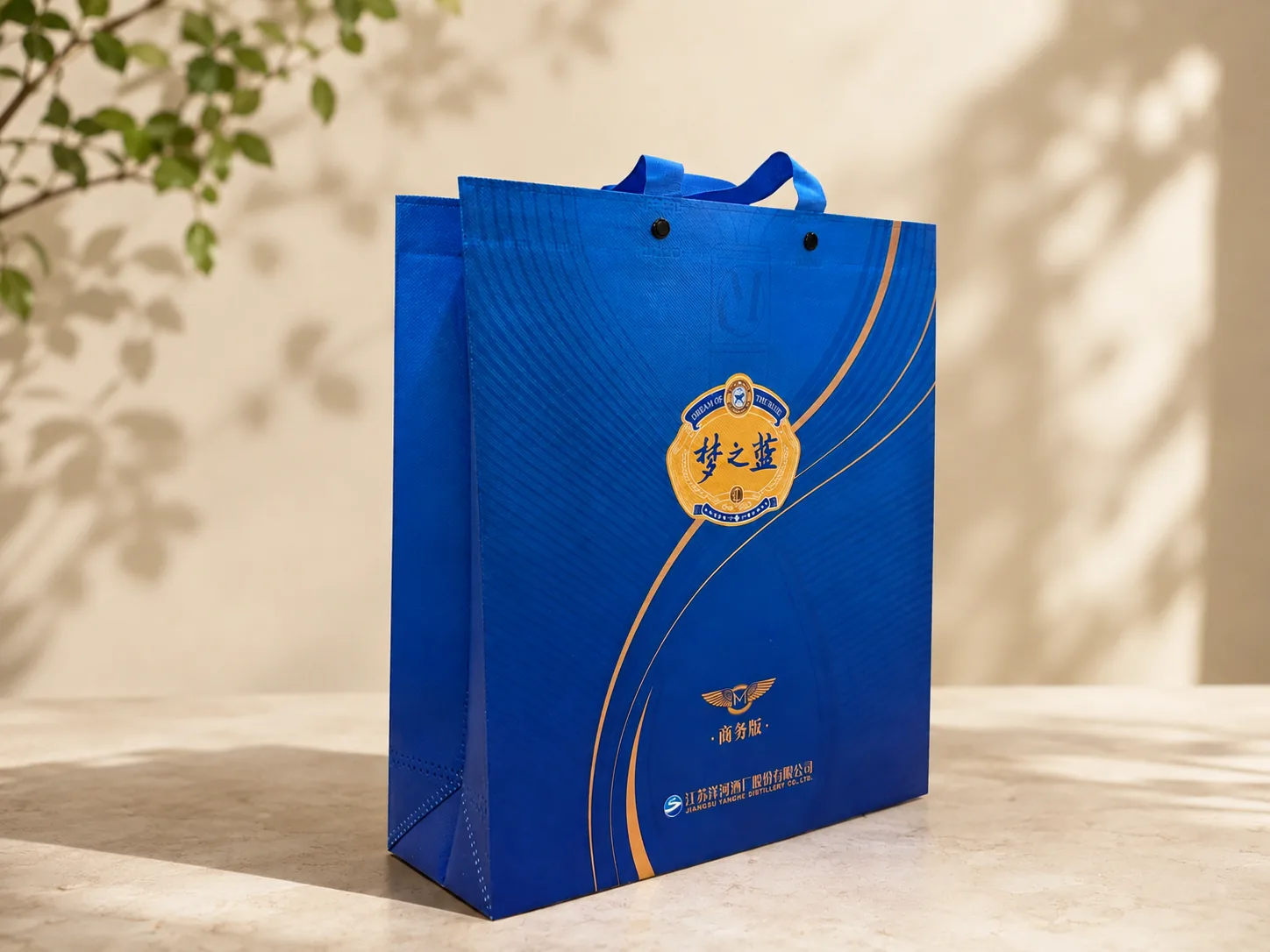
At a glance
- Minimum order quantity
- Typically 500–1,000 units for carrier bags with complex finishes; confirmed per specification
- Sampling
- Presentation-quality sample in 5–7 working days. The sample cost is credited against your first approved production order.
- Production lead time
- 15–20 working days after artwork approval
- Delivery to Europe
- DDP or DAP to the EU and the UK, DDP to Switzerland; your customs broker confirms duty and VAT rates
- Production
- Made to order (OEM/ODM)
- Country of origin
- Huai'an, Jiangsu, China
- Reusable
- Laminated Full-Colour
- Tote & Gusseted
- Custom Size
- Retail & Promotional
Overview
Non-woven bags occupy the space between a paper carrier and a fabric tote. They are light, fold flat and can take full-colour print across the panel. They can offer more water tolerance and repeat-use potential than an unprotected paper carrier, but the actual result depends on material weight, construction, load and use conditions.
Yuan Packaging produces non-woven carrier bags alongside our paper bag work on the handbag production line, which specialises in premium carriers in both paper and composite materials. Because both bag types are made on the same site, a retail programme can run a printed paper bag for in-store purchases and a reusable non-woven bag for larger orders under one colour standard and one approval process.
Laminated non-woven takes photographic full-colour artwork across the whole surface, which is what most brand and campaign work needs. Unlaminated material suits simpler one- or two-colour designs at lower cost. Which one is right depends on the artwork, the intended lifespan of the bag and the price point — and that is the first conversation, not the last.
Explore the range
- Flat Non-Woven Tote Bags — A simple flat carrier for briefs that value an economical format, clear print area and easy storage between uses.
- Gusseted Non-Woven Carrier Bags — Added side and base depth for boxed goods and retail packs that need more volume than a flat tote provides.
- Non-Woven Bottle & Gift Set Carriers — A reusable carrier developed around the dimensions and weight of a bottle or complete presentation set.
Bag Types
Flat Tote
The simplest and most economical format — two printed panels and shoulder or hand-length handles.
Gusseted Carrier
Side and base gussets give the bag depth and let it stand up, which matters when it holds boxed goods.
Laminated Print Bag
Full-colour artwork across the whole surface with a laminated finish that also protects the print.
Bottle & Gift Set Carriers
Narrow reinforced formats sized to bottles or rigid gift boxes, for gifting programmes that need to be carried.
Promotional & Event Bags
Campaign, conference and trade-show bags, usually simpler construction in higher quantities.
Selected work
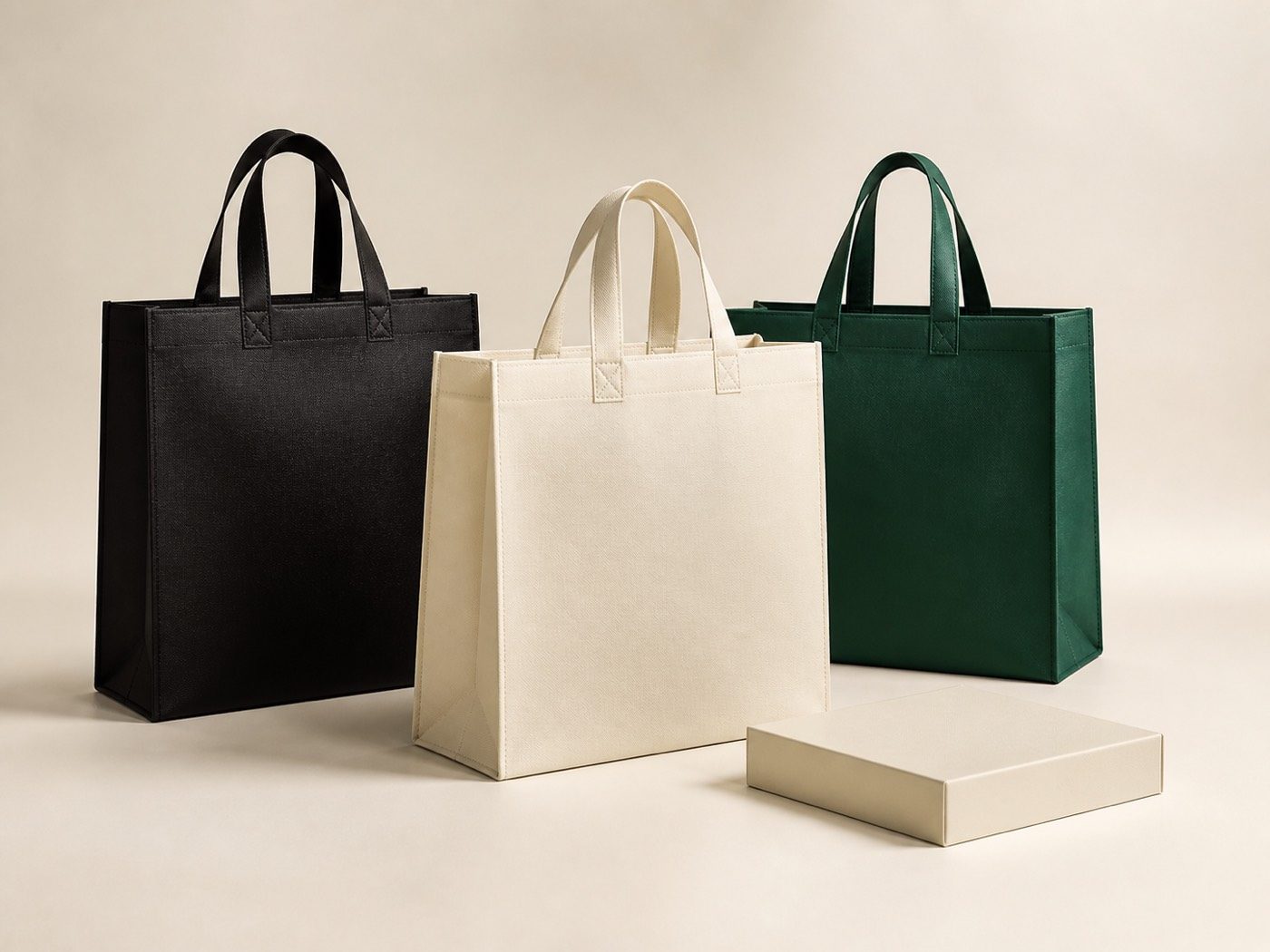
Board & material options
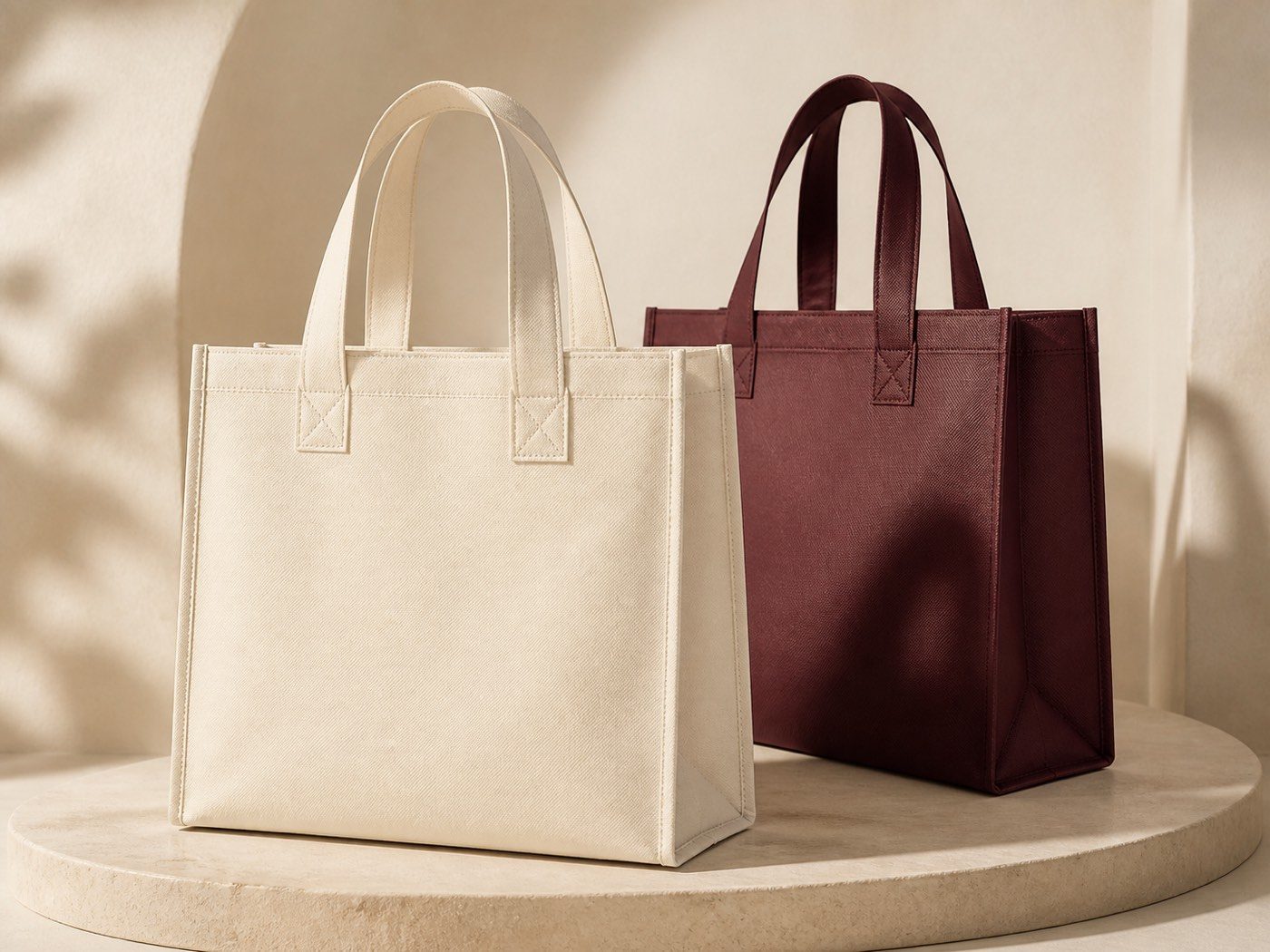
Non-Woven Polypropylene
The base fabric — light, tear-resistant and water-tolerant.
Available in a wide range of stock colours, which is usually cheaper than printing a solid background.
Laminated Non-Woven
A printed film bonded to the fabric face.
The only route to photographic, edge-to-edge artwork on a non-woven bag. It also gives a wipe-clean surface.
Webbing & Self-Fabric Handles
Handles cut from the bag material, or stitched webbing.
Self-fabric keeps the bag mono-material; webbing carries more weight. The choice follows the load, not the look.
Finishing options
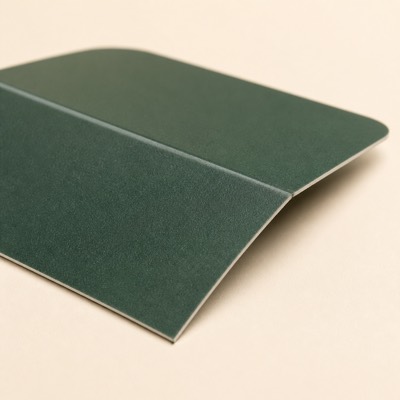
Matte Lamination
A non-reflective film that protects and softens the surface.
Reduces surface glare and protects printed colour. Compatibility with any additional print effect depends on the selected film and ink system.
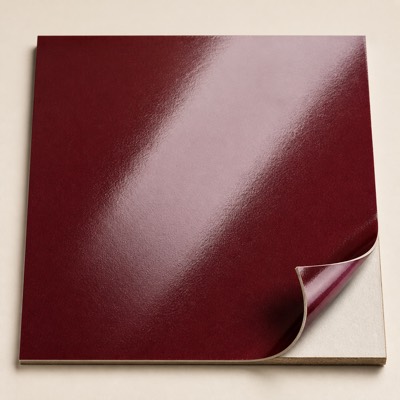
Gloss Lamination
A high-shine film that lifts colour saturation.
Makes colour photography and bright brand colours read stronger on shelf, and resists moisture better than an uncoated surface.
Materials
Non-Woven Polypropylene
The base material — light, tear-resistant, water-tolerant and available in a wide range of stock colours.
Laminated Non-Woven
A printed film laminated to the non-woven face, allowing photographic full-colour artwork and a wipe-clean surface.
Handle Options
Self-fabric handles cut from the same material, or webbing handles where the bag has to carry more weight.
Base Reinforcement
An inserted board in the base for bottles, boxes and anything with corners.
Printing & Finishes
Full-Colour Laminated Print
Photographic artwork across the entire panel, edge to edge, with the laminate protecting the surface.
Screen Printing
Solid spot-colour logos and simple graphics — the economical route on unlaminated material.
Matte & Gloss Lamination
Surface choice that changes the perceived quality of the bag as much as the artwork does.
What you can customise
- Dimensions and any applicable gusset depth sized to what the bag carries
- Material colour and whether the surface is laminated
- Print method — full-colour laminated or screen-printed spot colour
- Handle type, length and attachment
- Base reinforcement for boxed or bottled goods
- Matching specification with a paper bag or gift box programme
Specifications
| Minimum order quantity | Typically 500–1,000 units for carrier bags with complex finishes; confirmed per specification |
|---|---|
| Production lead time | 15–20 working days after artwork approval |
| Production line | Handbag production line — premium carriers in paper and composite materials, with automated forming and post-processing |
Terms for this specification
- Sampling
- Presentation-quality sample in 5–7 working days. The sample cost is credited against your first approved production order.
- Colour matching
- Pantone references and physical samples are used where the selected print process supports them. The approval method follows the substrate, artwork and process.
- Certifications
- ISO 9001, ISO 14001:2015, ISO 45001 and China Environmental Labelling (Ten-Ring). ISO 22000 applies to eligible food-contact work.
What drives the cost
Print method dominates here. Laminated full-colour is a different cost base from screen-printed spot colour, and the gap is wide enough that it is worth testing whether your artwork genuinely needs photographic reproduction.
Quantity
Most of the cost of a print job is set-up — plates, dies, make-ready, the first good sheet. Doubling a run rarely doubles the price, which is why it is worth asking for two or three volumes on the same quote.
Structure
A rigid box is formed, wrapped and often assembled by hand; a folding carton is die-cut and glued in one pass. Structure is usually the single biggest difference between two otherwise identical packs.
Material
Board grade and wrap stock. Specialty and textured papers cost more per sheet, but can replace a finishing pass — sometimes the cheaper route to the same effect.
Finishing passes
Each of foil, emboss, spot UV and lamination is a separate pass through a machine. Two effects cost roughly twice one, so the question is always which effect earns its place.
Tooling
Dies, emboss plates and foil blocks are one-off costs carried by the first order and reused on every repeat. Repeat runs of an approved specification are materially cheaper than the first.
Design & artwork
From an artwork check, through a dimensioned dieline and print-ready files, to a full concept package across a range — done by the factory that will make it.
Applications
Retail Programmes
Reusable bags sold or given at the till, where the bag is expected to come back to the store many times.
Promotional & Events
Conference, exhibition and campaign bags in higher quantities with simpler construction.
Gifting & Bottle Carriers
Reinforced formats for gift sets and bottles where repeat use or a textile-like carrier is part of the brief.
Corporate & Membership
Long-life branded bags for staff, members and loyalty programmes.
How it is made
Use & load review
How the bag will be used, how often and what it carries decides material weight, handle and base construction.
Format & print method
Tote or gusseted, laminated full-colour or screen-printed spot colour — decided against artwork and budget.
Sampling
A made-up bag in 5–7 working days so the material hand-feel, colour on non-woven and handle length can be judged.
Printing & lamination
Full-colour print laminated to the face material, or direct screen printing on unlaminated stock.
Cutting, forming & handles
Panels are cut and formed; any specified gussets and base support are set before handles are attached and reinforced.
Inspection & export packing
Visual and handle checks against the approved sample, then compressed flat packing for container efficiency.
Why Yuan Packaging
- Produced on the same handbag line as our paper carriers — one supplier, one colour standard for a whole retail programme
- Laminated full-colour printing for photographic artwork across the entire panel
- Construction specified against the load rather than sold as a fixed catalogue item
- ISO 14001:2015 certified environmental management across all production
Frequently asked questions
Should we choose a paper bag or a non-woven bag?
Paper suits a single premium journey from the shop to the home and recycles as one material. Non-woven suits repeated use — it tolerates rain, weight and folding for far longer. Many retail programmes run both: paper at the till, non-woven for larger baskets.
Can you print full-colour photographic artwork?
Yes — with laminated non-woven, where a printed film is bonded to the face material. Unlaminated non-woven is screen printed, which suits solid spot-colour logos and simpler graphics at a lower price point.
What is the minimum order quantity?
Carrier bags with complex finishes are typically 500–1,000 units. Non-woven quantities are usually confirmed against the specific format and print method — send the size, artwork and quantity you have in mind and we will confirm.
Can the non-woven bag match our paper bag artwork?
Yes, and it is worth sampling both together. Colour reads differently on a non-woven surface than on coated paper, so the two are matched at sampling stage rather than assumed to be identical from the same file.
From the Journal
Related products
Request a custom packaging quote
What to send for a quote
- The product it is for, and the format you have in mind
- Size as length × width × height, and whether those are inside or outside dimensions
- Quantity, or two or three quantities if you want to compare unit prices
- Material and finish preferences, or the look you are after
- Artwork status: print-ready files, a draft, or nothing yet
- The date you need the goods by
- The destination country
Missing some of these? Send what you have, and we will ask about the rest.