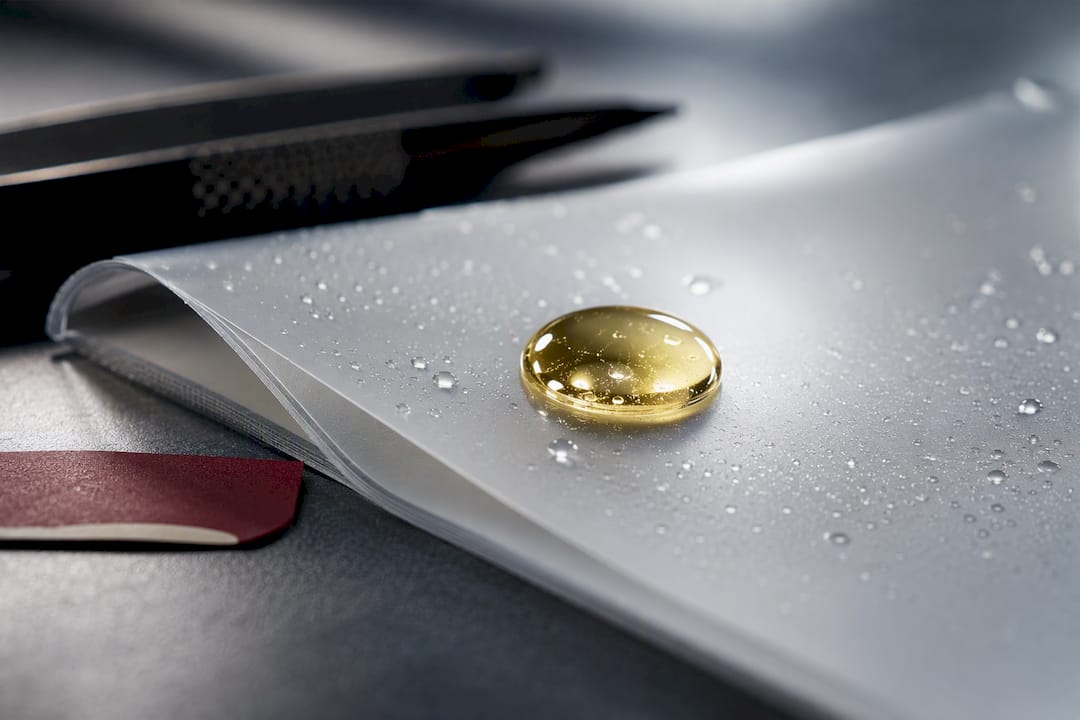
For reliable oil resistance, choose a synthetic film face stock such as polyester or vinyl, paired with a high-performance permanent or oily-surface adhesive and a protective topcoat. Vinyl handles curves and flexing; polyester wins on solvent and heat resistance. Whichever you pick, ask your supplier for a technical datasheet and a printed sample before committing to a production run, so you can see how the ink, laminate, and adhesive behave together under the exact conditions your product will face.
**TL;DR:** Polyester provides superior heat and solvent resistance, making it ideal for industrial labels exposed to aggressive chemicals. Vinyl is flexible and suited for curved surfaces but offers only moderate chemical resistance compared to polyester. Topcoated or laminated films are essential for oil resistance, as they block oil migration into printed layers and extend label durability. Proper testing includes both immersion and rub tests to assess how labels withstand chemical exposure and friction over time. For recyclable bottles or reusable containers, wash-off adhesives offer a sustainable alternative but are less durable against prolonged oil contact.
Table of Contents
- What Face Materials Actually Resist Oil and Moisture?
- Matching the Label to the Job
- What to Ask Your Label Supplier Before You Order
- How Do You Read a Label’s Durability Test Data?
- What Buyers Get Wrong About “Oil Resistant” Labels
- Ready to Test Your Label Against the Real Thing?
- Sources
- FAQ
What Face Materials Actually Resist Oil and Moisture?
Paper labels lose the fight against oil almost immediately. Oil wicks into the fibers, the print smears, and the adhesive gives up at the first sign of moisture. That is why nearly every durable label built for grease, water, or solvent exposure starts with a synthetic film rather than paper stock.
**Vinyl (PVC)** stays flexible at low temperatures and conforms well to curved bottles or drums, which makes it a common choice for essential oil bottles and squeeze tubes. **Polyester (PET)** is stiffer, but it outperforms vinyl on chemical and heat resistance, which is why you see it on industrial equipment tags and anything that gets wiped down with solvents. **BOPP and PE films** sit in the middle: cheaper than PET, tougher than paper, and often used for bath and body packaging where the label needs to survive steam and soap residue rather than aggressive chemicals.
None of these films do their job alone. A topcoat or laminate is what actually blocks oil migration and protects the printed image underneath.
- Vinyl: flexible, good for curved surfaces, moderate chemical resistance
- Polyester (PET): rigid, strong solvent and heat resistance, ideal for industrial labeling
- BOPP/PE: budget-friendly, decent moisture resistance, common on cosmetics and bath products
- Topcoated or laminated films: add a physical barrier that resists oil migration into the print layer
Even a well-chosen film has limits. Certain solvents, like some brake cleaners or aggressive degreasers, can strip print off a topcoated label if it sits in contact long enough. And low surface energy substrates, especially silicone, are a separate problem entirely. Pressure-sensitive adhesives generally do not bond reliably to silicone. If you are labeling silicone bottle caps or applicators, put the label on a hard plastic ring or cap instead, or the adhesive will fail regardless of how good the face film is.
Matching the Label to the Job
The right combination of film and adhesive depends entirely on what the label will touch and how often.
- *Essential oils and small glass bottles**: clear polyester or vinyl films with solvent-resistant inks and a strong topcoat handle citrus and carrier oils without discoloring or lifting at the edges.
- *Bath and body products**: labels here deal with soap film, steam, and repeated hand contact more than raw oil, so a laminated BOPP or PE film with a durable topcoat is usually enough.
- *Industrial and oily equipment**: surfaces already coated in grease or cutting fluid need specialty oily-surface adhesives or aggressive permanent acrylics on a polyester face, since standard adhesives will not grab a contaminated surface.
- *Refrigerated products and ice bucket labels**: cold, wet environments call for low-temperature adhesives and a laminate that prevents edge lift when condensation forms and refreezes repeatedly.
Get this mapping wrong and the failure shows up fast. A permanent acrylic that works beautifully on a dry retail shelf will often peel within days on a piece of oily manufacturing equipment.
What to Ask Your Label Supplier Before You Order
A good supplier conversation starts with a written spec, not a verbal description. Before you request a quote, put together a short checklist covering face stock, adhesive name and type, liner material, laminate or topcoat, and your intended print method. Vague requests like “something oil resistant” produce vague, disappointing results.
Here is what to confirm before placing an order:
- Exact face stock (vinyl, polyester, BOPP) and adhesive type or brand name
- Liner material and whether a laminate or topcoat is applied
- Print method compatibility (thermal transfer, digital, flexographic)
- Minimum order quantity and standard lead time
- Recommended ribbons or ink types for that specific face stock
- Wash-off or recycling options if the label eventually needs to come off cleanly
Ask for a technical datasheet that includes immersion and rub-test results, along with shelf life and storage guidance. A credible TDS will name specific solvents tested and specify storage conditions, not just a general “chemical resistant” claim. Also confirm print consumables: some suppliers recommend specific thermal transfer ribbon series for particular topcoated stocks, and using the wrong ribbon can undercut an otherwise oil-resistant label. If recyclability matters for your packaging, ask directly whether a wash-off construction is available for your bottle material.
**Pro Tip:** _If your product ships internationally or sits in a warehouse without climate control, ask for shelf life data at your actual storage temperature and humidity, not just the supplier’s ideal lab conditions._
How Do You Read a Label’s Durability Test Data?
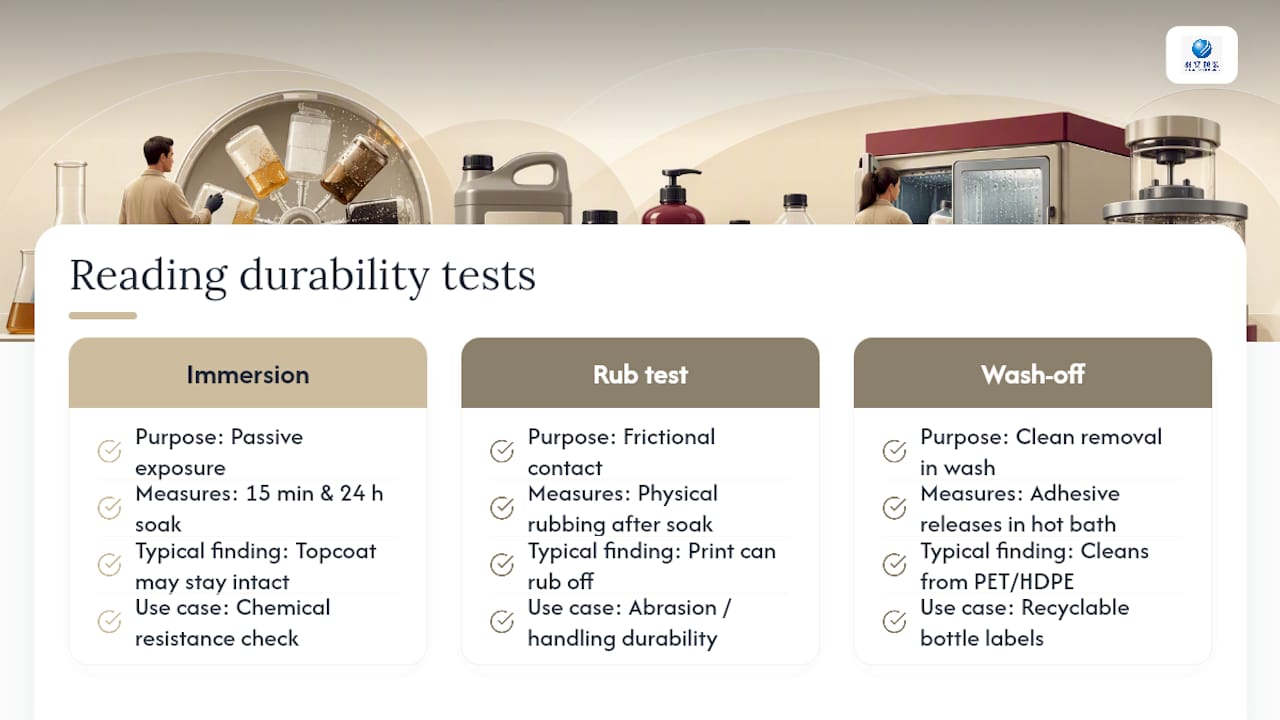
Technical datasheets tell you far more than a marketing page ever will, but only if you know what you are looking at. A representative example, TDS No. B-637 for a topcoated polyvinylfluoride film with permanent acrylic adhesive, lists both 15-minute and 24-hour immersion tests across a range of substances, including isopropyl alcohol, gasoline, JP-8 jet fuel, mineral spirits, cutting oil, and even sulfuric acid. The sheet notes exactly which solvents caused visible topcoat discoloration and which required physical rubbing before print actually came off.
That distinction between immersion and rub testing matters more than most buyers realize.
A label can survive a 24-hour chemical bath with no visible damage and still lose its print the moment someone wipes it with a rag soaked in the same solvent. Immersion tests measure passive exposure. Rub tests measure what happens when contact turns into friction.
If your product will contact recyclable PET or HDPE, ask about wash-off label technology, which uses a specially formulated adhesive that releases cleanly during an industrial hot-bath wash, letting bottles get recycled without adhesive residue contaminating the plastic stream. UPM’s wash-off film and paper options even include a PET liner made from roughly 90 percent post-consumer recycled content, which is worth raising if sustainability claims matter to your brand. The tradeoff is real: wash-off adhesives are engineered to let go under the right conditions, so they are not the right choice for a label that needs to survive years of oil exposure without ever coming off.
What Buyers Get Wrong About “Oil Resistant” Labels
Most buyers treat “oil resistant” as a single checkbox, as if one film and one adhesive could handle everything from a lavender oil roller bottle to a diesel engine part. It cannot. The oil resistance that protects a cosmetic bottle from a little hand cream residue is a different engineering problem than the resistance needed on a component that sits submerged in cutting fluid for a shift.
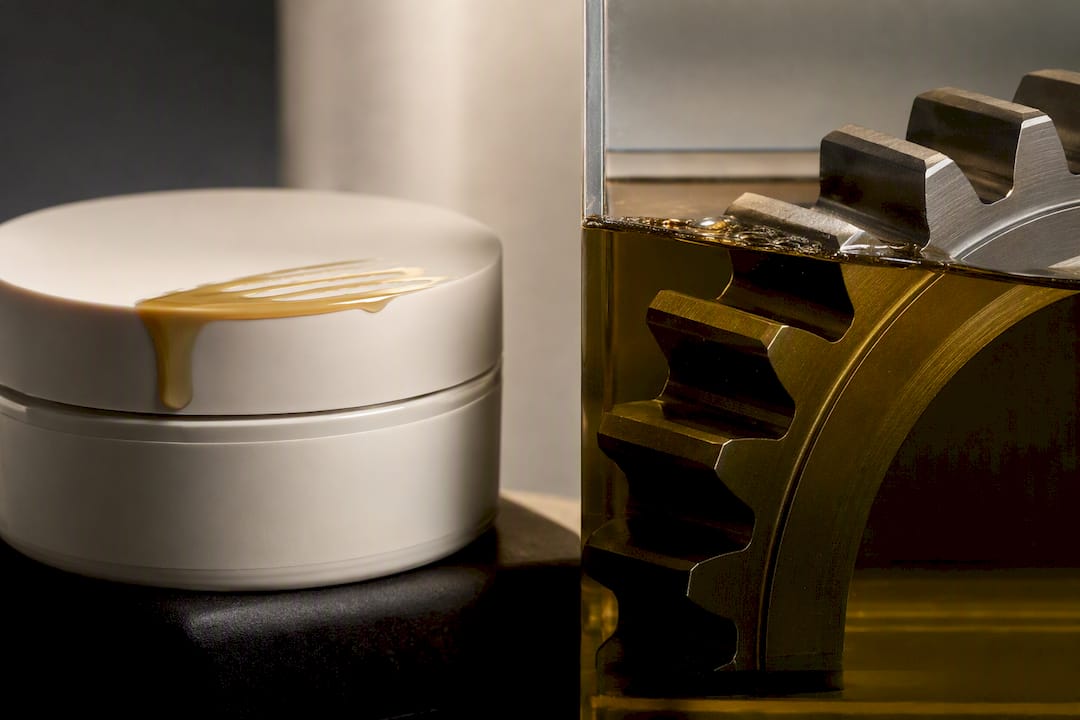
The bigger mistake is skipping the datasheet entirely and trusting a product description that says “chemical resistant” with no test data behind it. A real TDS names the solvents tested, the exposure time, and what actually happened. If a supplier cannot produce that, they are asking you to take their durability claim on faith, and faith is a poor substitute for a rub test.
I would also push back on the instinct to over-spec every label as permanent and industrial-grade. If your product line is heading toward refillable or recyclable packaging, a wash-off construction might serve your brand’s sustainability goals better than the toughest permanent adhesive on the market. Durability and recyclability sit on opposite ends of the same spectrum, and the right answer depends on what happens to that container after the customer empties it, not just what it needs to survive on the shelf.
_— Anthony_
Ready to Test Your Label Against the Real Thing?
A company with extensive experience in bespoke labels for beauty, spirits, and lifestyle brands understands that oily-surface and moisture-heavy challenges are real-world issues. They combine traditional print craftsmanship with modern film and adhesive technology and have a substantial track record of delivering labels that hold up past the point of sale.
If you are still choosing between vinyl and polyester, or you want to see how a laminate performs against your actual product before committing to a production run, start with our custom pressure-sensitive label capabilities. Request a sample and a technical datasheet for your specific application, and get a custom quote once you know exactly which construction survives your product’s real-world exposure.
Sources
- TDS No. B-637 (Allied) — Brady product datasheet
- Wash-off innovation (Bostik)
- Wash-off labels for PET package recycling | UPM Adhesive Materials
- Oily Surface Tape (DuraLabel)
FAQ
What is the most durable label material for oil and chemical exposure?
Polyester (PET) film with a permanent acrylic or specialty oily-surface adhesive and a protective topcoat generally offers the strongest combined resistance to oil, solvents, and heat.
What are weatherproof labels?
Weatherproof labels use synthetic films like polyester or vinyl with sealed edges and a laminate or topcoat that blocks moisture, UV exposure, and temperature swings from degrading the print or adhesive.
What are some durable adhesive labels for oily surfaces?
Specialty oily-surface adhesives are formulated to bond directly to grease-contaminated equipment, while aggressive permanent acrylics on a polyester face work well for cleaner but chemically exposed surfaces.
Can you get waterproof labels?
Yes. Vinyl, polyester, and laminated BOPP films are all commonly used to produce waterproof labels, and pairing them with a topcoat or laminate adds further protection against soap, condensation, and submersion.
Should I choose a permanent or wash-off label for my product?
Choose permanent adhesive for anything needing years of oil or chemical resistance, and choose a wash-off construction only when the container itself is meant to be recycled or reused after the label is removed.