Custom Paper Rope Handle Bags
A paper-based handle format for retail programmes that want a practical carrier with a consistent material story.
At a glance
- Minimum order quantity
- Typically 500–1,000 units for carrier bags with complex finishes
- Sampling
- Presentation-quality sample in 5–7 working days. The sample cost is credited against your first approved production order.
- Production lead time
- 15–20 working days after artwork approval
- Delivery to Europe
- DDP or DAP to the EU and the UK, DDP to Switzerland; your customs broker confirms duty and VAT rates
- Production
- Made to order (OEM/ODM)
- Country of origin
- Huai'an, Jiangsu, China
- Paper-Based Handle
Overview
Twisted paper rope is the standard handle choice for a broad range of retail carrier bags. It keeps the handle paper-based and visually straightforward, making it a useful starting point when the brief prioritises material simplicity over a textile detail.
The bag still has to be specified around what it will carry. Product dimensions and weight determine the bag proportions, paper choice and whether the base needs reinforcement; the artwork then determines the print and finishing route rather than changing those structural decisions.
A paper-rope bag is folded from printed paper into a front, a back and two side gussets, with the base folded and glued flat underneath. The top edge is turned inwards to make a doubled band, and the twisted paper-rope handles are fixed inside that band behind a paper patch, so the pull passes from the rope into the doubled edge and then down the front and back panels. Where the contents need it, a loose board sits in the base to spread the weight and keep the bottom square.
What to decide for this format
Product load
Confirm the heaviest item and whether it has rigid corners so the paper and base can be specified for the actual use.
Handle length
Decide whether the bag will be carried by hand or needs more clearance, then set the handle length against the finished bag.
Top-fold print and inside walls
Carry the background colour over the top-fold allowance, because the turned-in band shows the printed face inside the opening; decide separately whether the inside walls are left plain or printed.
Materials
Coated Art Paper
A smooth paper surface for full-colour retail artwork, lamination and foil.
Kraft Paper
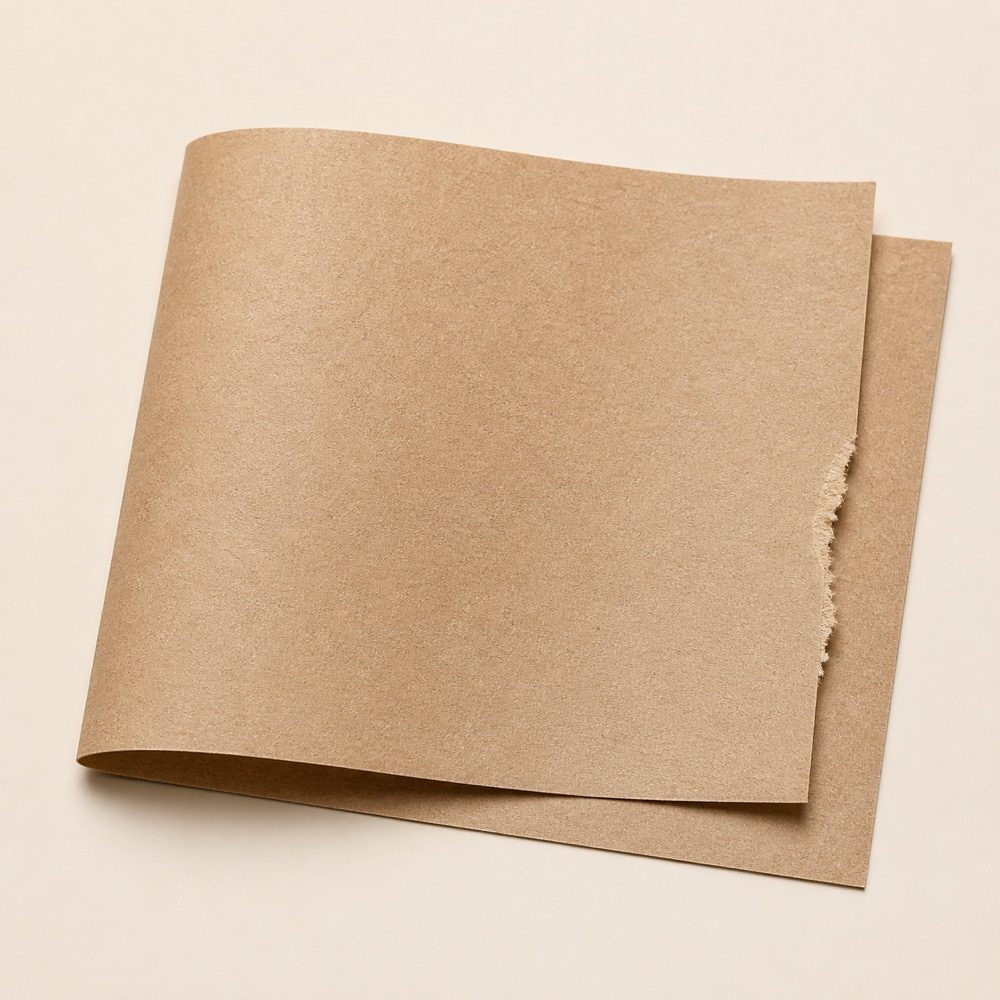
Brown or white kraft for briefs that prefer an uncoated, material-led surface.
Specialty & Textured Papers
Surface-led papers for retail programmes where texture is part of the design.
FSC-Certified & Recycled Paper
Certified or recycled-content options, confirmed against the required print and load.
Twisted Paper-Rope Handles
Paper-rope length, colour and attachment are specified against the formed bag and intended load.
Base Reinforcement
An inserted board can be specified where bottles, boxes or hard corners require added base support.
Across the Paper Carrier Bags range
This page covers what is particular to this product. The full lists for the whole range are set out once, on the Paper Carrier Bags page:
What applies to this product
- Printing & Finishes
- UV Offset Printing; Matte & Soft-Touch Lamination; Hot Foil Stamping; Embossing & Debossing; Spot UV; Die-Cut Windows & Shapes
- Applications
- Luxury & Fashion Retail; Beauty & Fragrance; Events & Corporate
- How it is made
- Load & dimension review; Dieline & artwork; Sampling; UV offset printing; Lamination & finishing; Forming & handle fitting; Inspection & export packing
What you can customise
- Finished dimensions built around the product or box carried
- Paper type and weight matched to the intended load
- Paper-rope colour, length and attachment
- Any required base reinforcement
- CMYK, supported spot colours and finishing combination
Specifications
| Minimum order quantity | Typically 500–1,000 units for carrier bags with complex finishes |
|---|---|
| Production lead time | 15–20 working days after artwork approval |
| Printing | KBA 8+2 UV offset press with automated bag forming and post-processing |
Terms for this specification
- Sampling
- Presentation-quality sample in 5–7 working days. The sample cost is credited against your first approved production order.
- Colour matching
- Pantone references and physical samples are used where the selected print process supports them. The approval method follows the substrate, artwork and process.
- Certifications
- ISO 9001, ISO 14001:2015, ISO 45001 and China Environmental Labelling (Ten-Ring). ISO 22000 applies to eligible food-contact work.
- Sustainable options
- FSC-certified or recycled-content paper and board, water-based inks and adhesives, and fibre-based fitments are available where the selected construction supports them.
Design & artwork
From an artwork check, through a dimensioned dieline and print-ready files, to a full concept package across a range — done by the factory that will make it.
Frequently asked questions
When should we choose a paper-rope handle?
Choose it when you want a straightforward retail carrier with a paper-based handle. The intended load still needs to be reviewed because handle choice does not replace the need to specify the paper and base correctly.
Can one paper-rope bag size serve several products in our range?
It can, if it is sized to the largest item it will carry. A bag that is roomy for the smallest product lets it slide about and looks under-filled, so a range with very different products usually settles on a small family of bag sizes, with the artwork adapted to each. List the products the bag should serve and the sizes are planned from them together.
Will paper-rope handles hold a heavier product?
They can, if the whole bag is specified for the weight rather than the handle alone. The pull runs from the rope through the patch and the doubled top band into the paper, so the paper, the depth of the top turn and the size of the patch are chosen together, often with a board in the base. A handle that holds an empty bag can still distort the top edge under the real product, so the made-up sample is lifted and carried loaded before it is approved.
What do we need to measure before pricing a paper-rope bag?
Measure the largest item and weigh everything the bag will carry at once, because the size and the full load set the bag size, the paper and whether the base needs a board. Then add the quantity per order, the artwork or a rough layout, and whether you want a coated or kraft surface. If the bag must sit beside an existing box or carton, include that pack's dimensions and colour reference so the proportions and colour can be set together. Say which country the bags are delivered to and, for the EU or the UK, whether you want DDP or DAP.
From the Journal
Related products
Request a custom packaging quote
What to send for a quote
- The product it is for, and the format you have in mind
- Size as length × width × height, and whether those are inside or outside dimensions
- Quantity, or two or three quantities if you want to compare unit prices
- Material and finish preferences, or the look you are after
- Artwork status: print-ready files, a draft, or nothing yet
- The date you need the goods by
- The destination country
Missing some of these? Send what you have, and we will ask about the rest.