Custom Cotton Cord & Ribbon Handle Paper Bags
A softer handle detail for retail and gifting, specified as part of the bag rather than added as an afterthought.
At a glance
- Minimum order quantity
- Typically 500–1,000 units for carrier bags with complex finishes
- Sampling
- Presentation-quality sample in 5–7 working days. The sample cost is credited against your first approved production order.
- Production lead time
- 15–20 working days after artwork approval
- Delivery to Europe
- DDP or DAP to the EU and the UK, DDP to Switzerland; your customs broker confirms duty and VAT rates
- Production
- Made to order (OEM/ODM)
- Country of origin
- Huai'an, Jiangsu, China
- Cotton or Ribbon
Overview
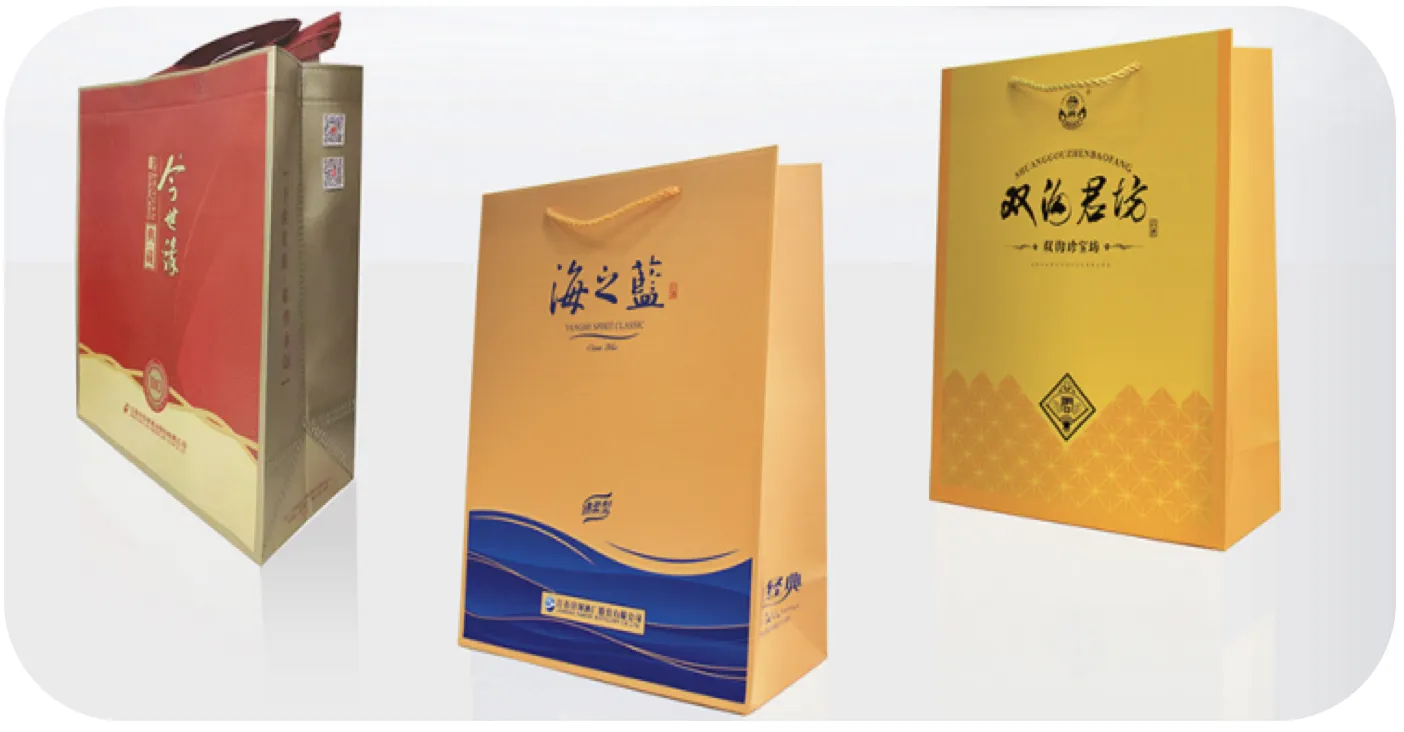
Cotton cord and ribbon change the feel of a paper carrier before the customer notices the printing. They suit retail and gift programmes where the handle is expected to contribute a softer, more considered detail than paper rope.
Handle material, colour and length should be judged with the made-up bag, not from a loose swatch. The product load determines the bag and reinforcement requirements, while the paper surface and finishing plan determine how the handle colour sits beside the printed pack.
The bag body is built like other paper carriers: folded panels and side gussets, a glued base and a turned-in top band. What changes is the handle. Cotton cord or ribbon passes through holes punched in the doubled top band, and its ends are either knotted inside the bag or held behind a reinforcing patch. The holes can be left plain or finished with eyelets, which is a separate choice from the fixing. The knot or the patch shows on the inside and an eyelet shows on the outside, so both belong in the specification rather than being settled at the end of sampling.
What to decide for this format
Cord or ribbon
Choose the handle by the feel and visual line the pack needs, then review the choice on a formed sample.
Colour coordination
Set the handle colour beside the printed paper and any foil or lamination rather than approving it in isolation.
Handle fixing
Decide whether the handle ends are knotted inside the top band or held behind a reinforcing patch, judging how each looks to the shopper who opens the bag as well as how it holds.
Materials
Coated Art Paper
A smooth paper surface for full-colour retail artwork, lamination and foil.
Specialty & Textured Papers
Surface-led papers for programmes where the bag is part of the gift presentation.
FSC-Certified & Recycled Paper
Certified or recycled-content paper options, confirmed against print, finish and load.
Cotton Cord & Ribbon
Textile handle colour, width or diameter, length and attachment are approved on the formed bag.
Base Reinforcement
An inserted board can be specified where the intended contents require added base support.
Across the Paper Carrier Bags range
This page covers what is particular to this product. The full lists for the whole range are set out once, on the Paper Carrier Bags page:
What applies to this product
- Printing & Finishes
- UV Offset Printing; Matte & Soft-Touch Lamination; Hot Foil Stamping; Embossing & Debossing; Spot UV; Die-Cut Windows & Shapes
- Applications
- Luxury & Fashion Retail; Beauty & Fragrance; Spirits & Wine; Events & Corporate
- How it is made
- Load & dimension review; Dieline & artwork; Sampling; UV offset printing; Lamination & finishing; Forming & handle fitting; Inspection & export packing
What you can customise
- Finished dimensions built around the product or gift pack carried
- Paper type and weight matched to the intended load
- Cotton-cord or ribbon colour, length and attachment
- Any required base reinforcement
- CMYK, supported spot colours and finishing combination
Specifications
| Minimum order quantity | Typically 500–1,000 units for carrier bags with complex finishes |
|---|---|
| Production lead time | 15–20 working days after artwork approval |
| Printing | KBA 8+2 UV offset press with automated bag forming and post-processing |
Terms for this specification
- Sampling
- Presentation-quality sample in 5–7 working days. The sample cost is credited against your first approved production order.
- Colour matching
- Pantone references and physical samples are used where the selected print process supports them. The approval method follows the substrate, artwork and process.
- Certifications
- ISO 9001, ISO 14001:2015, ISO 45001 and China Environmental Labelling (Ten-Ring). ISO 22000 applies to eligible food-contact work.
- Sustainable options
- FSC-certified or recycled-content paper and board, water-based inks and adhesives, and fibre-based fitments are available where the selected construction supports them.
Design & artwork
From an artwork check, through a dimensioned dieline and print-ready files, to a full concept package across a range — done by the factory that will make it.
Why Yuan Packaging
- KBA 8+2 UV offset line dedicated to bags — instant cure handles heavy solids and dark grounds cleanly
- Handle and base construction specified against the load, not applied as a standard template
- Bags, cartons and rigid boxes produced on one site so a retail programme keeps one colour standard
Frequently asked questions
What is the difference between cotton cord and ribbon handles?
Both provide a textile handle detail, but they read differently in the hand and against the bag surface. The right choice depends on the visual direction, the intended carry and the formed sample rather than a universal quality ranking.
Can ribbon-handle bags use foil or soft-touch lamination?
Yes. Those finishes are available on paper carrier bags, subject to the chosen paper and artwork. The complete combination should be reviewed together because the handle, surface and printed colour all affect the final impression.
Do ribbon handles need eyelets?
No. An eyelet finishes the punched hole; it does not fix the handle, which is still knotted or held behind a patch inside the bag. Eyelets protect the hole edge where a cord rubs and add a small metal detail to the outside, so they are chosen for the look and for the handle material. Without them, the hole is punched clean through the doubled top band.
Which handle details should we settle before pricing a ribbon-handle bag?
The handle material, its colour reference, its preferred length, how the ends are fixed and whether the holes take eyelets. With those, give the bag size or the product it carries, the expected load, the order quantity and the finishes planned for the paper. A photo of a bag you like is useful too, because it shows the handle width and fixing style more clearly than a description. Add the delivery country, the date you need the bags and, for the EU or the UK, whether you want DDP or DAP.
From the Journal
Related products
Request a custom packaging quote
What to send for a quote
- The product it is for, and the format you have in mind
- Size as length × width × height, and whether those are inside or outside dimensions
- Quantity, or two or three quantities if you want to compare unit prices
- Material and finish preferences, or the look you are after
- Artwork status: print-ready files, a draft, or nothing yet
- The date you need the goods by
- The destination country
Missing some of these? Send what you have, and we will ask about the rest.