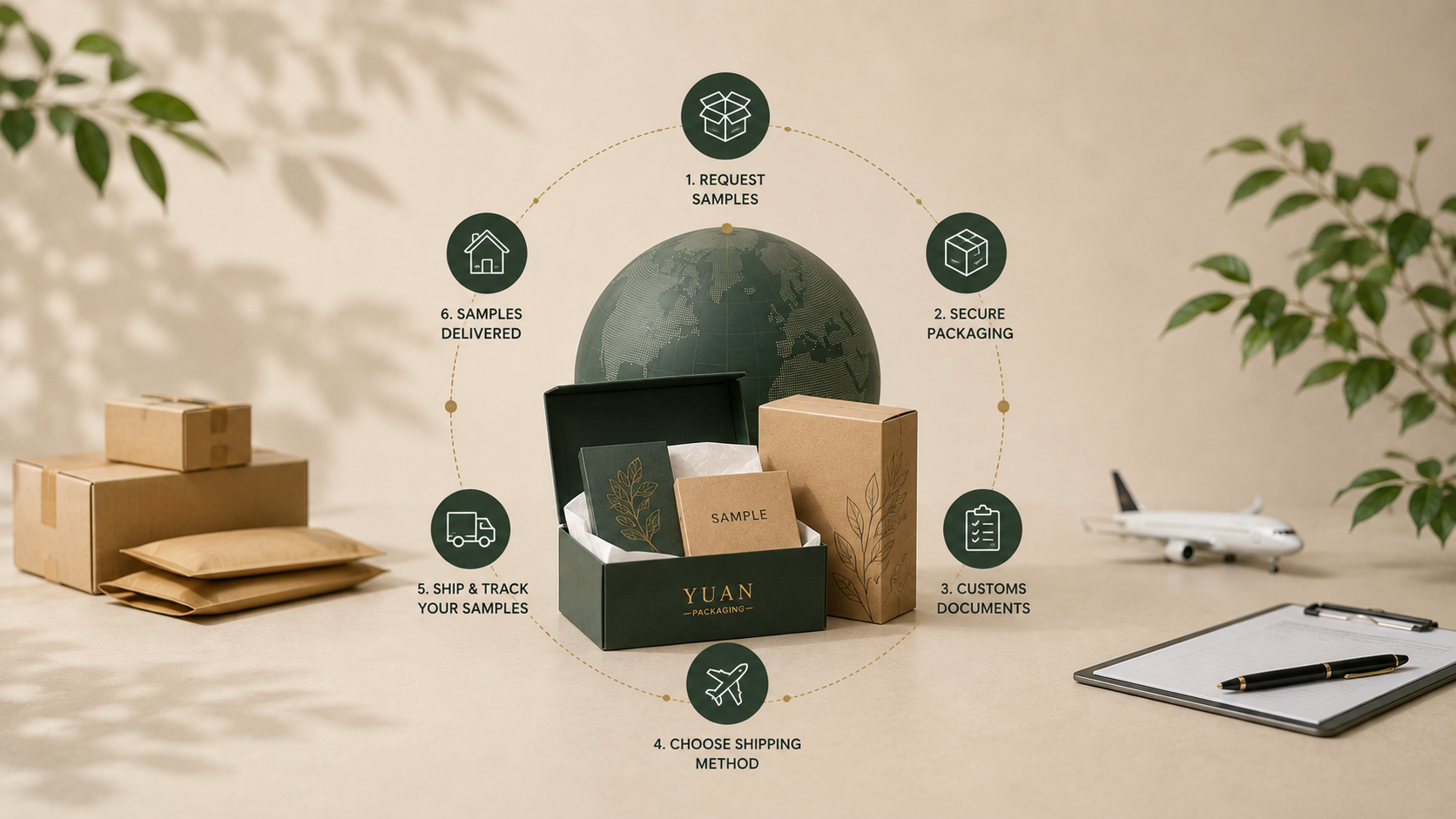
Physical samples are the single most effective way to de-risk a custom packaging order. Approving structure, colour, and finish in your hands — rather than on a screen — removes the largest cause of costly reprints. But a sample is only useful when it arrives quickly and clears customs without drama. This guide covers how packaging samples ship from China, which courier to use, what paperwork is needed, and how to keep the whole process smooth.
Table of contents
- Why samples come first
- How samples are shipped
- Cost and who pays
- Customs and clearance
- Getting the paperwork right
- How to speed things up
- Reviewing the sample when it arrives
- From sample to production
- Summary
- Frequently asked questions
Why samples come first
Samples come first for a reason. Before committing to a production quantity, a physical or pre-production sample confirms that the dieline, board, print, and finishing match your specification. It is the step that connects the questions of minimum order quantity and lead time to a real, approvable object. A sample is produced individually and does not reflect production pricing, but it is the cheapest insurance you can buy against a five- or six-figure production error.
How samples are shipped
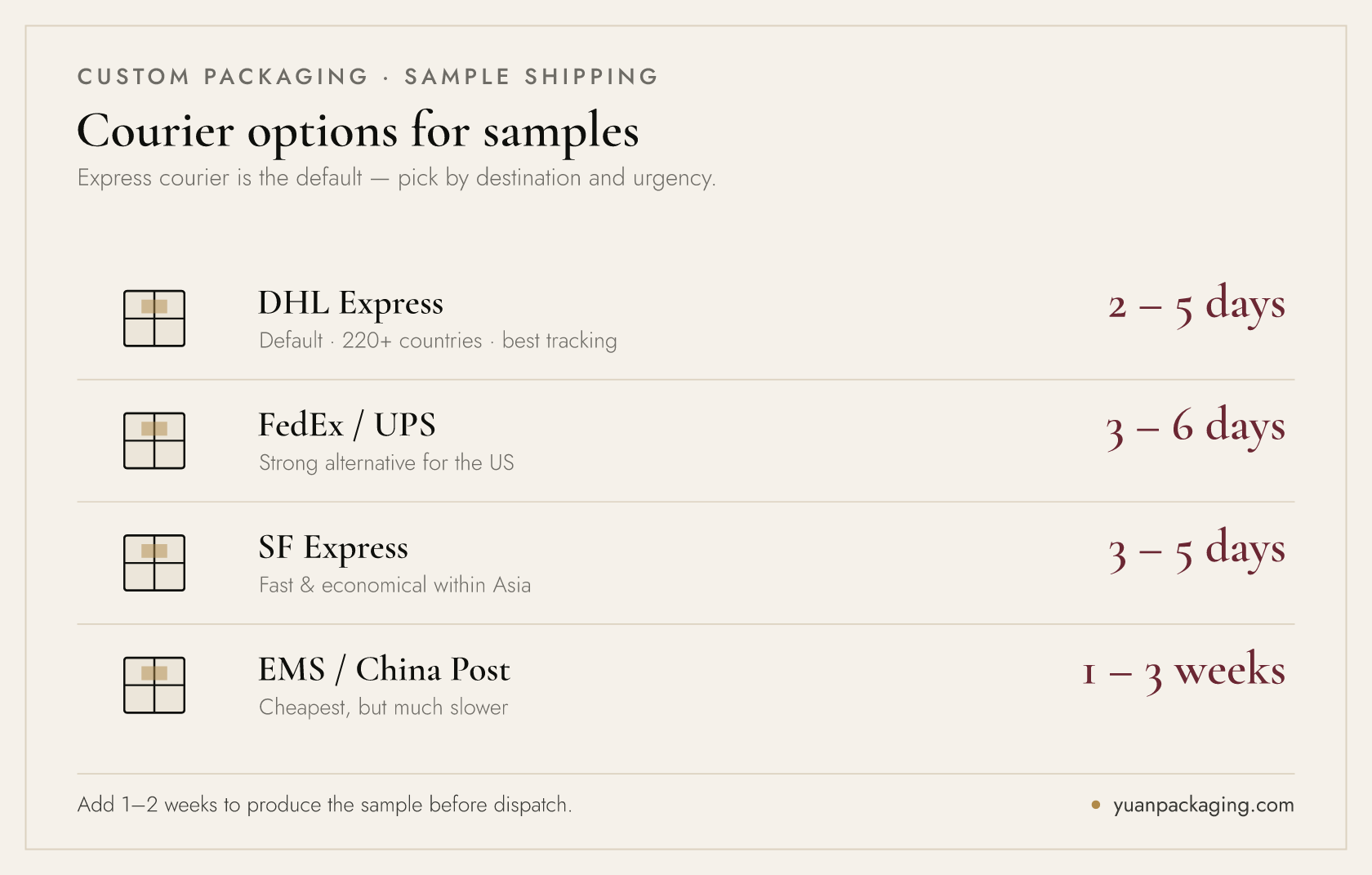
For shipping, express courier is the default for samples. DHL Express is the most widely used: it reaches 220+ countries, offers reliable tracking, and typically delivers from China in two to five days. FedEx and UPS are strong alternatives, particularly for the United States. SF Express is fast and economical within Asia-Pacific. EMS / China Post is cheaper but much slower (one to three weeks) and is best reserved for low-value, non-urgent items. For most international buyers, DHL is the right balance of speed and reliability.
Cost and who pays
On cost and who pays: a sample shipment is usually small and light, with courier cost commonly in the region of fifty to one hundred US dollars depending on destination and service. For serious, qualified enquiries we will often cover or share the sample shipping cost, because removing friction from the sampling stage is in everyone’s interest. The sample itself is produced and priced individually and is separate from any future production order. US buyers can see the same sample timings alongside freight and customs guidance on our United States sourcing page.
Discuss your packaging project
Customs and clearance
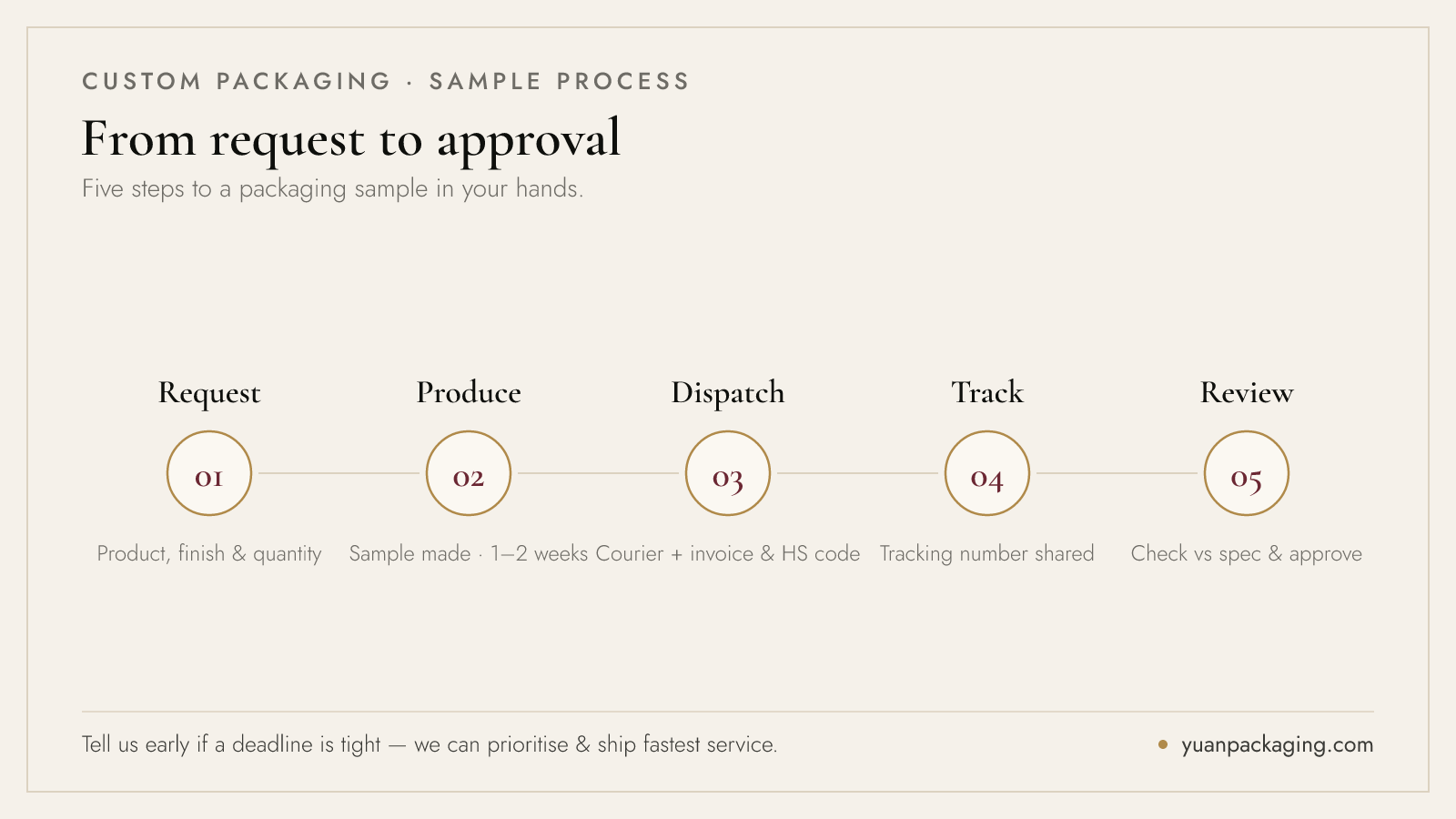
Customs is where samples occasionally get stuck, and accurate paperwork is the fix. Every international shipment needs a commercial or proforma invoice describing the contents, quantity, declared value, HS (tariff) code, and Incoterms. Packaging samples should be described honestly and, where applicable, marked as samples of no commercial value or low declared value. Whether any duty or tax applies depends on the destination country and the declared value — thresholds and rules vary by market and change over time, so check the current rules for your destination or let the courier advise.
Getting the paperwork right
Get the paperwork right and clearance is usually quick. The commercial invoice should match the physical contents exactly — under-declaring to avoid duty risks delays, penalties, and seizure, while over-declaring means unnecessary tax. Include accurate sender and receiver details, and for some markets the recipient’s tax identifier (for example an EORI number in the EU). Clear, consistent documentation is what keeps a sample moving through customs rather than sitting in a broker’s queue.
How to speed things up
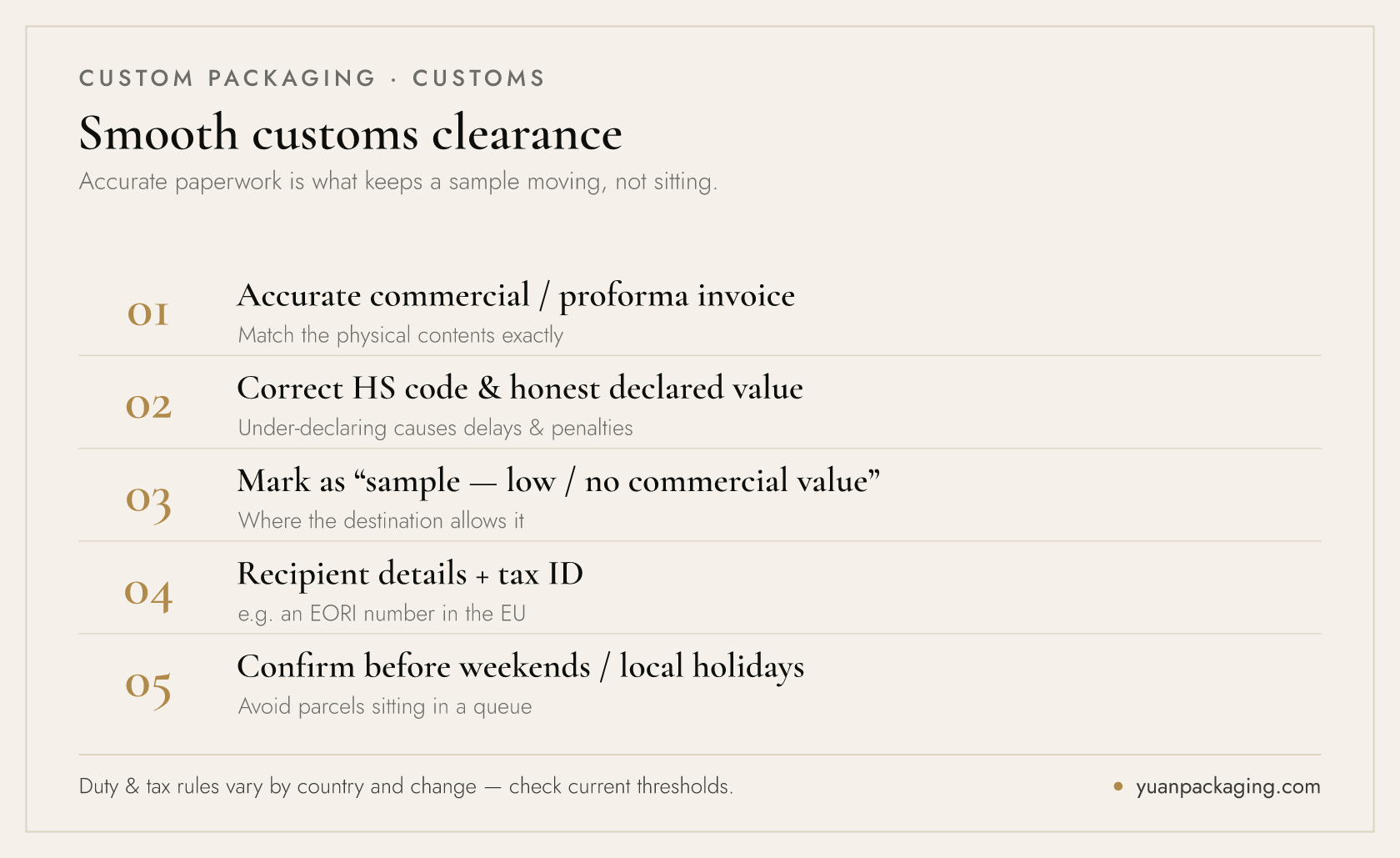
A few practical steps speed things up. Ship on a courier account with accurate, complete paperwork; avoid dispatching just before weekends or local public holidays at the destination; confirm the recipient’s full address, phone number, and any tax identifier in advance; and use the courier’s tracking from pickup. If a shipment is time-critical — for a pitch, a trade show, or a launch deadline — tell us at the request stage so we can prioritise production and choose the fastest service.
Reviewing the sample when it arrives
When the sample arrives, review it against your specification promptly: check structure and fit, colour against your Pantone references, finishing quality, and any functional elements such as closures or inserts. Approving or commenting quickly keeps your timeline intact. Once the sample is signed off, the project moves from sampling into production — and a clean, documented sample approval is what lets production start without further back-and-forth.
From sample to production
Beyond a single sample, the sampling stage is the start of a longer relationship. Once your specification is approved, repeat and high-volume orders run from that confirmed standard, often without re-sampling. For brands moving toward volume, our facility is built for high-volume manufacturing — four dedicated production lines running from 100,000-unit launches to multi-million-unit annual programmes — with a single point of contact from the first sample through to scheduled production and delivery.
Summary
In short: choose express courier (usually DHL), get the commercial invoice and HS codes right, declare honestly, and confirm the recipient’s details and any tax identifier up front. Do that and a packaging sample from China should reach you within a week. If you would like samples of your packaging — or a sample kit of our finishes and structures — tell us about your project and we will arrange dispatch.
Frequently Asked Questions
How are packaging samples shipped from China?
Almost always by express courier — DHL Express is the default and typically delivers in two to five days, with FedEx and UPS strong for the US and SF Express within Asia. EMS is cheaper but much slower. Every shipment needs a commercial invoice with an HS code and declared value.
How much does it cost to ship packaging samples?
A small sample shipment is commonly around fifty to one hundred US dollars by express courier, depending on destination and service. For serious, qualified enquiries we will often cover or share the cost — the sample itself is produced and priced separately from any production order.
Will I pay customs duty on packaging samples?
It depends on the destination country and the declared value. Samples should be declared honestly and, where applicable, marked as samples of low or no commercial value. Duty and tax thresholds vary by market and change over time, so check the current rules for your destination or ask the courier.
How long do packaging samples take to arrive?
Producing a sample typically takes one to two weeks, then express courier delivery is usually two to five days — so allow roughly two to three weeks end to end. Tell us if a deadline is tight and we can prioritise production and choose the fastest service.