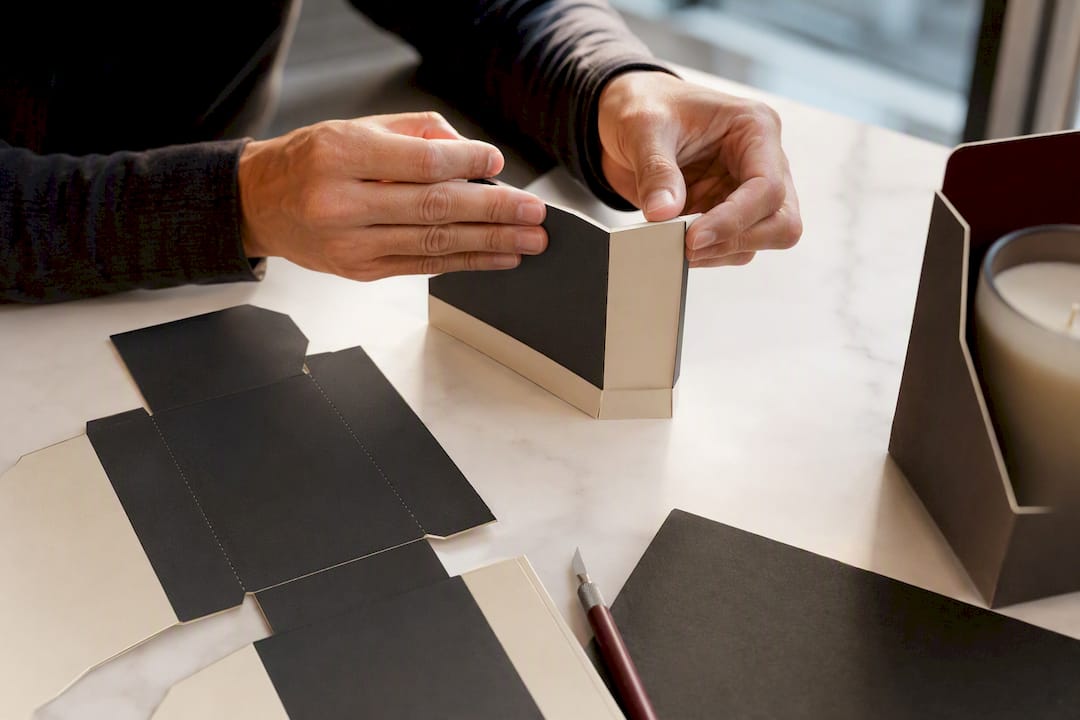
For most small-batch candle brands, a rigid box or a strong folding carton with a custom-fit insert, paired with a consistent front-panel hierarchy, delivers the best mix of protection, shelf appeal, and unboxing value. It keeps glass jars safe in transit, gives your logo and scent name room to breathe, and photographs well for both retail shelves and product pages. The sections below walk through the format ideas, materials, and production checklist you need to get there.
**TL;DR:** Rigid boxes with custom inserts and sliding drawer designs offer superior protection and unboxing experiences for premium or gift set candles. Materials such as 18 pt or 24 pt board with finishes like foil stamping or soft-touch lamination enhance perceived quality and brand differentiation. Proper insert sizing and test drop procedures are essential to prevent breakage during transit, especially for heavier glass jars. Eco-friendly options like recycled kraft with limited ink or compostable films support sustainability without sacrificing durability. Starting with prototypes, requesting samples, and confirming safety and branding details early can prevent costly errors before large-scale production.
Yuanpackaging
Explore packaging solutions
Table of Contents
- Creative Candle Box Design Ideas Worth Adapting
- How Do You Choose the Right Structure for Your Candle?
- What Materials and Finishes Raise Perceived Value?
- How Do You Keep Glass Candle Jars Safe in Transit?
- Branding and Artwork Tips for the Front Panel
- Sustainable and Reusable Candle Packaging Options
- Practical Checklist Before You Send Candle Boxes to Print
- What Yuan Packaging Brings to Candle Box Production
- Balancing Design Ambition and Production Reality
- Request a Sample and See the Difference in Hand
- Sources
- FAQ
Creative Candle Box Design Ideas Worth Adapting
Candle box design succeeds or fails on one question: does the format match how the product is sold? Here are seven approaches we see working across price points and retail channels.
- *Rigid two-piece box with a die-cut insert.** The premium default. A lid-and-base rigid box holds the jar snugly and reads as high-end the moment a customer lifts the lid.
- *Sliding drawer box.** A slide-out tray inside a rigid sleeve. It slows the unboxing down just enough to feel deliberate, which works well for gift sets.
- *Paper tube.** Round, lightweight, and distinctive on a shelf full of rectangular cartons. Tubes also cut material use compared to a full rigid box.
- *Tuck-top folding carton with a window.** The budget-friendly workhorse. A die-cut window lets the wax color sell the product without extra printing.
- *Tin plus outer carton.** Pairs a reusable metal vessel with a printed sleeve, aimed at buyers who want to keep the container after the candle is gone.
- *Multi-candle gift set layout.** A single outer box with internal dividers for three or four scents, ideal for holiday bundles.
- *Minimalist foil-stamped core line with bold seasonal colorways.** One consistent structural die-line, then swap ink and foil colors by season so the tooling investment gets reused year-round.
Rigid boxes and tubes suit premium and gift-set positioning; tuck-top cartons with windows suit everyday retail and lower unit costs. Structural comparisons across candle formats generally link heavier vessels to rigid or tube construction, and lighter travel formats to folding cartons.
How Do You Choose the Right Structure for Your Candle?
Structure decisions come down to four practical factors: jar weight, how many SKUs you’re running, whether you sell direct-to-consumer or through retail, and your minimum order quantity.
- *Heavy glass jars (10 oz or more):** favor rigid boxes or corrugated for shipping protection.
- *Travel tins or votives:** paper tubes or slim folding cartons keep material costs down.
- *Retail shelf placement:** tuck-top cartons with windows sell the product visually without extra photography.
- *DTC or subscription boxes:** drawer-style rigid boxes elevate the unboxing moment customers screenshot and share.
- *Low MOQ test runs:** folding cartons are cheaper to prototype before committing to rigid box tooling.
As a rule of thumb, add a foam or die-cut insert any time the jar has less than a quarter inch of clearance inside the box. Skipping the insert to save a few cents almost always costs more in breakage claims.
What Materials and Finishes Raise Perceived Value?
Board weight and finish choice do more to signal quality than any logo placement. Paper stock guidance from PrintPlace breaks candle box paperboard into three practical tiers.
- *14 pt stock:** lightweight, suited to retail display cartons that won’t be shipped individually.
- *18 pt stock:** the workhorse premium choice, rigid enough for most jar weights and standard shipping.
- *24 pt stock:** maximum durability, reserved for heavier jars or boxes going straight into a shipping mailer without a secondary carton.
Finish selections carry as much weight as the board itself: soft-touch lamination gives a velvet-like hand feel, spot UV adds contrast without full foil cost, foil stamping and embossing signal luxury on a logo mark, and scented varnish is a small, memorable touch some brands use on the lid seam. For windows, PET film is the cheaper standard, while compostable PLA film costs more but supports an eco-forward brand story. The U.S. candle market’s steady growth, tracked by Statista, is exactly why differentiated packaging pays off: more brands are competing for the same shelf space, and finish choices are often the first thing a shopper notices.
How Do You Keep Glass Candle Jars Safe in Transit?
Protection starts with the insert, not the outer box. Die-cut cardboard inserts are the most common and cost-effective option; molded pulp offers a more premium, tactile feel with decent shock absorption; EVA foam handles the roughest transit conditions; and simple corrugated dividers work well for multi-candle sets.
- Measure jar diameter and height, then design the insert cavity with roughly 1/16 inch of clearance, not more.
- Run a basic drop test from waist height before committing to a full production order.
- Ship rigid boxes nested inside a stronger corrugated outer mailer rather than relying on the retail box alone.
- Keep void-fill minimal when the insert is doing its job. Extra padding usually means the insert was sized wrong.
**Pro Tip:** _Test your insert with a jar filled to actual wax weight, not an empty jar. An unfilled jar bounces differently than a full one, and that difference shows up as breakage claims later._
Branding and Artwork Tips for the Front Panel
Front-panel hierarchy should follow a strict order: logo first, scent name and a one-line descriptor second, then small icons for net weight and burn time. Cramming all three onto one visual plane is the most common mistake we see in first-round proofs.
- Build one repeatable layout for the whole scent line, then vary only a color band or swatch per scent. This keeps SKU expansion cheap because the die-line and print setup stay identical across new flavors.
- Save the interior panel for the story: sourcing notes, burn instructions, and safety copy. That keeps the exterior clean and photograph-ready.
- Use foil or embossing sparingly on interior panels; design studios that specialize in unboxing experiences often reserve the boldest tactile finish for the moment the lid opens, not the shelf-facing panel.
Sustainable and Reusable Candle Packaging Options
Eco-conscious design doesn’t have to mean a dull box. Recycled kraft board with a single accent ink color reads as intentional rather than cheap, and reducing full-bleed ink coverage cuts both cost and environmental footprint.
- Recycled kraft plus one or two spot colors instead of full-color printing.
- Compostable window film as an alternative to PET, with the trade-off being slightly less optical clarity.
- Keepsake-style boxes or reusable jars designed to be repurposed as storage after the candle burns down.
- Clear, specific material claims on the box itself. State the actual board type or recycled content percentage rather than a vague “eco-friendly” label, which regulators and customers alike increasingly scrutinize.
Reuse messaging works best when it’s simple: a short line like “keep me, I make a great catch-all” does more than a paragraph of sustainability language.
Practical Checklist Before You Send Candle Boxes to Print
Getting from concept to production-ready files takes a specific sequence, and skipping steps is where most first-time orders go wrong.
- Measure your jar precisely and set clearance tolerances before requesting a dieline.
- Request a 3D mockup from your manufacturer to confirm proportions before committing to print files.
- Order physical material samples, not just digital proofs, to check board weight and finish in hand.
- Approve final color and finish proofs, then run a small production batch before scaling to a full run.
- Confirm barcode, UPC, and required safety copy placement don’t conflict with your artwork.
- Photograph the finished box from front, side, and open angles for your product pages and any Amazon A+ content you build around the launch.
This sequence mirrors the dieline-to-sample workflow most packaging suppliers recommend, and it catches sizing errors before they become an expensive reprint.
What Yuan Packaging Brings to Candle Box Production
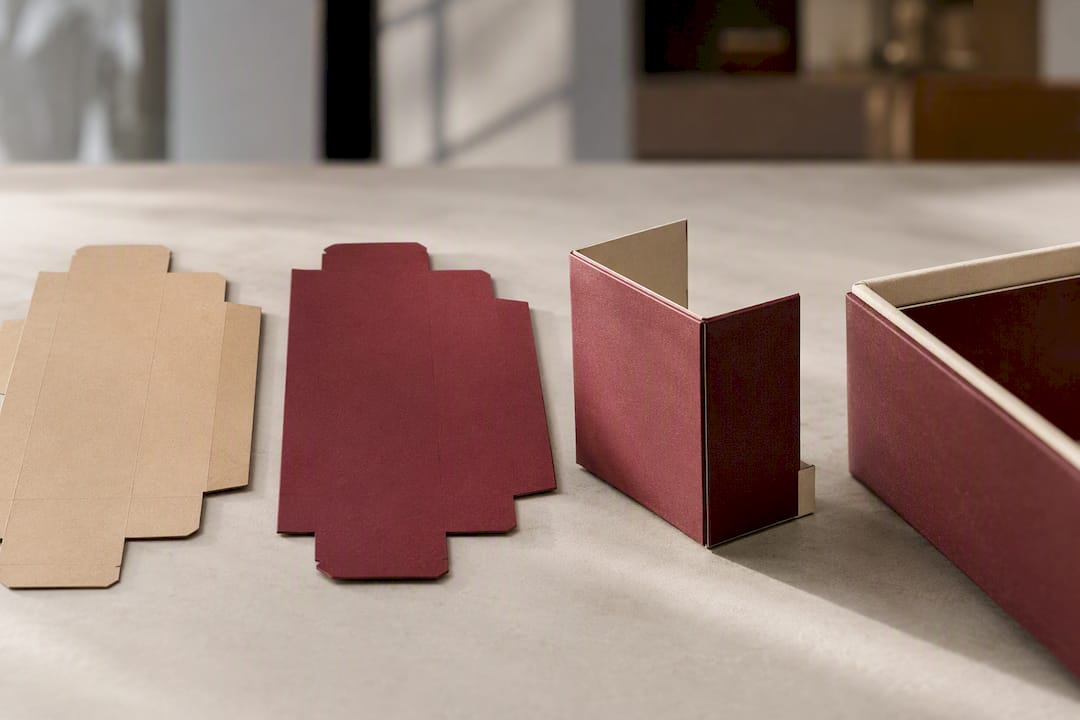
Twenty-five-plus years in the business and more than 100 million units delivered across 5,000 brands means most structural and finishing questions have already come up before. Yuan Packaging produces bespoke rigid candle boxes alongside sustainable and FSC-certified material options, so eco-conscious brands aren’t stuck choosing between durability and their values.
When vetting any manufacturer, ask about:
- Sample and prototyping options before committing to a full production run.
- Minimum order quantities and how they scale with SKU count.
- Finishing capabilities: foil, embossing, spot UV, soft-touch lamination.
- Lead times from approved dieline to delivered stock.
The standard path runs dieline, then material sample, then a small trial run, then full production. It’s a slower start than jumping straight to bulk ordering, but it catches costly mistakes early.
Balancing Design Ambition and Production Reality
Favor manufacturability over an elaborate finish whenever the two conflict on a first order. Small brands can mimic premium looks affordably with a single foil accent instead of full coverage, or soft-touch lamination on just the lid. Packaging decisions compound over hundreds of production runs. Get the structure right first.
_— Anthony_
Request a Sample and See the Difference in Hand
Reading about board weights and finishes only goes so far. Yuan Packaging gives candle brands a way to actually hold the decision before committing to a full production run: custom rigid candle boxes built with sustainable material options, foil stamping, embossing, and soft-touch finishes applied at scale rather than as a one-off craft project.
Beyond candle-specific structures, the same production line supports paper tube formats for travel sizes and windowed folding cartons for retail-facing SKUs, so a full product line can share one consistent look without juggling multiple suppliers. If your brand also sells candles alongside skincare or spirits, the same label printing capabilities extend to matching jar labels. Request a sample of the board weight and finish you’re considering, or get a quote on a custom rigid candle box before your next production run.
Sources
- Statista — Size of the candle market in the U.S.
- PrintPlace — Candle boxes
- Box Genie — Step-by-step: Designing custom candle boxes that sell
FAQ
What Are the Legal Requirements for Candle Boxes?
Candle packaging in most markets requires fire-safety warnings, burn instructions, and clear ingredient or fragrance disclosure on either the box or an attached label; exact rules vary by country, so check your local consumer product safety authority before finalizing safety copy.
Is It Cheaper to Buy or Make Your Own Candle Containers?
DIY containers can save money at very low volumes, but once you’re ordering more than a few hundred units, custom-manufactured boxes and inserts typically cost less per unit and reduce breakage losses compared to sourcing containers piecemeal.
What Are Some Creative Ideas for Candle Containers?
Paper tubes, sliding drawer boxes, tin-and-carton combinations, and rigid two-piece boxes with die-cut inserts are among the most adaptable formats, each suited to a different combination of budget, jar weight, and retail positioning.
How Can I Make My Own Candle Containers?
Small-batch makers often start with tuck-top folding cartons and a simple die-cut insert, since these require lower minimum order quantities and can be prototyped with a manufacturer like Yuan Packaging before scaling to rigid boxes.