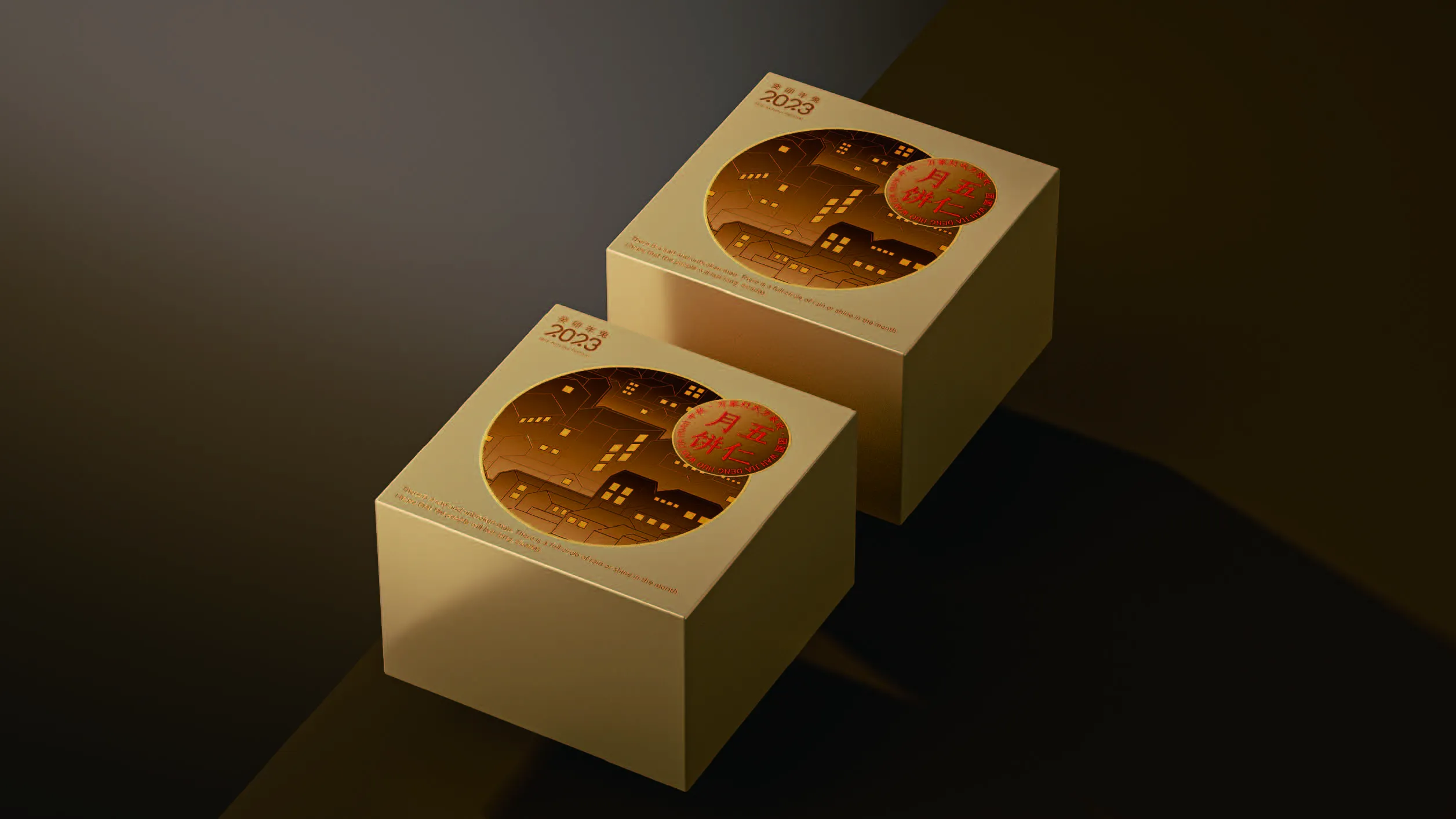
A food gift box is built in layers, and food contact packaging rules ask which layer touches the food and what could transfer to it. The layer that touches the food, such as a tray, bag, film, liner or jar, is in direct contact and carries the main compliance paperwork. The printed box, carton or tube around it is normally indirect contact, but indirect does not mean "no rules".
This guide covers the EU, the US and China for brand, packaging and procurement teams. It is general information, not legal advice.
TL;DR
- The layer that touches the food carries the food-contact compliance and its documents.
- A printed box outside a sealed inner pack is usually indirect contact, but EU and Chinese rules still cover materials that can transfer substances to food.
- Paper becomes food contact when food sits on it unwrapped.
- Ask each supplier for documents for the layer it makes.
- ISO 22000 certifies a food safety management system, not a box or a tray.
Table of Contents
- What Counts as Food Contact Packaging
- Direct vs Indirect Food Contact: Which Layer Touches the Food
- Primary, Secondary and Transport Packaging
- How a Food Gift Box Is Built: Inner Layer First, Paper Outside
- Indirect Contact Still Has Rules: Inks, Set-Off and Mineral Oil
- Documents to Ask For, by Market
- What ISO 22000 Does and Doesn't Tell You
- Our Perspective: Decide the Contact Layer Before the Box
- How to Brief a Food Gift Box Project
- Bring Your Food Gift Box to Production
- FAQ
- Sources
What Counts as Food Contact Packaging
In the EU, Regulation (EC) No 1935/2004 covers materials intended to come into contact with food "directly or indirectly", and materials that "can reasonably be expected to be brought into contact with food or to transfer their constituents to food under normal or foreseeable conditions of use". They must not transfer constituents to food in amounts that could endanger health or change the food unacceptably, and their labelling must not mislead consumers.
China's GB 4806.1-2016 likewise covers materials whose constituents may transfer into food, including inks and adhesives that may contact food directly or indirectly. In the US, under 21 CFR 170.3, a packaging component that does not migrate into food is not a food additive.
Direct vs Indirect Food Contact: Which Layer Touches the Food
The EU's GMP Regulation (EC) No 2023/2006 separates a material's food-contact side from its non-food-contact side and states: "The printed surfaces shall not come into direct contact with food." China's GB 4806.14-2023 likewise splits direct-contact from indirect-contact inks, whose constituents may still transfer into food.
The Finnish Food Authority gives a simple example: "the biscuits are first wrapped in clear plastic (direct contact with food) and then placed in a paperboard box (indirect contact with food)". The same page lists paperboard boxes as food contact materials, so the outer box is still inside the rules; it just does not touch the food.
| Product | Layer that usually touches the food | What the printed paper does | When the paper itself becomes food contact |
|---|---|---|---|
| Chocolates | Plastic tray, blister or flow-wrap | Rigid gift box or sleeve | Unwrapped pieces on a paper insert or in paper cups |
| Loose tea | Foil or laminate pouch, tin, or lined tube | Printed tube, box or caddy | Tea poured into an unlined tube |
| Mooncakes | Individual tray or bag per cake | Gift box and paper dividers | Dividers touching unwrapped cakes |
| Biscuits | Tray and film, or flow-wrap | Carton or gift box | Biscuits placed straight in the box |
| Honey and jam | Glass jar, with a gasket or coated lid | Gift box, sleeve, label | Not normally |
| Spirits and wine | Bottle and closure | Rigid box, tube, label | No |
When paper itself becomes food contact
Paper is food contact when food sits on it unwrapped, as in the last column above. Paper rules then apply to that part:
- China: GB 4806.8-2022, in force since 30 June 2023, covers paper and board, including waxed paper, silicone paper and moulded pulp.
- US: 21 CFR 176.170 covers the food-contact surface of paper for aqueous and fatty foods; 21 CFR 176.180 covers paper in contact with dry food.
- EU: paper and board have no specific EU measure, so national rules apply; Germany's BfR Recommendation XXXVI is a widely used reference (a recommendation, not a law).
Pro tip: If the food would otherwise sit straight on paper, say so in the brief, so a layer that touches the food can be planned between the food and the paper from the start.
Primary, Secondary and Transport Packaging
Industry calls the layer that holds the food primary and the printed box secondary. The EU packaging regulation uses different terms (sales, grouped and transport packaging) with their own definitions, and they do not map one-to-one. For compliance, what matters is which surface touches the food or could transfer substances to it, not what the layer is called.
How a Food Gift Box Is Built: Inner Layer First, Paper Outside
From the food outwards, a food gift pack usually has:
- A food-contact layer: an inner tray, bag, film, liner or jar, with its own documents.
- A paper insert or divider holding wrapped portions in place; see box insert options.
- A printed outer: a lid and base box, a folding carton or a tea and food caddy.
- A carrier bag or shipper.
In China, the State Administration for Market Regulation explained that under the over-packaging standard GB 23350-2021, mooncakes should not be packed with other products, apart from the oxygen absorbers and ice packs that protect them. The rules do not apply to exported food or to transport packaging.
A plastic tray inside a paper box also affects recycling; see mono material packaging.
How Yuan Packaging handles it
Our paper packaging does not touch food directly. We make the printed paper boxes, cartons, tubes and bags that go around the food. When a product needs a layer that touches the food, for example plastic, that layer can be made by our subsidiary, which holds ISO 22000 certification, and our paper packaging is made to go around it. Tell us at the quote stage what the food is and how it is packed, so the paper packaging can be planned around that inner layer.
Indirect Contact Still Has Rules: Inks, Set-Off and Mineral Oil
Inks and set-off
The EU GMP Regulation requires inks on the non-food-contact side to be formulated and applied so that substances from the printed surface are not transferred to the food-contact side, through the substrate or by set-off in the stack or reel, at levels that would breach the general safety rule of Regulation (EC) No 1935/2004. Switzerland's SR 817.023.21 defines printing inks as inks for the surface not in direct contact with food, and Germany's ink rules in the Bedarfsgegenständeverordnung apply to printed food contact articles from 1 January 2027.
Mineral oil from board and inks
EFSA noted that, in the literature, mineral oil levels in foods packed in recycled and printed paperboard seem to be higher; in one pasta example it cited, adhesives and transport boxes also contributed. Germany's BfR names fresh-fibre board, inks made without mineral oil and functional barriers as remedies. Its Q&A says transfer from packaging is to be expected especially in dry foods with a large surface area, and that transfer from outer packaging must be considered as well as the direct food packaging.
A 2011 Austrian health-ministry answer said PP or PET inner bags can be considered effective barriers, while paper and PE apparently give almost no protection, and noted that vapour-tight films can increase microbial growth. A German 2022 draft ordinance, not in force, gave aluminium and plastics such as PET, polyacrylates, polyacetates and polyamides as examples of barrier materials.
Printing requirements for food packaging boxes
Ask the box supplier and the inner-layer supplier together:
- Is the board virgin fibre or recycled, and does that matter for this food?
- Which inks and varnishes go on the outside, and how are printed sheets stacked before converting?
- Is the inner layer a barrier for this food, storage time and temperature?
Pro tip: Choose the barrier together with the inner-layer supplier while the pack is being designed, not after the box artwork is approved.
Documents to Ask For, by Market
| Market | Layer | Ask for | Issued by |
|---|---|---|---|
| EU | Plastic touching the food | Declaration of compliance (Regulation 10/2011, Annex IV) and migration evidence | The business supplying it, at each stage before retail |
| EU | Paper touching the food | The basis under national rules, such as BfR Recommendation XXXVI | The maker of that part |
| EU | Printed outer box | Answers on whether any printed surface touches the food, and on inks and board | The box maker |
| US | Layer touching the food | Its legal basis (a 21 CFR 174–179 listing, an FCN or another route) and a letter of guaranty | The manufacturer |
| China | Layer touching the food | Declaration of compliance and test report against the GB 4806 standard for the material | The producer |
EU. Regulation (EU) No 10/2011 requires a written declaration of compliance for plastic food contact materials at marketing stages other than retail, stating the food types, time and temperature it covers, and limits overall migration to 10 mg per dm². Since Regulation (EU) 2025/351, the plastics migration limits apply to laminates whose food-touching layer is plastic. Under Regulation (EC) No 1935/2004, only compliant materials may carry the words "for food contact" or the glass-and-fork symbol.
US. 21 CFR 174.5 lists the legal routes for substances in food contact articles, including an effective food contact notification (FCN). FDA guidance says an FCN is effective only for the manufacturer named in it, so the substance must come from that manufacturer, and that you may ask for a letter of guaranty.
China. GB 4806.1-2016 sets the contents of the declaration of compliance and requires finished food contact products to carry "for food contact" or similar wording, or the spoon-and-chopsticks symbol, unless their food-contact use is obvious. Plastics follow GB 4806.7-2023 (in force 6 September 2024), and GB 4806.13-2023 has laminates labelled from the outer layer to the food layer.
PFAS. Since 12 August 2026, the EU packaging regulation has limited PFAS in food-contact packaging; ask about any grease-resistant paper (EU PPWR 2026: What Packaging Printers Need to Know).
General information, not legal advice: confirm the rules for your product and market with your compliance team or a testing lab.
What ISO 22000 Does and Doesn't Tell You
ISO 22000:2018 is a food safety management system standard for any organisation in the food chain, packaging suppliers included. Prerequisite programmes for food packaging manufacture are in ISO 22002-4:2025, which replaced ISO/TS 22002-4:2013. FSSC 22000 combines ISO 22000, the ISO 22002-x programmes and its own requirements; BRCGS published Issue 7 of its Packaging Materials standard in October 2024. GFSI recognises programmes for food packaging production, including BRCGS Packaging Materials, FSSC 22000, IFS PACsecure and SQF; ISO 22000 on its own is not on that list.
| Document | What it shows | What it does not show |
|---|---|---|
| ISO 22000, FSSC 22000 or BRCGS certificate | How a site manages food safety | That a given tray or bag complies for your food |
| Declaration of compliance | Which rules the item meets, for which foods, times and temperatures | Use outside those conditions |
| Migration test report | Migration under the stated test conditions | Other foods or conditions |
Ask your customer which certificate they need; some ask for a GFSI-recognised certificate such as BRCGS Packaging Materials or FSSC 22000. For any certificate, check the number, scope, issuer and expiry date in the issuer's register.
ISO 22000 is held by our subsidiary, which can make the food-contact layer when a product needs one, not by Yuan Packaging itself.
Our Perspective: Decide the Contact Layer Before the Box
Decide what touches the food before you design the box. The inner layer, and who makes it, shapes the paper packaging we build around it.
Mooncake and festival gift programmes are annual work for our gift box line, produced against fixed dates. Their divided trays hold portions in their own wrap, with the fit decided on a loaded sample. We make the gift box, label, carton and shipper on one site, so a seasonal launch has one schedule; the inner layer belongs on it from the first sample.
— Anthony
How to Brief a Food Gift Box Project
Send these details with your enquiry:
- The product
- Whether it is sealed, wrapped or loose
- Its fat and moisture content, and whether its surface is oily or dry
- Storage time and temperature
- The destination markets
- The inner-layer format, and who will supply it
- The documents you need for each layer
- The on-shelf date (see how long custom packaging takes from China)
- The quantity (gift boxes from 500 units)
Bring Your Food Gift Box to Production
Yuan Packaging has made printed packaging in Huai'an, China, since 2000. For food and beverage brands we make rigid gift boxes, folding cartons, window cartons and paper tubes. A presentation-quality sample takes 5–7 working days; production takes 15–20 working days after artwork approval, or 25–30 working days for complex gift boxes.
Tell us the food and how it is packed, then send us the brief and we will quote against your specification.
FAQ
What is the difference between direct and indirect food contact packaging?
Direct contact packaging touches the food, such as a tray, bag or film. Indirect contact packaging, such as the paperboard box around wrapped biscuits in the Finnish Food Authority's example, does not touch it but could still transfer substances. EU GMP rules keep printed surfaces off the food.
Does a printed gift box need to be food grade if the food is wrapped?
Usually the layer that touches the food carries the food-contact compliance. The printed box is indirect contact, and EU and Chinese rules still cover it where its inks or board could transfer substances, so ask about inks and board. Check the rules for your product and market with your compliance team or a testing lab.
Can printing ink on a box get into the food?
It can. EU Regulation 2023/2006 requires inks on the non-food-contact side to be formulated and applied so that substances are not transferred through the substrate or by set-off at levels that would breach EU food contact safety rules. EFSA noted that, in the literature, mineral oil levels in foods packed in recycled and printed paperboard seem to be higher.
What documents should I ask for with food-contact packaging?
Ask each supplier for documents for the layer it makes. EU Regulation 10/2011 requires a declaration of compliance for plastic food-contact items at marketing stages other than retail, and GB 4806.1 sets out what a Chinese declaration of compliance contains. Check the rules for your product and market with your compliance team or a testing lab.
Is ISO 22000 a food-contact certificate for packaging?
No. ISO 22000 is a food safety management system standard: it shows how a site manages food safety, not that a particular tray, bag or box complies for your food. For that, ask for the item's declaration of compliance and migration test evidence.
Is primary packaging the same as food-contact packaging?
Not always. Primary is industry shorthand for the layer that holds the food, usually the food-contact layer, but EU food contact rules follow what touches the food or could transfer substances to it, not what a layer is called. Check the rules for your product and market with your compliance team or a testing lab.
Can Yuan Packaging supply the food-contact layer as well as the box?
Yes, through our subsidiary. Our paper packaging does not touch food directly. When a product needs a layer that touches the food, for example plastic, our subsidiary, which holds ISO 22000 certification, can make it, and we make the printed box, carton or tube that goes around it. Tell us the food, how it is packed and where it sells.
Sources
- EUR-Lex: Regulation (EC) No 1935/2004 on food contact materials
- EUR-Lex: Regulation (EC) No 2023/2006 on good manufacturing practice
- EUR-Lex: Regulation (EU) No 10/2011 on plastic food contact materials
- EUR-Lex: Regulation (EU) 2025/351 amending the plastics rules
- European Commission: Food contact materials legislation
- EUR-Lex: Regulation (EU) 2025/40 on packaging and packaging waste
- Finnish Food Authority: Food contact materials
- EFSA: Update of the risk assessment of mineral oil hydrocarbons in food (2023)
- BfR: Communication 35/2023 on mineral oil residues in food
- BfR: Questions and answers on mineral oil components in food
- BfR: Recommendation XXXVI, paper and board for food contact
- Fedlex: FDHA Ordinance on materials and articles in contact with food, SR 817.023.21 (German)
- Gesetze im Internet: Bedarfsgegenständeverordnung (German)
- Austrian Parliament: Answer 7740/AB on mineral oil in food packaging, 2011 (German)
- Bundesrat: Drucksache 390/22, draft mineral oil ordinance (German)
- eCFR: 21 CFR 170.3, definitions
- eCFR: 21 CFR 174.5, indirect food additives
- eCFR: 21 CFR 176.170, paper and paperboard for aqueous and fatty foods
- eCFR: 21 CFR 176.180, paper and paperboard in contact with dry food
- US FDA: Determining the regulatory status of components of a food contact material
- CFSA: National food safety standards database (GB 4806 series)
- Xinhua: SAMR on over-packaging rules for mooncakes (Chinese)
- EVS: ISO 22000:2018, food safety management systems
- EVS: ISO/TS 22002-4:2013, prerequisite programmes for food packaging manufacturing
- FSSC: FSSC 22000 scheme
- BRCGS: 25 years of the Packaging Materials Standard
- GFSI: Recognised certification programme owners
Recommended
- Paper Tube Packaging: A Guide to Construction, Lids, Liners and Print
- 5 Box Insert Options for Brands and Designers to Cut Damage and Waste
- Packaging Quality Control for QA & Procurement: ISO 2859, AQL, 3 Tests
- How to Qualify a Packaging Supplier in China (Enterprise Checklist)
What is the difference between direct and indirect food contact packaging?
Direct contact packaging touches the food, such as a tray, bag or film. Indirect contact packaging, such as the paperboard box around wrapped biscuits in the Finnish Food Authority's example, does not touch it but could still transfer substances. EU GMP rules keep printed surfaces off the food.
Does a printed gift box need to be food grade if the food is wrapped?
Usually the layer that touches the food carries the food-contact compliance. The printed box is indirect contact, and EU and Chinese rules still cover it where its inks or board could transfer substances, so ask about inks and board. Check the rules for your product and market with your compliance team or a testing lab.
Can printing ink on a box get into the food?
It can. EU Regulation 2023/2006 requires inks on the non-food-contact side to be formulated and applied so that substances are not transferred through the substrate or by set-off at levels that would breach EU food contact safety rules. EFSA noted that, in the literature, mineral oil levels in foods packed in recycled and printed paperboard seem to be higher.
What documents should I ask for with food-contact packaging?
Ask each supplier for documents for the layer it makes. EU Regulation 10/2011 requires a declaration of compliance for plastic food-contact items at marketing stages other than retail, and GB 4806.1 sets out what a Chinese declaration of compliance contains. Check the rules for your product and market with your compliance team or a testing lab.
Is ISO 22000 a food-contact certificate for packaging?
No. ISO 22000 is a food safety management system standard: it shows how a site manages food safety, not that a particular tray, bag or box complies for your food. For that, ask for the item's declaration of compliance and migration test evidence.
Is primary packaging the same as food-contact packaging?
Not always. Primary is industry shorthand for the layer that holds the food, usually the food-contact layer, but EU food contact rules follow what touches the food or could transfer substances to it, not what a layer is called. Check the rules for your product and market with your compliance team or a testing lab.
Can Yuan Packaging supply the food-contact layer as well as the box?
Yes, through our subsidiary. Our paper packaging does not touch food directly. When a product needs a layer that touches the food, for example plastic, our subsidiary, which holds ISO 22000 certification, can make it, and we make the printed box, carton or tube that goes around it. Tell us the food, how it is packed and where it sells.