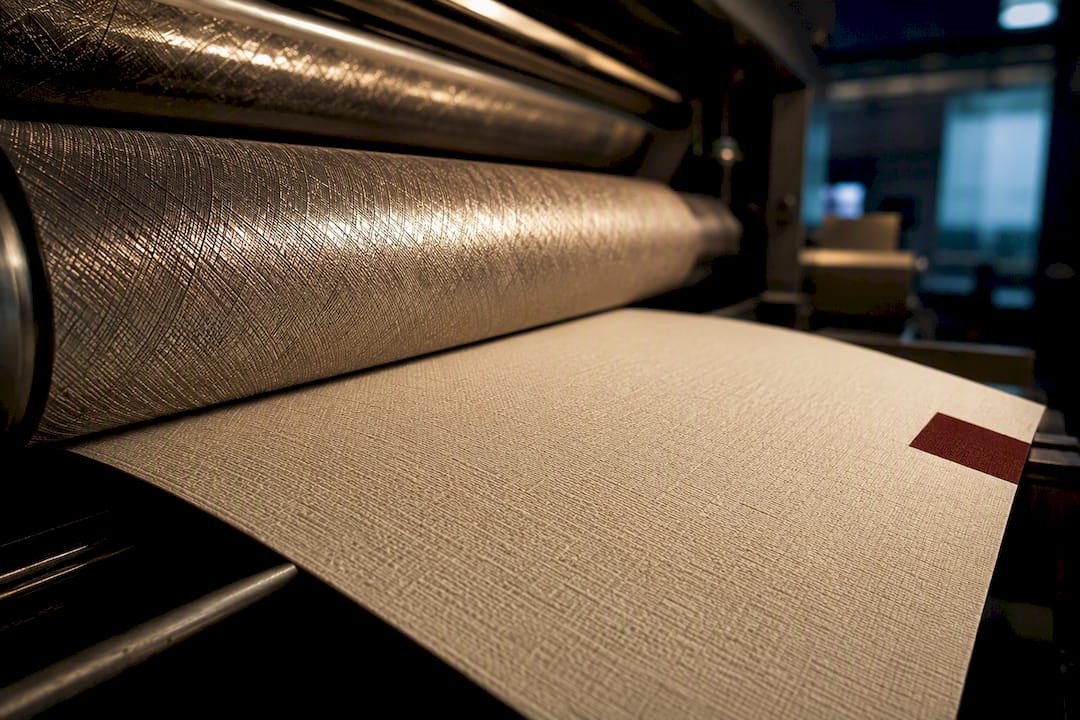
Linen embossed paper is stock run through an embossing roller that presses a fine crosshatch pattern into the surface, mimicking woven linen cloth. It’s the go-to choice for premium wedding invitations, formal stationery, packaging insert cards, and business cards whenever a project needs a tactile, understated finish instead of a flat, glossy one. Before you order a full run, confirm the weight and printer compatibility with a sample sheet.
**TL;DR:** Linen embossed paper is best suited for tactile, high-end projects like wedding invitations and premium packaging, with weights ranging from 24 lb to 165 lb. Offset lithography and digital presses handle linen stock well, but heavier weights may jam household printers, requiring testing beforehand. The subtle crosshatch pattern enhances perceived quality, improves small type legibility, and is more consistent than other textured finishes like laid or canvas. Proper storage in a climate-controlled environment preserves the embossed texture, preventing compression, humidity damage, and yellowing over time. For large-scale orders, direct mill or wholesale supplier purchases offer better value and consistency, but always request physical proofs before full production.
Table of Contents
- What Is Linen Embossed Paper Made From?
- What Weights and Sizes Does Linen Paper Come In?
- What Is Linen Paper Good for? Best Uses by Project
- How Do You Print and Finish Linen Embossed Paper?
- How Do You Choose the Right Linen Paper for Your Project?
- Where Can You Buy Linen Embossed Paper and Order Samples?
- How Yuan Packaging Uses Linen Texture in Custom Packaging
- Where Did Linen Embossed Paper Come From?
- What Are the Advantages and Disadvantages of Linen Embossed Paper?
- How Should You Store Linen Paper to Protect Its Texture?
- Should You Order Small Retail Packs or Go Direct to a Mill?
- Custom Linen-Textured Packaging From Yuan Packaging
- Sources
- FAQ
What Is Linen Embossed Paper Made From?
The texture comes from mechanical pressure, not weave. During finishing, the paper passes between metal rollers etched with a repeating linen pattern, and the pressure transfers that crosshatch into the sheet’s surface. According to PaperSpecs, a linen finish paper is simply paper embossed to resemble linen cloth, and the process works on both coated and uncoated stocks.
That texture changes how light hits the page. Ink sits slightly recessed in the low points of the pattern, which softens sharp edges on type and gives colors a muted, almost fabric-like depth compared to smooth stock. It’s a subtle effect, not a heavy one, which is exactly why designers reach for it when they want texture without sacrificing legibility.
Compared to other textured finishes, linen sits in the middle of the intensity range:
- *Laid finish** shows fine parallel lines running one direction, closer to old-world writing paper than woven cloth.
- *Canvas finish** uses a deeper, more irregular texture with a rougher hand feel.
- *Linen finish** gives the most consistent, even crosshatch, which is why it prints cleanly at small type sizes.
What Weights and Sizes Does Linen Paper Come In?
Linen stock is sold across a wide weight range, and matching weight to project is the first decision you’ll make. Neenah’s Classic Linen line, one of the most widely stocked ranges in North America, spans from 24 lb writing weight up through 165 lb double thick cover, according to its product information sheet.
- *Text/writing weight (24–32 lb, roughly 90–120 gsm):** letterheads, envelope liners, single-sheet stationery.
- *Cover weight (65–100 lb, roughly 176–270 gsm):** business cards, invitation panels, folder covers.
- *Double thick cover (up to 165 lb):** rigid presentation pieces and packaging inserts.
- *Card stock at 250 gsm** is a common midpoint for small-run greeting cards and event stationery, per Soho Paper’s product listings.
Standard sheet sizes run 8.5 x 11 inches and 8.5 x 14 inches for letter and legal format, with larger parent sheets available for custom die cuts. Always check that your chosen weight has a matching envelope in the same finish before you finalize a design, as envelope availability varies by weight.
What Is Linen Paper Good for? Best Uses by Project
Linen finish earns its reputation on formal, tactile projects where the goal is perceived quality rather than photographic color reproduction. Here’s how to match weight to purpose:
- *Wedding invitations and RSVP cards:** use 80–100 lb cover for the main invitation and a lighter 24–32 lb text weight for enclosure cards, so the whole suite feels cohesive without becoming stiff to fold.
- *Envelope liners:** a lighter text weight (24–28 lb) folds cleanly and adds texture without adding bulk to the envelope.
- *Business stationery:** letterhead in 24–28 lb linen text pairs naturally with 80–100 lb linen business cards for a matched brand set.
- *Packaging inserts and hang tags:** 100 lb+ cover or double thick stock holds up under handling and gives premium packaging that extra tactile cue when a customer opens the box.
Choose linen over a perfectly smooth stock when the brand story leans traditional, artisanal, or high-end. Choose a heavier textured board like canvas or a laid finish instead when you need a rougher, more rustic hand feel or when the design has minimal fine type that would blur against a busier texture.
How Do You Print and Finish Linen Embossed Paper?
Offset lithography remains the gold standard for linen stock because rollers apply even ink pressure across the textured surface, minimizing dot gain in the recessed valleys of the crosshatch. Commercial digital presses handle linen well too, and many retail-grade linen papers, including Neenah’s 70 lb Classic Linen sold through Staples, carry explicit inkjet, laser, and copier compatibility. Desktop inkjet and laser printers can still work, but test a single sheet first. Heavier double thick covers sometimes jam narrow-gap desktop feeders even when the manufacturer lists compatibility for lighter weights in the same line.
A few things to watch for when you move from screen to press:
- *Dot gain and color shift:** the textured surface scatters light differently than smooth stock, so colors often read slightly darker or softer than your proof. Ask your printer to build in extra drying or curing time before trimming, especially on heavier ink coverage.
- *Scoring before folding:** always score linen cover weights before folding rather than folding cold. The crosshatch pattern makes cracking along the fold more visible than it would be on smooth stock.
- *Embossing on top of embossing:** a secondary emboss (a monogram or logo, for example) reads best when it’s deep enough to visually override the base linen texture underneath it.
- *Foil stamping:** foil adheres less evenly to a textured surface than to smooth stock, so foil dies often need slightly more heat and dwell time to bridge the recessed valleys of the crosshatch. Fine hairline foil details are the riskiest choice on linen; bolder shapes transfer more reliably.
**Pro Tip:** _Always request a physical press proof before committing to a full production run. Screen previews and even digital proofs cannot show you how ink will settle into the linen texture, and catching a color or foil-adhesion issue on a proof sheet costs far less than reprinting 500 finished invitations._
How Do You Choose the Right Linen Paper for Your Project?
Run through this checklist before you place an order:
- *Match weight to function.** A folded card needs enough weight to hold its shape (80 lb cover minimum); a flat insert can go lighter.
- *Confirm your print method.** If you’re printing at home or in a small office, verify inkjet or laser compatibility on the product sheet rather than assuming.
- *Check color and brightness against your envelope stock.** Linen ranges are typically produced with a consistent finish on both sides, but brightness can vary between mills, so order swatches from the same line for anything that needs to match exactly.
- *Verify sustainability credentials if they matter to your client.** Many linen ranges, including Neenah’s Classic Linen, offer FSC-certified options alongside standard stock.
- *Ask your supplier for a caliper spec, not just a weight number.** Two papers at the same nominal weight can feel different in hand depending on caliper, which matters more than the label weight for anything that needs to fold or stand upright.
Where Can You Buy Linen Embossed Paper and Order Samples?
Retail craft and office supply stores stock common weights like 70 lb and 80 lb linen text and cover for small projects, while specialty online paper merchants carry the fuller range of weights, colors, and double thick covers. For bulk orders, custom sizes, or matched envelope runs, going directly to a mill or wholesale distributor gets you better per-sheet pricing and more color consistency across a large batch.
Before ordering, read the product sheet closely for caliper, gsm, FSC status, and stated printer compatibility, not just the weight in pounds. Most suppliers offer sample packs or swatch books, and ordering one is standard practice: it’s the only reliable way to confirm color and texture in hand, according to supplier guidance from LCI Paper. Request a printed proof alongside your swatch if the run involves foil or heavy ink coverage.
How Yuan Packaging Uses Linen Texture in Custom Packaging
In custom packaging work, linen texture shows up most often on rigid box panels, insert cards, and envelope-style liners tucked inside a gift box, where the tactile first touch matters as much as the graphics. Foil stamping and blind embossing both interact directly with that base texture, and getting the combination right depends on the finish and print effects chosen for the piece and how they’re specified upfront.
When you request a quote for linen-textured packaging components, include:
- Target weight and caliper, not just a “feels like cardstock” description.
- A physical color reference or Pantone number, since linen texture reads color slightly differently than smooth stock.
- Whether the piece needs lamination or bonding to a rigid substrate, which changes how the texture behaves under foil.
- Expected volume, so your supplier can advise on material options that balance cost and finish quality at scale.
Where Did Linen Embossed Paper Come From?
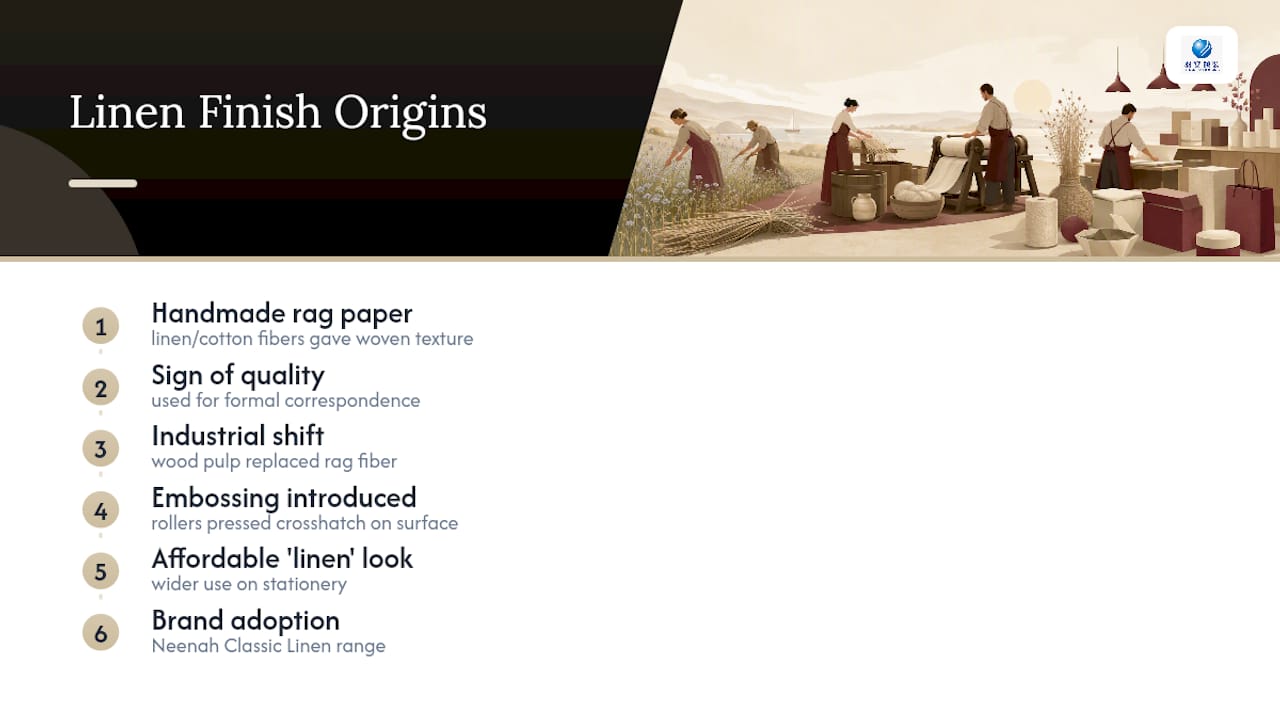
Linen finish traces back to a much older tradition: paper made by hand from linen and cotton rag fibers, which naturally carried a subtle woven texture from the fabric pulp itself. Fine writing paper across Europe was largely rag-based well into the industrial era, and that authentic cloth texture became associated with quality correspondence and formal documents.
As paper manufacturing industrialized and wood pulp replaced rag fiber for most commercial stock, mills needed a way to recreate that familiar tactile signal on cheaper base paper. Embossing rollers etched with a crosshatch pattern solved the problem: instead of weaving texture into the fiber itself, manufacturers pressed it into the surface after the sheet was formed. The result looked and felt close enough to genuine linen rag paper that the name stuck, even though modern linen embossed stock is almost always wood pulp based.
That shift mattered commercially. It meant any mill could offer a “linen look” at a fraction of the cost of true rag paper, which is why linen finish became a staple of corporate letterhead, formal invitations, and legal stationery through the twentieth century. Brands like Neenah built entire product lines, including the long-running Classic Linen range, around this exact positioning: a premium tactile signal at a production cost far below hand-made rag stock. The finish never went away because the psychological cue it sends, that a document or invitation deserves extra care, hasn’t changed even as the manufacturing behind it has.
What Are the Advantages and Disadvantages of Linen Embossed Paper?
Linen finish earns its place in premium stationery for a specific set of reasons, but it isn’t the right choice for every project.
**Advantages:**
- *Tactile signal of quality.** The crosshatch texture communicates craftsmanship the instant someone picks up the piece, before they’ve read a word of the copy.
- *Forgiving on fine type.** Because the texture is subtle and even, small serif fonts and fine rule lines stay legible in a way they wouldn’t on a heavier canvas or laid finish.
- *Wide weight and format range.** From 24 lb text to 165 lb double thick cover, linen stock scales from envelope liners to rigid packaging panels within a single, visually consistent product line.
- *Broad printer compatibility.** Many linen weights are rated for inkjet, laser, and commercial digital output, so small studios and large print shops alike can run the same stock.
**Disadvantages:**
- *Slightly higher dot gain.** Ink can spread into the recessed valleys of the texture, softening fine detail more than it would on smooth stock.
- *Foil and fine embossing risk.** Hairline foil details and shallow secondary embosses don’t always transfer cleanly across the base texture.
- *Cost premium over smooth stock.** Linen finish typically costs more per sheet than an equivalent uncoated smooth paper, which matters at high volumes.
- *Not ideal for photo-heavy work.** The texture interferes with fine photographic detail, so it suits type-driven and graphic designs better than image-heavy layouts.
How Should You Store Linen Paper to Protect Its Texture?
Linen finish is durable under normal handling, but the crosshatch pattern can flatten or crush if sheets are stored under pressure or in poor conditions. Keep reams flat and stacked no more than a few boxes high; stacking too much weight on top of finished sheets can compress the embossed texture over time, especially on lighter text weights.
Humidity is the bigger long-term threat. Paper fiber absorbs moisture from the air, and swings in humidity cause sheets to curl, cockle, or feel stiff in a way that changes how they run through a printer. Store linen stock in a climate-controlled space, ideally in its original wrapper until you’re ready to print, and avoid basements or garages where humidity swings widely between seasons.
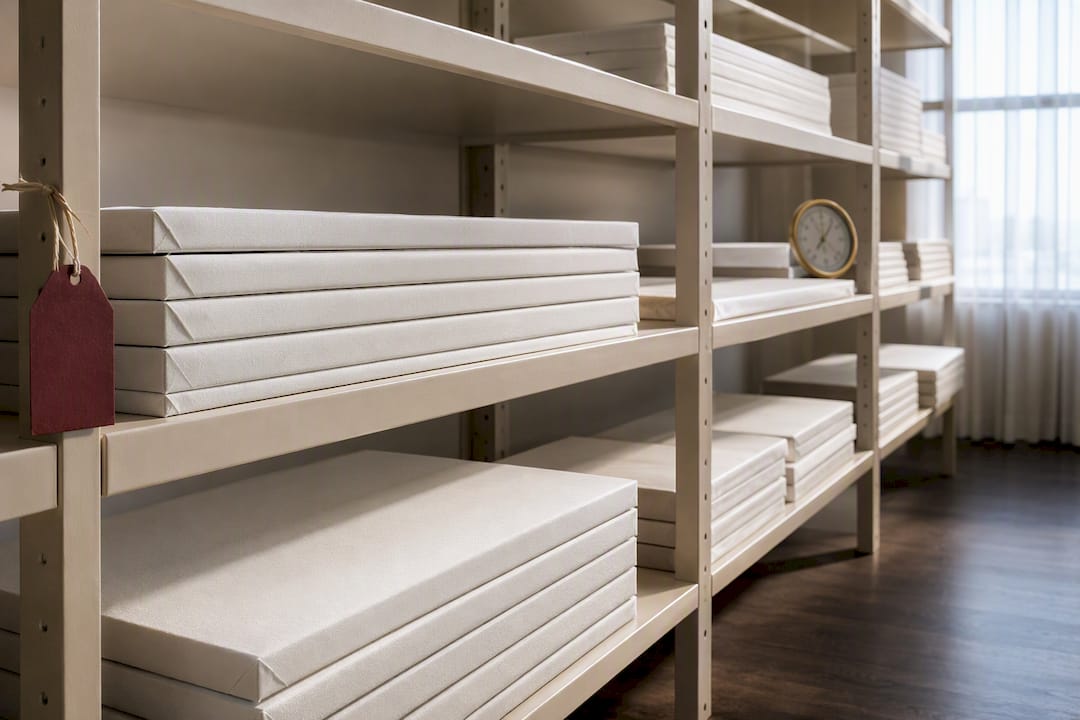
If you’re holding finished, printed pieces (invitations or business cards) for an event weeks or months away, keep them in acid-free boxes away from direct sunlight. UV exposure fades ink and can yellow uncoated stock, which is especially visible against bright white linen. For packaging components in production runs, ask your manufacturer how finished panels are packed for transit; texture that survives printing and finishing can still get crushed in a poorly padded shipping carton.
Should You Order Small Retail Packs or Go Direct to a Mill?
Small retail packs and local print shops make sense when you’re testing a design or producing under a few hundred pieces. Once a project scales into the thousands, direct mill or wholesale ordering usually wins on price per unit and color consistency, though lead times stretch and minimums climb. Whichever route you take, get a physical proof in hand before you commit to full production. A screen never tells you how ink will sit in that crosshatch texture.
_— Anthony_
Custom Linen-Textured Packaging From Yuan Packaging
If you’re moving beyond invitations and business cards into branded packaging, Yuan Packaging manufactures the linen-textured panels, insert cards, and envelope-style liners that turn a rigid box into a premium unboxing moment, with foil stamping and embossing applied directly to that textured surface.
When you request a quote, come prepared with your target weight and caliper, a color reference (a Pantone number beats a screen swatch every time), your estimated volume, and whether you’ll need a physical sample before committing to a full run. That information lets Yuan Packaging’s team match the right linen-finish stock to your box, sleeve, or insert and quote accurately on the first pass instead of going back and forth on specs. Browse the full product range and request a quote to see how linen texture performs on your specific packaging design.
Sources
- linen finish paper - PaperSpecs
- Classic Linen product information sheet
- CLASSIC® Linen Paper, 8 1/2" x 11", 70 lb., Linen Finish, Avon Brilliant White, 500/Ream | Staples
FAQ
Where Can I Buy Linen Paper for Printing?
Craft and office supply retailers carry common weights for small projects, while specialty online paper merchants and mills offer the fuller range of weights, colors, and custom sizes for bulk orders.
Does Michaels Have Linen Paper?
Craft retailers occasionally stock linen-finish cardstock in limited weights and colors, but selection varies by location and season, so specialty paper merchants remain the more reliable source for a specific weight or exact color match.
What Is Linen Paper Good for?
Linen paper suits wedding invitations, formal stationery, business cards, and premium packaging inserts where a tactile, refined surface matters more than photographic color detail.
Is Linen Paper Textured?
Yes. Linen paper is embossed with a fine crosshatch pattern that mimics woven linen cloth, giving it a distinct tactile feel compared to smooth uncoated or coated stock.
What Weight Linen Paper Should I Use for Invitations?
Most designers use mid-to-heavy cover weight for the main invitation card, paired with a lighter text weight for enclosures and envelope liners.