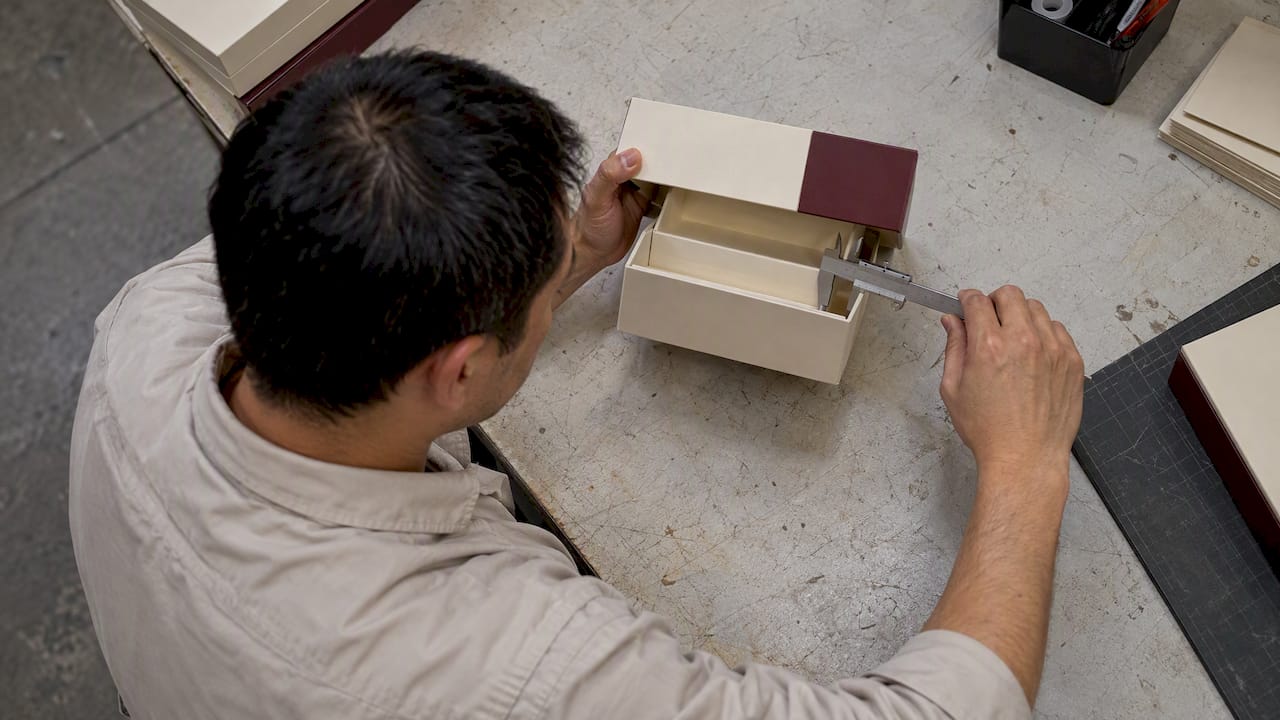
A shoulder neck box is a rigid box built from a lid, a visible neck or tray, and a base. It delivers a premium reveal while protecting high-value products, which is why fragrance, cosmetics, and gift brands choose it. Below, we cover how it is built, the measurements we need from you, finishing options, and how to prepare a quote request that gets accurate answers fast.
TL;DR:
- Label every dimension as internal or external, including lid height, visible neck height, usable depth, and clearance for inserts and padding.
- Choose a glued tray for fixed, consistent placement; a removable tray allows separate handling but needs tighter tolerances to stay secure.
- Send product dimensions and weight, materials, artwork, finishes, insert requirements, quantity, target lead time, and any shipping or packing constraints.
- Unit pricing generally improves as order volume grows, but minimum order quantities vary by structure and finish, so confirm them before planning a run.
- Lock finishes during prototyping, since late changes can reset tooling and timelines; request a physical sample to check product fit before full production.
Table of Contents
- How is a shoulder neck box built?
- Which measurements do you need to give a supplier?
- What finishes and trays create a premium presentation?
- How do you prepare a quote request for a shoulder neck box?
- Where do shoulder neck boxes work best?
- What should you lock down before production starts?
- Need custom shoulder neck boxes made to your spec?
- FAQ
How is a shoulder neck box built?
A shoulder neck box has a lid, a neck, and a base. The base holds the product and forms the foundation. The neck, also called the tray, is the inner section that rises above the base and stays visible when the lid is lifted. The lid slips over the neck and rests against its shoulder, which is why the box looks layered rather than flat.

The neck creates the "shoulder," a visible step between lid and base that gives the unboxing a deliberate pause. Construction here changes both look and function. A glued tray stays fixed, which keeps assembly simple and the product placement consistent. A removable tray lifts out, so the customer can handle the product and the tray separately, but it needs tighter tolerances to stay secure.
Material choice shapes the touch of the box. Most rigid boxes use rigid greyboard wrapped in paper, and specialty papers or cloth wraps change the tactile quality noticeably: a textured paper feels crafted, while a cloth wrap feels softer and more ceremonial. For deeper construction notes, our rigid box design guide covers dielines, materials, and production rules.
Which measurements do you need to give a supplier?
Accurate quotes and dielines start with accurate numbers. Here is what we ask for on every shoulder neck project:
- External length and width: the outer footprint, which drives shipping and carton planning.
- Total external height: the full height with the lid closed.
- Lid height: how far the lid drops over the neck.
- Visible neck height: the portion of the neck you see when the lid is closed.
- Base or internal usable depth: the space left for the product.
- Internal clearance: room for inserts and padding around the product.
Each number has a job. Lid height and neck height decide how smoothly the lid slides on and how much of the shoulder shows. Internal clearance decides whether an insert actually fits. External dimensions decide stackability in shipping cartons.
Three pitfalls come up again and again:
- Forgetting insert thickness, which shrinks the usable space inside.
- Not stating whether dimensions are internal or external.
- Leaving out print and inner color specifications until late in the process.
State internal versus external on every line, and the dieline conversation gets much shorter.
What finishes and trays create a premium presentation?
Finishes decide what the customer sees and feels before they touch the product. The options we produce most often:
- Foil stamping: metallic logos and accents that catch light.
- Blind embossing or debossing: raised or recessed artwork with no ink.
- Soft-touch lamination: a velvety surface that feels expensive in the hand.
- Spot UV: glossy highlights against a matte field.
- Metallic or holographic papers: color and shine built into the wrap itself.
Tray and insert choices affect placement and cost. A glued tray is simple and stable. A removable tray adds a handling moment. Inserts range from paperboard and foam to molded pulp, and each holds the product differently. Our overview of box insert options walks through how they cut damage and waste.
For sustainability, we work with responsibly sourced materials. These choices can sit alongside high-end finishes without dulling the result.
Pro Tip: Choose finishes during prototyping that scale cleanly to production runs, so you avoid late changes that reset tooling and timelines.
How do you prepare a quote request for a shoulder neck box?
A complete brief saves days of back and forth. Send the following, in this order:
- Exact measurements (length × width × height), plus lid height and visible neck height.
- Product dimensions and weight.
- Preferred materials and paperboard thickness.
- Artwork files or notes on print placement.
- Finishes and special effects.
- Insert requirements.
- Order quantity and target lead time.
- Shipping or packing constraints.
Quantity matters because setup work is spread across the run, so unit pricing generally improves as volume grows. Minimum order quantities vary by structure and finish, so ask for them early.
Attach product samples, photos, or a prototype whenever you can, and request sample proofs before full production. A physical check catches fit problems that a flat drawing never will.
Where do shoulder neck boxes work best?
Shoulder neck boxes shine wherever the opening moment is part of the product:
- Perfume and fragrance sets
- Premium cosmetics and skincare
- Gift or limited-edition spirits
- Apparel gift sets
Small design cues amplify the effect. A contrasting neck color draws the eye to the reveal. A reveal strip, a windowed neck, or a ribbon closure adds another beat to the unboxing. On a shelf, the layered silhouette reads as premium before anyone lifts the lid.
What should you lock down before production starts?
I work with Yuan Packaging, where our team has extensive experience producing rigid boxes, and the most common regret I see is a finish chosen late. A foil or lamination that looked right on a one-off sample can behave differently at volume, so settle your finishes at the prototype stage, when changing them costs almost nothing. If you want a second pair of eyes, request a sample or a dieline consultation before you commit artwork.
— Anthony
Need custom shoulder neck boxes made to your spec?
We manufacture custom shoulder neck rigid boxes directly, with finishes such as foil stamping, embossing, and soft-touch lamination, a range of insert styles, and responsibly sourced material options. Our team works from your measurements and artwork to a dieline you can approve, then a sample before the full run.
Ready to start? Send us your dimensions and quantity through our custom shoulder neck rigid boxes page, request a quote, or ask for a sample. You can also browse everything we produce in our full product range.
FAQ
What is a shoulder neck box?
A shoulder neck box is a rigid box with a lid, a visible neck or tray, and a base. The neck creates a stepped "shoulder" where the lid rests, giving a layered, premium look.
How is a shoulder neck box different from a standard rigid box?
A standard rigid box typically pairs a lid with a base. A shoulder neck box adds the visible neck between them, which creates the reveal effect and a more structured presentation.
What do I need to send for a shoulder neck box quote?
Send exact measurements including lid height and visible neck height, product weight, materials, finishes, insert needs, quantity, and lead time. Artwork notes and a product sample make the quote faster and more accurate.
Can a shoulder neck box be made with sustainable materials?
Yes. Recycled papers, FSC-certified boards, water-based inks, and eco-friendly laminates can all be used on this box style without losing the premium finish.
Recommended
- Custom Shoulder-Neck Rigid Boxes
- Stop Spine Width Rework: Book Style Box Specs Brands Need
- 5 Box Insert Options for Brands and Designers to Cut Damage and Waste
- Rigid Box Design: Dielines, Materials & Production Rules
What is a shoulder neck box?
A shoulder neck box is a rigid box with a lid, a visible neck or tray, and a base. The neck creates a stepped "shoulder" where the lid rests, giving a layered, premium look.
How is a shoulder neck box different from a standard rigid box?
A standard rigid box typically pairs a lid with a base. A shoulder neck box adds the visible neck between them, which creates the reveal effect and a more structured presentation.
What do I need to send for a shoulder neck box quote?
Send exact measurements including lid height and visible neck height, product weight, materials, finishes, insert needs, quantity, and lead time. Artwork notes and a product sample make the quote faster and more accurate.
Can a shoulder neck box be made with sustainable materials?
Yes. Recycled papers, FSC-certified boards, water-based inks, and eco-friendly laminates can all be used on this box style without losing the premium finish.