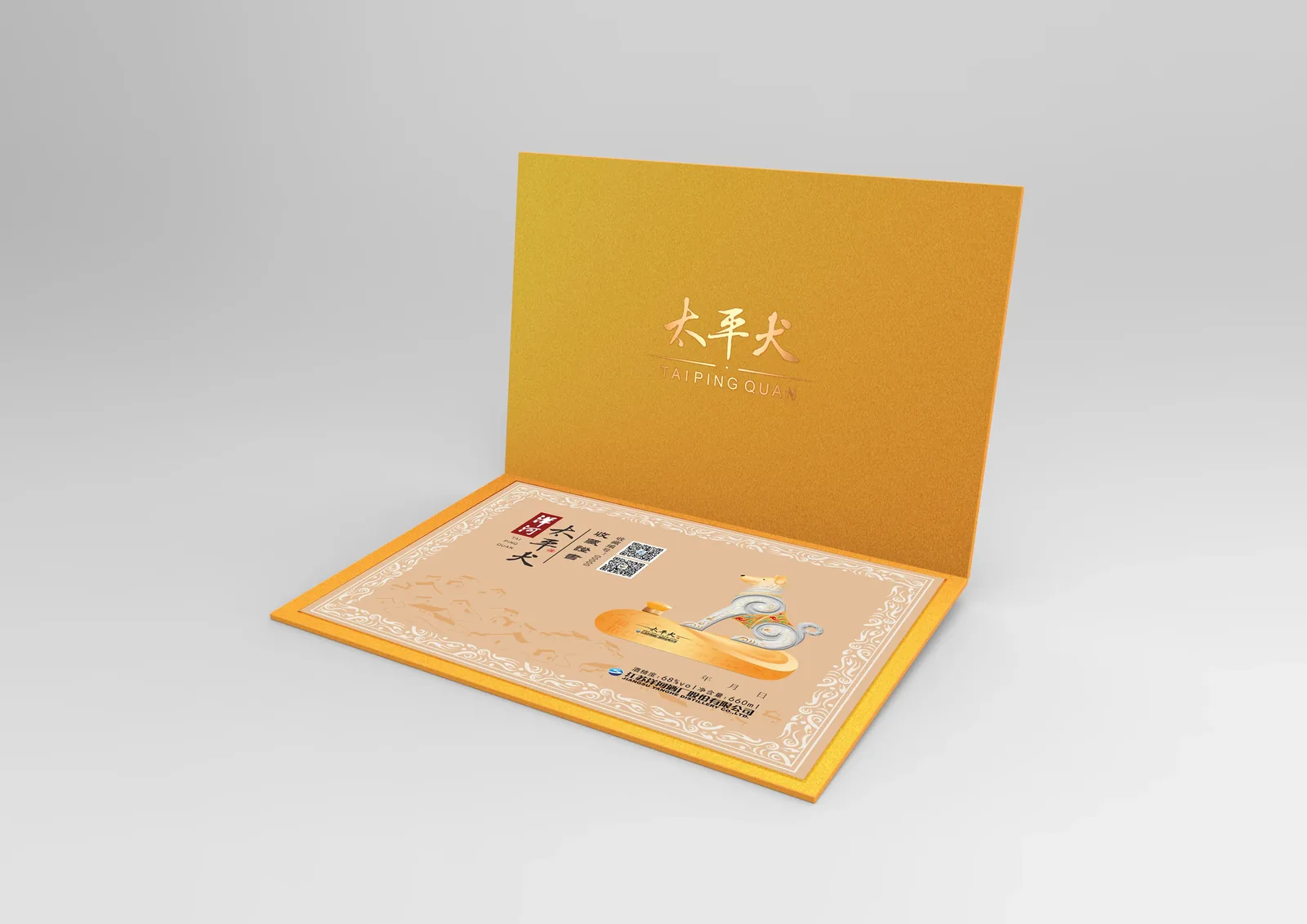
A packaging designer can only design what the brief describes, and a factory can only print what the files allow. Most back-and-forth on a new box comes from the gap between the two: a stretched template, foil described only in an email, a product size nobody wrote down, a new reference image in every message.
This guide is for brand, procurement and marketing teams with no designer yet, or with files a factory cannot print from. It covers the three kinds of designer to consider, how to choose one, the order of work, a brief template you can copy, and what the factory needs back. Yuan Packaging has made printed packaging in Huai'an, Jiangsu, since 2000; the last sections explain where we fit in.
TL;DR
- Three routes: a freelance designer, a design agency, or the manufacturer's partner design studio.
- Choose on evidence: produced boxes in the portfolio, not only renders; dieline and print-finish experience; who owns the editable files; and how many revision rounds are included.
- Work in this order: structure and size, factory dieline, design on the dieline, file check, proof, physical sample.
- The designer should work on the manufacturer's dieline, never on a generic or stretched template.
Table of Contents
- Three ways to get packaging design done
- How to choose a packaging designer
- The order of work, from size to sample
- Packaging design brief template
- What your factory needs back from the designer
- Our Perspective: Brief the Box Before the Look
- How to start with us
- FAQ
- Sources
Three ways to get packaging design done
A freelance packaging designer
A freelancer suits a single product, a refresh of an existing pack, or a brand that already has its logo, typefaces and colours. The trade-offs: one person has limited capacity around a launch, and packaging experience varies; many capable graphic designers have never set artwork on a factory dieline or specified foil. You also become the link between designer and factory.
A design agency
An agency suits a range launch or a project that also needs strategy, naming, identity, copywriting or photography. The trade-offs: more people sit between you and the person drawing the file, approvals take longer, and some agencies hand production artwork to a separate artworker. Check that print-ready files on the factory's dieline are in scope, not only the concept.
The manufacturer's partner design studio
Some manufacturers work with a design studio that designs directly on the factory's own dieline. This suits a brand with no designer, no usable files, or a concept that started as AI images. The trade-offs: the studio works on that manufacturer's structures, and you should agree in writing which files you receive and how many revision rounds are included. Ask both questions when you request the quote.
Pro tip: whichever route you choose, name one person who sends files to the factory and answers its questions. Otherwise each correction passes between you, the designer and the factory.
How to choose a packaging designer
A good render shows that a designer can make an image, not that the box will print and fold. Ask these questions before you commission anyone:
- Produced packaging, not only renders. Ask for photos of printed boxes and what changed between render and finished box; a 3D mockup can show a fold no real board allows.
- Experience with dielines. Ask whether they have placed artwork on a manufacturer's dieline, kept it unchanged on its own layer, and carried artwork across folds, glue flaps and rigid box wraps.
- Experience with print finishes. Foil, embossing, spot UV and varnish each need their own layer, registered to the dieline. Ask to see such a file.
- Who owns the final editable files. Agree that you receive the layered source files as well as the PDF, with the right to use and change them.
- How many revision rounds, and what counts as a revision. Agree both before work starts.
File ownership: copyright basics (general information)
This is general information, not legal advice. In the US and the UK, paying for a design does not by itself give you its copyright. The U.S. Copyright Office explains that copyright initially belongs to the author, that owning a copy does not make you the copyright owner, and that a transfer generally must be in writing and signed. Commissioned work from an outside designer counts as a "work made for hire" only if it falls into one of nine listed categories and both parties sign a written agreement saying so (Circular 30). In the UK, GOV.UK says a transfer of copyright needs a written, signed document, sometimes called an assignment.
Either way, put file delivery and rights in the contract, and check the rules for your own market with a lawyer.
What counts as a revision
Agree definitions like these in writing before work starts:
| Change | Usually treated as |
|---|---|
| Fixing a typo or wrong size the designer introduced | A correction, not a revision |
| Changing text you supplied, after you approved it | A revision |
| Swapping the main image or adding a new AI image | A revision, and often new artwork and a new proof |
| Changing the box size or structure | New work: a new dieline first, then the design adapted to it |
| Fixing bleed, layers or colours after the factory file check | Part of producing print-ready files; agree who does it |
The order of work, from size to sample
Most rework comes from designing first and asking for the dieline later.
- Structure and size. Measure the product, including any cap, pump or insert, and choose the box style, for example a rigid box or a tuck-end folding carton.
- Factory dieline. The manufacturer draws the dieline for that structure, board and size.
- Design on the dieline. The designer places the artwork on the dieline, with each finish on its own layer.
- File check. The factory checks the files against its press requirements.
- Proof. Your team approves text, colours and placement, and proofreads every word, number and barcode.
- Physical sample. Check fit, colour and finishes with the product inside. At Yuan, the sample order comes first: we draw the dieline (step 2), check your files free of charge (step 4) and make the sample from the approved files.
Why the designer must work on the manufacturer's dieline
Crease positions depend on board thickness, tuck depths and glue flaps differ between sources, and a rigid box wrap needs allowances to turn over the board edges. A generic template ignores those details, and stretching a dieline scales the allowances along with the panels. The result: a logo over a fold, a background short of an edge, or foil out of register. Carton dielines explains how to check one.
Pro tip: ask the factory for the dieline before the designer opens a file. If the size or the board changes later, ask for a new dieline; never resize the old one.
For timing, work back from the date you need the packaging. At Yuan a sample takes 5–7 working days, and production takes 15–20 working days after artwork approval for most products, or 25–30 for complex gift boxes. So those two steps need 20–27 working days (5 + 15 at the shortest, 7 + 20 at the longest), or 30–37 for a complex gift box. Design, revisions, approvals and shipping come on top.
Packaging design brief template
Copy this into an email or a document. Keep each bold label, replace the text after the colon with your answer, and write "not needed" where a line does not apply.
- Brand: name, one sentence on what it stands for, and the brand guidelines (logo files, typefaces, colours).
- Product: what goes in the box, exact size in millimetres (length × width × height, including caps, pumps or inserts) and weight in grams, which affects the board and insert.
- Structure / box style: for example a lid-and-base rigid box, magnetic closure box, tuck-end carton or sleeve. Attach the factory dieline once you have it.
- Market and mandatory text: countries of sale, languages, and the text and marks your compliance team will supply, such as net quantity, ingredients, importer address, recycling marks and barcode (UPC vs EAN). The designer places them.
- Quantity: how many boxes of each design you need (for example, per flavour or per size).
- Finishes: foil, embossing or debossing, spot UV, soft-touch or matte lamination, windows, and where each one goes.
- Colours: Pantone references for brand colours, and whether you can send a physical Pantone reference.
- References: three to five packs, with one line each on what you like (colour, type, finish, opening).
- Deliverables: for example concept options, a print-ready PDF, layered editable source files, fonts and linked images.
- Revision rounds: the number agreed, and what counts as a revision.
- Deadline: when the factory needs final files, worked back from when you need finished packaging.
- Approver: the one person who signs off design and proof, and who else reviews it (legal, regulatory).
References need a reason: "like this" leaves the designer guessing, and the guess becomes a revision round. Pick one master direction before you brief, and if it started as AI images, read Can You Use AI Images on Packaging? first.
What your factory needs back from the designer
Send these requirements to the designer with the brief:
- Vector artwork for logos, text and line art
- The dieline on its own layer, unchanged
- Fonts converted to outlines
- 3 mm bleed
- CMYK plus named Pantone spot colours
- Foil, emboss, varnish and spot UV each on a separate layer
- A physical Pantone reference for colour
- Photographic images at least 300 DPI at print size
Each point is explained in our artwork preparation guide; Pantone colour matching covers brand colours. The 300 DPI rule is where AI images most often fall short; Can You Use AI Images on Packaging? shows how to work out the pixels a panel needs.
Our Perspective: Brief the Box Before the Look
On a new project, the first questions we ask are usually the ones a brief answers: the exact product size, which image is final, where the foil goes. Agreeing one image at the start also matters, because each new image means new artwork and a new proof.
We draw dielines in-house, and a sample order includes the dieline, so whoever designs the box, your designer or our partner design studio, starts from the drawing we will cut and fold. Settle the structure first, write one brief, and let the sample answer what a screen cannot.
— Anthony
How to start with us
Four ways in, depending on what you have:
- You have nothing yet, or want us to design the pack. Our partner design studio designs it on the dieline we draw in-house. Design is quoted per job, with revision rounds agreed first. Ask for full design.
- You have a logo, ideas or AI images, but no print-ready files. Our partner design studio rebuilds them into print-ready artwork on our dieline, quoted per job in the same way. Send your logo and images.
- You have a designer but no dieline. Order a sample: we draw the dieline first, your designer adds the artwork, and we make the sample from the checked files. The dieline is included, and the sample and dieline cost is credited against your bulk order. Request a sample with dieline.
- You already have print-ready files. We check them against our press requirements free of charge. Send your files for a check.
A dieline ordered on its own, without a sample, is charged. Each route is described on our design services page.
What to send us
- Your completed brief from the template above, with the product size, quantity, box style and finishes
- Your logo as a vector file, if you have one
- Your one chosen reference or AI image, or a photo of a box you like (for example a rigid box or folding carton style)
- All on-pack text, approved by your team
FAQ
Should I hire a freelancer or an agency for packaging design?
A freelancer suits one product or a refresh when your brand assets already exist. An agency suits a range launch that also needs strategy, naming or photography. Either way, look for produced packaging in the portfolio and print-ready files on the factory's dieline in the scope.
What should a packaging design brief include?
The brand, the product with exact dimensions and weight, the box style, the market and mandatory text, quantity, finishes, Pantone references, reference packs with what you like about each, deliverables and file formats, revision rounds, the deadline and the one approver.
Who owns the packaging design files?
In the US and the UK, usually the designer, unless a written, signed document transfers it. In the US, the author owns it first: the freelancer, or the agency whose employee made the design as part of the job. Paying for the design does not change that on its own. Agree in writing that you receive the layered, editable source files and the right to change them. This is general information, not legal advice.
Who should draw the dieline: the designer or the factory?
The factory that will cut and fold the box, because it knows the board, creases and glue flaps for your structure and size. The designer places the artwork on that dieline, unchanged on its own layer. A free template is fine for early concepts, but never stretch one to a new size.
How many revision rounds are normal for packaging design?
There is no fixed number. Agree it before work starts, with what counts as a revision (new text, a new image) and what is a correction of the designer's own error. With our partner design studio, rounds are agreed per job.
What does Yuan Packaging charge for, and what is free?
Checking print-ready files is free. A dieline on its own is charged. When you order a sample, the dieline is included, and the sample and dieline cost is credited against your bulk order. Design and rebuilding AI images by our partner design studio are quoted per job, with the number of revision rounds agreed first. You can give our dieline to your own designer instead.
Sources
- U.S. Copyright Office: Circular 1, Copyright Basics
- U.S. Copyright Office: Circular 30, Works Made for Hire
- GOV.UK: License and sell your copyright
Recommended reading
- How to Prepare Artwork for Custom Printed Packaging
- Carton Dielines: How to Read, Build and Check Them
- Can You Use AI Images on Packaging? From AI Concept to Print-Ready File
- Rigid Box Design: Dielines, Materials & Production Rules
Should I hire a freelancer or an agency for packaging design?
A freelancer suits one product or a refresh when your brand assets already exist. An agency suits a range launch that also needs strategy, naming or photography. Either way, look for produced packaging in the portfolio and print-ready files on the factory's dieline in the scope.
What should a packaging design brief include?
The brand, the product with exact dimensions and weight, the box style, the market and mandatory text, quantity, finishes, Pantone references, reference packs with what you like about each, deliverables and file formats, revision rounds, the deadline and the one approver.
Who owns the packaging design files?
In the US and the UK, usually the designer, unless a written, signed document transfers it. In the US, the author owns it first: the freelancer, or the agency whose employee made the design as part of the job. Paying for the design does not change that on its own. Agree in writing that you receive the layered, editable source files and the right to change them. This is general information, not legal advice.
Who should draw the dieline: the designer or the factory?
The factory that will cut and fold the box, because it knows the board, creases and glue flaps for your structure and size. The designer places the artwork on that dieline, unchanged on its own layer. A free template is fine for early concepts, but never stretch one to a new size.
How many revision rounds are normal for packaging design?
There is no fixed number. Agree it before work starts, with what counts as a revision (new text, a new image) and what is a correction of the designer's own error. With our partner design studio, rounds are agreed per job.
What does Yuan Packaging charge for, and what is free?
Checking print-ready files is free. A dieline on its own is charged. When you order a sample, the dieline is included, and the sample and dieline cost is credited against your bulk order. Design and rebuilding AI images by our partner design studio are quoted per job, with the number of revision rounds agreed first. You can give our dieline to your own designer instead.