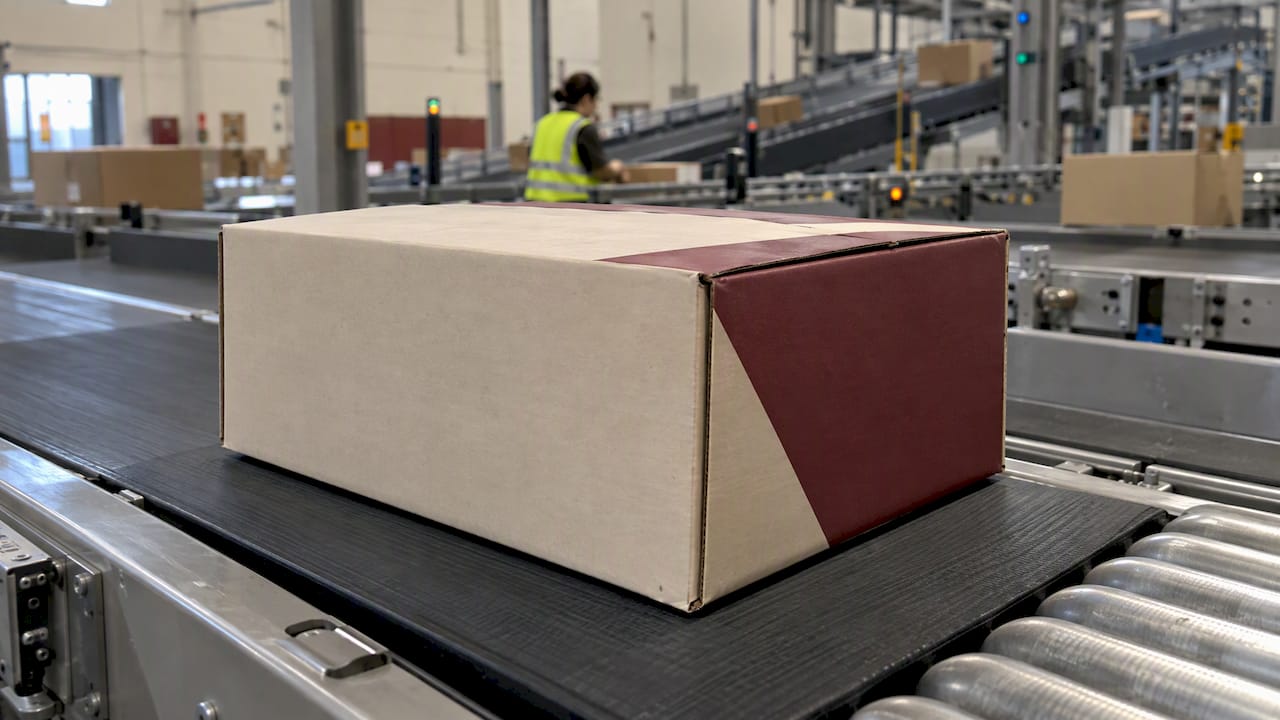
A good ecommerce box does three jobs at once: it gets the product to the customer undamaged, it costs little enough to ship at scale, and it turns opening the parcel into a moment that belongs to your brand. Design starts with the structure and the board, then moves to size, print and finish, and only then to decoration. This guide walks through those decisions in order, including the special case of subscription boxes and the trade-offs of eco-minded materials.
TL;DR
- Design the structure and material first, then the graphics. For ecommerce, protection and cost-effective shipping are the priorities.
- Right-size the box. Oversized cartons raise dimensional shipping charges and need void fill, and an under-sized one fails the product.
- Prove protection with a test, not a guess. Drop and vibration testing under ISTA 3A is a widely used reference for parcel shipments.
- For subscription boxes, design the interior around the real assortment and the packing line, so the reveal repeats every month.
- Choose lower-impact materials by checking local recyclability first, then coatings, inks and mixed components.
Table of Contents
- What an ecommerce box actually has to do
- Choosing the box structure
- Materials: why corrugated dominates
- Sizing: the quiet lever on cost and waste
- Protective design without extra packaging
- Print, graphics and finishes
- Subscription box design
- Eco ecommerce packaging: what to check
- Labeling and compliance by category
- Our perspective
- Bring the box to production
- FAQ
- Sources
What an ecommerce box actually has to do
Retail packaging competes on a shelf. Ecommerce packaging competes with a delivery network: conveyor belts, sorting hubs, stacked pallets and a porch. The customer meets the box only after all of that, which is why protection comes first and presentation second.
The package has to survive delivery, open easily and give the customer an unboxing worth sharing. A 2025 interview with Sappi Europe in Packaging Insights frames premium ecommerce packaging as three parallel demands: storytelling, logistics protection and credible sustainability (Packaging Insights).
Use those three demands as a scorecard for every decision below. If a finish improves the reveal but weakens the board, or a recyclable liner fails the drop test, the design is not done.
Choosing the box structure
Structure decides protection, packing speed and shipping cost more than any graphic does. These are the common formats for direct-to-consumer shipments.
| Format | Best for | Watch out for |
|---|---|---|
| Front-tuck mailer with dust flaps | Apparel, cosmetics, accessories, recurring shipments | Limited crush resistance for heavy or fragile items |
| Corrugated shipping box (regular slotted style) | Heavier, fragile or irregular products | Plain look unless printed inside and out |
| Two-piece lid-and-base | Gifts, premium reveals | Needs an outer shipper if it is rigid or delicate |
| Rigid gift box inside a shipper | Luxury beauty, spirits accessories, limited editions | Higher unit cost and more volume |
| Folding carton inside a mailer | Cosmetics, supplements, small goods | Two packaging layers to right-size |
Front-tuck mailers with dust flaps suit many recurring shipments, while heavy or fragile contents call for a sturdier shipping box. For custom printed mailers in corrugated board, see our e-commerce mailers.
When a premium product needs two layers
A rigid box delivers a tactile unboxing, but it is not built to be thrown on a conveyor. Luxury beauty and gifting brands usually solve this by shipping the rigid box inside a right-sized corrugated shipper, so the inner box arrives looking untouched. If you are weighing the inner format, our comparison of a rigid box vs folding carton covers cost, shipping and finish options.

Materials: why corrugated dominates
Smithers reported in 2025 that corrugated board was the dominant ecommerce packaging material, worth $61.3 billion globally in 2024, because it combines versatility, strength and relatively low environmental impact (Smithers). The same report notes flexible packaging is especially important for apparel because it is lightweight and low-cost.
The structure explains the strength. The US EPA describes corrugated containers as a fluted medium glued between linerboards, typically containing recycled fiber (US EPA). The flute gives cushioning and stacking strength, and the liners take printing.
Three specifications matter when you brief a manufacturer:
- Flute profile. Finer flutes print better and suit small, light products. Thicker flutes give more cushioning and stacking strength.
- Board strength. Edge crush test (ECT) ratings indicate stacking strength, which matters if cartons are palletized for fulfillment centers.
- Liner surface. Kraft liners are natural and economical. White-top or coated liners give brighter color and finer detail.
Our guide to corrugated box design, FEFCO styles, flutes and ECT explains how to match these to a product's weight and fragility.
Sizing: the quiet lever on cost and waste
Box size drives three costs: board, void fill and carrier charges. Carriers bill the greater of actual weight or dimensional weight. UPS states that dimensional weight is calculated as length times width times height divided by a divisor, and applies when a package is large relative to its weight (UPS). Every inch you remove from a box dimension can reduce the billable weight on lightweight products.
Smithers reported in 2026 that corrugated boxes held 79.7% of global ecommerce packaging sales by value in 2025, and forecast the share to fall to 77.1% by 2031 as right-sizing reduces shipment volume, dimensional shipping cost and void fill (Smithers). The industry is moving toward boxes that fit the product.

Amazon's Frustration-Free Packaging guidelines give a concrete benchmark. They define box utilization as product cubic volume divided by total packaging volume, and Tier 1 certification requires more than 30% for fragile products and more than 50% for non-fragile ones (Amazon guidelines, 2021). Even if you never sell on Amazon, the ratio is a useful audit: measure your product volume, measure the box volume, and divide.
A simple sizing workflow
- Measure the product at its largest points, including any retail carton it ships in.
- Add only the cushioning thickness the product needs on each side.
- Compare the result with your current box and your carrier's dimensional rules.
- Build a white sample and pack it by hand before approving the dieline.
If you fulfill across borders, box size also affects international and last-mile shipping charges, so it helps to align packaging with your fulfillment and logistics setup before the dieline is locked.
Protective design without extra packaging
The aim is protection that does not rely on piles of fill. Canada Post's packaging guide says items should be held securely in place to prevent movement during transit (Canada Post). Movement is what breaks products: a bottle that shifts hits the wall, and a jar that rattles loosens its closure.
Structural options that hold a product in place include:
- Fitted corrugated inserts cut to the product's profile.
- Folded-in cradles and dividers that are part of the box's own dieline, so no separate piece is needed.
- Paper fill or tissue used sparingly for the remaining gaps.
Test before you print
ISTA, the transport packaging association, advises documenting the tested product and package configuration, materials and construction, because seemingly insignificant differences can cause significant performance variations. Its 3A parcel-delivery test includes drops and random vibration (ISTA). Practically, that means:
- Test the box with the real product, not a dummy weight.
- Record the board grade, flute, insert design and closure.
- Re-test whenever any of those change, even a supplier swap.
Lab testing is not always needed for a low-value item, but a basic drop test on all faces, corners and edges from a realistic height can reveal many weaknesses before you print.
Print, graphics and finishes
Graphics come after structure and material, and in ecommerce they work best when they are simple. Clear product communication reads well on a parcel, and simpler artwork means fewer print elements to set up and fewer chances of an error that forces a reprint.
Where to spend the decoration budget:
- Inside the lid or flap. The inside is the reveal. A printed pattern, a message or care instructions turn a plain exterior into a branded moment.
- One strong exterior element. A logo, a single color field or a strip of tape in your brand color.
- Tactile accents on premium inner boxes. Foil stamping, blind embossing and soft-touch lamination belong on the rigid or folding carton inside the shipper, where the customer touches them first.
Printing method also changes the economics. Smithers reported in 2025 that digital printing is gaining traction in corrugated, cartons and flexible packaging (Smithers). Digital suits short runs, seasonal editions and many SKUs. Flexo generally wins at volume. Our breakdown of flexo vs digital printing by run length shows how to estimate where the crossover falls.
Pro tip: Ask for the dieline early and place artwork on it yourself before approval. Glue flaps, score lines and the tuck area change where a logo can sit.
Subscription box design
Subscription boxes add a problem that one-off orders do not have: the same reveal must feel good in month two, month six and month twelve, while the contents change. Design the interior, whether tissue, paper fill or fitted inserts, around the actual assortment and the packing workflow.
A workable approach:
- Fix the outer box, vary the inside. One structure keeps tooling and inventory simple. Changing inserts, a printed card or a belly band refreshes each month.
- Design for the packing line. If a packer needs more than a few seconds to place items, the layout is too complicated. Time a sample pack.
- Plan for the heaviest month. Size the box and board for the heaviest or most fragile assortment you expect, or use an insert system that adapts.
- Make opening effortless. Tear strips, tuck closures and dust flaps give a clean first impression and avoid damage from knives or scissors.
- Plan for reuse. If the box is reusable or a keepsake, a sturdier build justifies a higher unit cost.
Printed hang tags, sleeves and belly bands are inexpensive ways to change the look of a fixed box from month to month.
Eco ecommerce packaging: what to check
Eco claims fail in the details. A review published in 2020 describes dematerialization, using as little packaging material as possible, as a way to reduce material and energy use, solid waste and CO2 emissions (peer-reviewed review). Right-sizing, covered above, is therefore the first eco decision.
The ECR design-for-recycling guide lists the main levers: reduce material without weakening protection, use mono-materials or compatible material combinations, design for reuse, use recycled material where possible, use EuPIA-compliant inks and coatings, and choose adhesives that do not hinder sorting and recycling. It also stresses access to regional recovery streams and flags barrier layers and mixed materials as problem areas (ECR). Kering's packaging ecodesign tool frames it as four actions: reduce, design for reuse, design for recycling by simplifying composition, and integrate recycled or bio-based materials from certified sources (Kering).
Practical checks:
- Coatings and laminations. Amazon's Tier 1 guidance requires curbside-recyclable materials and says printing or treatments must not impair recyclability (Amazon). Ask your manufacturer which finishes are compatible with paper recycling.
- Mixed components. A magnet, plastic window or foam insert can complicate sorting. Make components easy to separate.
- Recycled content. The US EPA recommends specifying recovered and post-consumer fiber by weight and notes that buyers can print on recycled boxes (US EPA).
- Dark inks. ECR warns that carbon-black pigments can cause misclassification in near-infrared plastic sorting, which matters for any plastic parts.
It is worth the effort: in the Packaging Insights interview above, Sappi Europe counts credible sustainability among the three demands premium ecommerce packaging has to meet.
Labeling and compliance by category
If your box carries product claims or regulated information, the dieline has to leave room for them. Requirements differ by country. In the Andean Community, which includes Colombia, cosmetics labeling has been governed since December 17, 2025, by Resolution 2310 as amended by Resolution 2540: precautions, instructions for use, storage conditions and warnings must appear in Spanish, and a complementary sticker may add or clarify information, but the batch number must be on the original label or packaging (U.S. Department of Commerce). Local-authority guidance in the UK lists the information cosmetics must carry in English, including function, responsible-person details, batch reference, warnings and ingredients (Southwark Council). UK government export guidance makes the same point more broadly: you cannot always rely on home-market labeling and packaging standards abroad, so check each market's rules early (Business.gov.uk).
The design consequence: reserve a clear label zone, confirm language and panel rules for each destination, and consider serialized or anti-counterfeit labels for high-value goods. Confirm the final text with your regulatory adviser before artwork is approved.
Our perspective
We have produced packaging for more than 5,000 brands, and the most expensive ecommerce box mistakes we see are made before any artwork exists. Teams choose a finish they love, then discover the structure cannot carry it. Or they approve a box that looks beautiful on screen and fails in a drop test.
Our advice is to settle things in this order: product and shipping conditions, structure, board, size, then print and finish. We combine hand-finishing craft with automated production in one facility, so a brand can keep a tactile rigid or folding carton inside a printed corrugated shipper and have both made to the same standards. Where a premium reveal matters, we usually suggest putting the money inside the box, where the customer's hands are, and keeping the exterior simple and sturdy.
— Anthony
Bring the box to production
We make corrugated and e-commerce boxes, rigid gift boxes, folding cartons, labels, carrier bags and hang tags for beauty, spirits, lifestyle, health, food and retail brands, with structure, material and finishing tailored to each brief. Prices depend on specification and run length, so send us your product dimensions, weight, shipping method and target quantity and we will recommend a structure.
Start with our corrugated and e-commerce box range, or browse the full packaging product line. For premium inner packaging, see our custom rigid gift boxes.
FAQ
What is the best box style for ecommerce shipping?
For lightweight, non-fragile goods, a front-tuck mailer with dust flaps is efficient and looks good. For heavy or fragile items, a corrugated shipping box with fitted inserts protects better. Premium products often use both: a decorative inner box inside a right-sized shipper.
How do I design a subscription box that stays fresh month after month?
Keep the outer box constant and change the inside: printed cards, inserts, tissue or a belly band. Size the structure for your heaviest assortment and time how long it takes to pack. That keeps tooling costs stable while the reveal still feels new.
How can I protect products without extra packaging?
Hold the product still with die-cut inserts or folds built into the box, and size the box close to the product. Then test with the real product, for example using drop and vibration procedures like ISTA 3A, and re-test after any material change.
Is eco-friendly ecommerce packaging as protective as standard packaging?
It can be. Corrugated board is paper-based and recyclable in many regions, and protection comes mainly from the structure, board grade and fit rather than from extra fill, so a right-sized box with fitted paper inserts can cut material without giving up protection. The trade-offs come from coatings, mixed materials and local recycling access, so verify each against your own test results and your customers' collection systems.
Sources
- Packaging Insights: Premium e-commerce packaging
- Smithers: 9.0% growth in e-commerce packaging market
- Smithers: Global e-commerce packaging to surpass $105 billion by 2031
- Smithers forecasts 54.3% growth in digital print
- US EPA: Paper Products (archive)
- US EPA: Buy-Recycled Series, Paper Products
- UPS: Shipping Dimensions and Weight
- Amazon Frustration-Free Packaging certification guidelines (v10.3, 2021)
- Canada Post: Your guide to packaging
- ISTA 3A overview
- Sustainability in e-commerce packaging: A review
- ECR: Packaging design for recycling
- Kering: Packaging ecodesign tool
- U.S. Department of Commerce: Colombia cosmetics labeling standards update
- Southwark Council: Cosmetic products guidance
- Business.gov.uk: Product labelling
Recommended
- E-Commerce Mailer Boxes
- Drawer Box Packaging That Looks Premium and Meets 4evergreen and ECMA
- Corrugated Box Design: 5 FEFCO Options for Packaging Designers
- 5 Box Insert Options for Brands and Designers to Cut Damage and Waste
What is the best box style for ecommerce shipping?
For lightweight, non-fragile goods, a front-tuck mailer with dust flaps is efficient and looks good. For heavy or fragile items, a corrugated shipping box with fitted inserts protects better. Premium products often use both: a decorative inner box inside a right-sized shipper.
How do I design a subscription box that stays fresh month after month?
Keep the outer box constant and change the inside: printed cards, inserts, tissue or a belly band. Size the structure for your heaviest assortment and time how long it takes to pack. That keeps tooling costs stable while the reveal still feels new.
How can I protect products without extra packaging?
Hold the product still with die-cut inserts or folds built into the box, and size the box close to the product. Then test with the real product, for example using drop and vibration procedures like ISTA 3A, and re-test after any material change.
Is eco-friendly ecommerce packaging as protective as standard packaging?
It can be. Corrugated board is paper-based and recyclable in many regions, and protection comes mainly from the structure, board grade and fit rather than from extra fill, so a right-sized box with fitted paper inserts can cut material without giving up protection. The trade-offs come from coatings, mixed materials and local recycling access, so verify each against your own test results and your customers' collection systems.